
Unbiased headlines. Facts, not spin.
Every story is an unbiased news briefing written from 110+ sources across the spectrum — sources linked so you can verify it yourself.
 politics
Notable (6/10)
June 19, 2026 at 07:31 PM
politics
Notable (6/10)
June 19, 2026 at 07:31 PM
Trump Says Presidential Power Has 'No Limits' After Iran Deal, Warns Cuba Could Face Venezuela-Style Treatment
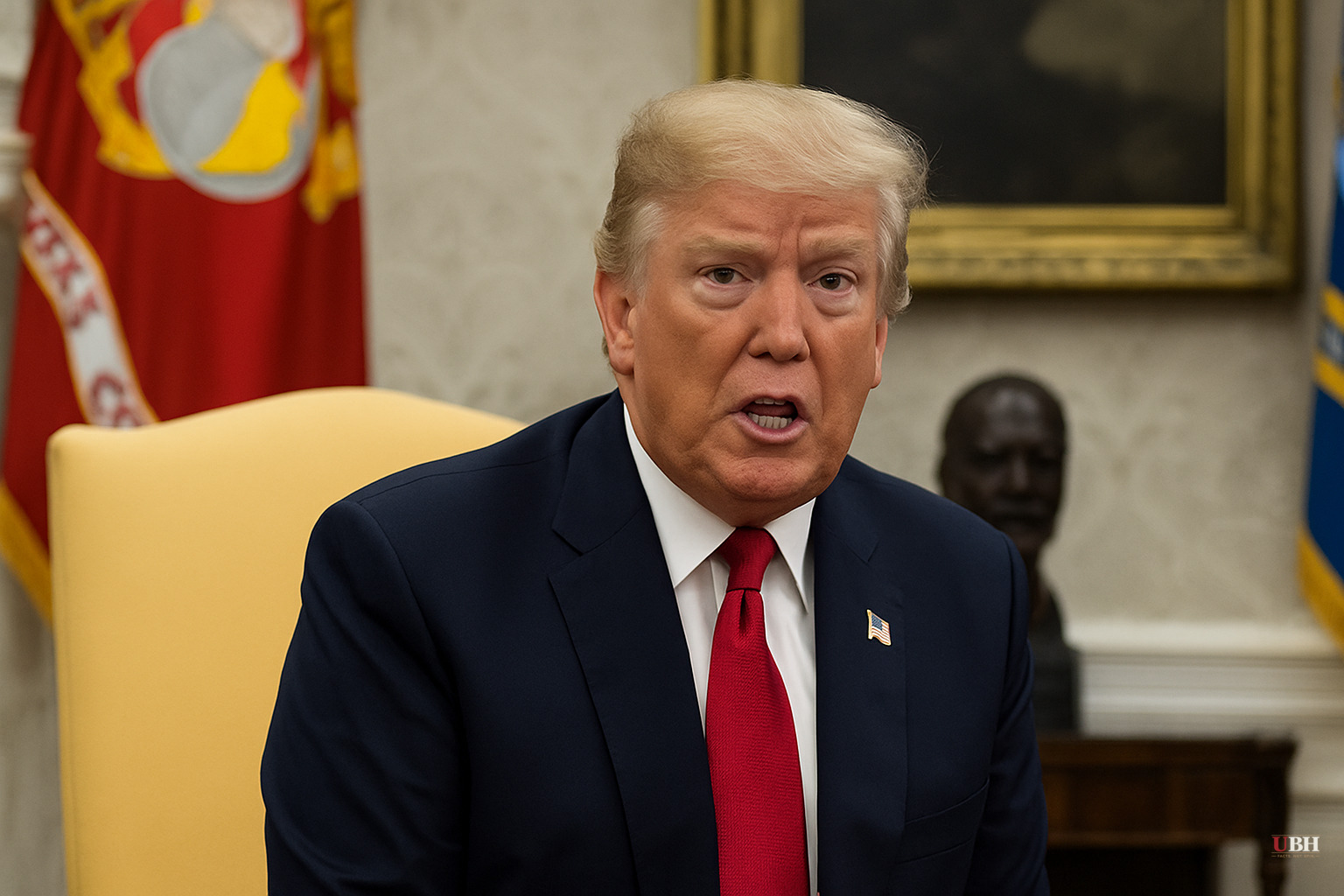
Since the Trump administration signed its memorandum of understanding with Iran — covered in prior reporting — Trump has moved quickly to frame the agreement as one of the defining achievements of his presidency.
What Trump Said
In a wide-ranging interview with Axios White House correspondent Marc Caputo on "The Axios Show," Trump argued the Iran deal averted what he called a possible "worldwide depression." His stated reasoning: a prolonged conflict in the region would have triggered an oil shock severe enough to destabilize global energy markets, according to Axios.
Asked directly what the Iran conflict taught him about the limits of presidential power, Trump's answer was unambiguous: "There are no limits." He added that while limits theoretically exist, he has not personally encountered them yet.
Congress holds the power of the purse, ratifies treaties, and declares war. Courts have blocked executive actions across administrations from both parties. Trump's assertion is a political statement about governing posture, not a legal determination, and no court has endorsed it.
Cuba on the Table
Trump also floated a harder line toward Cuba, telling Caputo that Cuba could face treatment "similar" to Venezuela and calling that scenario "possible," citing the geographic proximity of both countries to the United States. He offered no specifics on what such treatment would look like. Venezuela has faced sweeping U.S. sanctions and diplomatic isolation under Trump-era and Biden-era policy alike.
No formal policy announcement on Cuba has been made as of June 19, 2026.
The Iran Agreement and Israel
Trump connected the Iran deal to Israel's long-term security, arguing that his 2018 withdrawal from the JCPOA — the 2015 nuclear agreement negotiated under President Obama — was the correct call because it had placed Iran on a path to a nuclear weapon. He claimed the new memorandum of understanding forecloses that path.
Critics of that framing note a counterpoint: the JCPOA included binding inspections and enrichment limits that international monitors verified. When the U.S. withdrew in 2018, Iran progressively expanded its uranium enrichment program. The degree to which the current MOU restores equivalent verification and limits is not yet publicly clear from the source material available.
Anthropic and National Security
In a brief exchange, Trump indicated that Anthropic, one of the leading U.S. artificial intelligence companies, had "appeared to pose a national security concern in recent days" but suggested the situation had since improved. He did not elaborate on the nature of the concern, and no independent confirmation of a formal investigation or federal action against Anthropic has been reported as of today.
An off-hand presidential comment in an interview is not the same as a named agency finding. Until a specific charge, investigation, or official statement materializes, this is an allegation without a named basis.
Why the 'No Limits' Line Matters
Presidents often push the boundaries of executive authority. Trump has done it more aggressively than most. But the "no limits" framing is different from simply acting boldly. It is a stated governing philosophy. The Supreme Court, multiple federal circuit courts, and Congress have all constrained presidential action within Trump's own terms in office, including on immigration, spending, and trade.
The Axios interview did not include a rebuttal from congressional leaders or constitutional scholars, and Roya News, which published the summary used here, did not provide additional sourcing beyond the Axios report.
The next concrete test of these assertions may come from Congress, where several members have already raised questions about whether the Iran MOU requires Senate ratification as a treaty rather than executive sign-off alone. That legal debate has not been resolved as of June 19, 2026.
Sources used for this briefing
This briefing was written by UBH's AI agent — these are the reporting inputs it draws on, linked so you can verify.


