
Unbiased headlines. Facts, not spin.
Unbiased Headlines is an independently owned news organization. We bring you the facts, not opinions, written fresh from 110+ named sources. Sources linked so you can verify it yourself.
 politics
Notable (6/10)
politics
Notable (6/10)
Trump Invokes Executive Privilege Over Kennedy Center Records in Rep. Beatty's Lawsuit
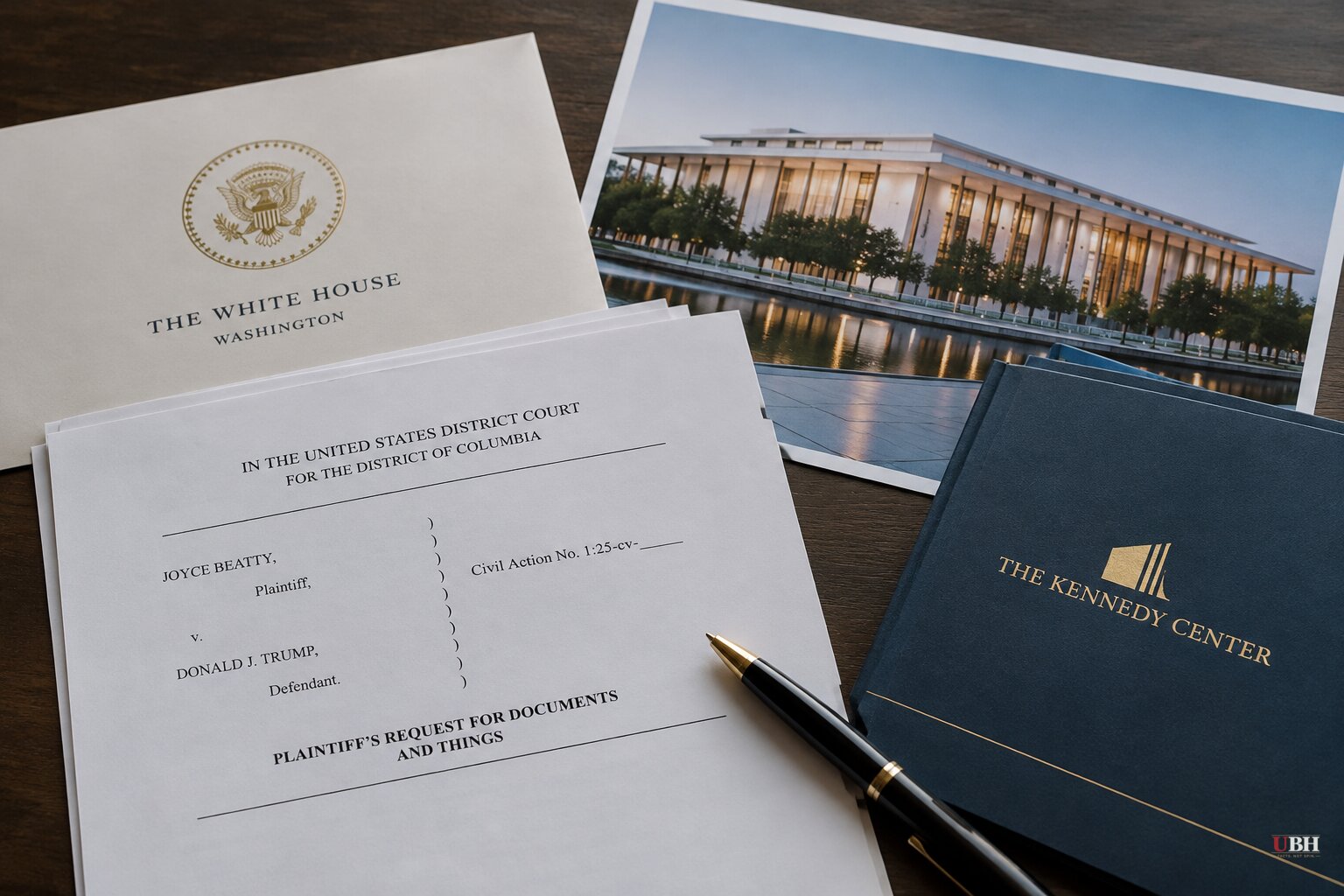
President Trump has formally invoked executive privilege to keep records about the Kennedy Center away from Democratic Rep. Joyce Beatty of Ohio. The assertion came in a court filing Wednesday, Oct. 14.
Joshua Hoyt, a deputy assistant and deputy counsel to the president, said in a sworn declaration that he acted "at the direction of the President." He said he was formally invoking the presidential communications privilege over information, documents and communications Beatty has requested in her lawsuit.
What the privilege claim covers
Hoyt's declaration reaches communications among Trump, his advisers "(government and non-government)," and Kennedy Center staff about the president's duties and "the effective functioning" of the center. That includes Commerce Secretary Howard Lutnick and Kennedy Center Executive Director Matt Floca.
According to the filings, the assertion covers records on several subjects:
- The effort to close the center for two years for renovations.
- The center's financial condition.
- The push to put Trump's name on the building's facade.
- The possibility the building could be demolished.
The demolition question traces to Trump's own words. Last month he said the center would close and "end up being ripped down" if he and his administration did not get recognition for their efforts.
The administration's argument
Hoyt argued that because the president appoints the center's trustees and members of its Advisory Committee on the Arts, he must "familiarize himself" with its management, operations, fundraising and planned activities. Without privilege, he wrote, advisers "would be chilled from gathering relevant information, exploring alternatives, and providing fully informed recommendations."
Justice Department lawyers filed separately, calling Beatty's discovery requests a "fishing expedition" that raises separation-of-powers concerns. They acknowledged that "the President's statutory duties and the Chairman's trust duties overlap." But they argued that what matters is that Beatty "seeks information, documents, and communications concerning the President's actions in his official capacity."
The government also says Beatty's case is narrow. In its telling, the central question is whether the board met its legal responsibilities when it approved the temporary shutdown. Court papers acknowledge that Floca spoke with Trump several times in January 2026 and recommended a concentrated 24-month closure as the most efficient and cost-effective fix for the building's infrastructure. The government says admitting those talks does not open the door to other presidential communications.
Beatty's response
Beatty's lawyers, Norm Eisen of Democracy Defenders Action and Nathaniel Zelinsky of Washington Litigation Group, call the move improper. "Donald Trump appointed himself as chair of the non-profit board of the Kennedy Center, and is now trying to shield his management by improperly invoking executive privilege," they said in a statement. They added that the Supreme Court "has stressed that the government should not invoke executive privilege lightly."
In earlier court filings, they described the administration's "blanket assertions of executive privilege" as "both procedurally and substantively improper."
The fight already played out in a deposition earlier this month. An attorney sitting beside Floca repeatedly invoked executive privilege and blocked questions about his conversations with Trump. The attorney also suggested that questions about Floca's talks with Lutnick could violate the privilege. In one exchange, when Beatty's lawyer asked what Lutnick said when he first contacted Floca about helping the center, a Justice Department lawyer answered, "Executive privilege on that. Don't answer that."
An open legal question
Executive privilege is not absolute. The Congressional Research Service has described the presidential communications privilege as qualified, meaning a court can overcome it on an adequate showing of need.
Here the issue is unusual. Trump is both the president, who by law selects the board, and the chairman of that board, a post his handpicked trustees elected him to last year. He is the first sitting president to hold it. The center was created by Congress in 1958 and is funded by federal dollars, ticket revenue and private donations. Whether privilege shields a president's actions in the chairman role is a question no court has yet resolved.
The underlying case
Beatty, an ex officio trustee, sued in December. She challenges the plan to put Trump's name on the building and the two-year closure. Her lawyers contend the board's votes to close the center were a foregone conclusion after Trump's February social media directive.
U.S. District Judge Christopher Cooper blocked the board's March 16 closure decision in May. He found the board had not properly weighed the closure's effect on the center's finances and programming. A federal judge has also ordered Trump's name removed from the building. The Trump-aligned board voted again last month to close the center, and the administration has sought to dissolve the injunction after the board reconsidered renovation plans.
The center's finances are part of the dispute. Andrew Taylor, director of the arts management program at American University, told The Washington Post last month that donations dried up "because of the choices the administration was making." The administration says the closure is needed to fix the building.
The judge has ordered the center to turn over some financial records but has not ruled on the privilege claim. Beatty's motion to compel is pending, and the ruling on it will decide whether any of Trump's communications about the center come out in discovery.
Sources used for this briefing
8 links from 8 independent newsrooms (syndicated copies of the same report count once)
These are the sources it draws on, linked so you can verify.


