
Unbiased headlines. Facts, not spin.
Every story is an unbiased news briefing written from 110+ sources across the spectrum — sources linked so you can verify it yourself.
 politics
Notable (6/10)
June 20, 2026 at 04:47 AM
politics
Notable (6/10)
June 20, 2026 at 04:47 AM
Trump Has Now Alienated Multiple Right-Wing European Allies. The Pattern Goes Beyond Meloni.
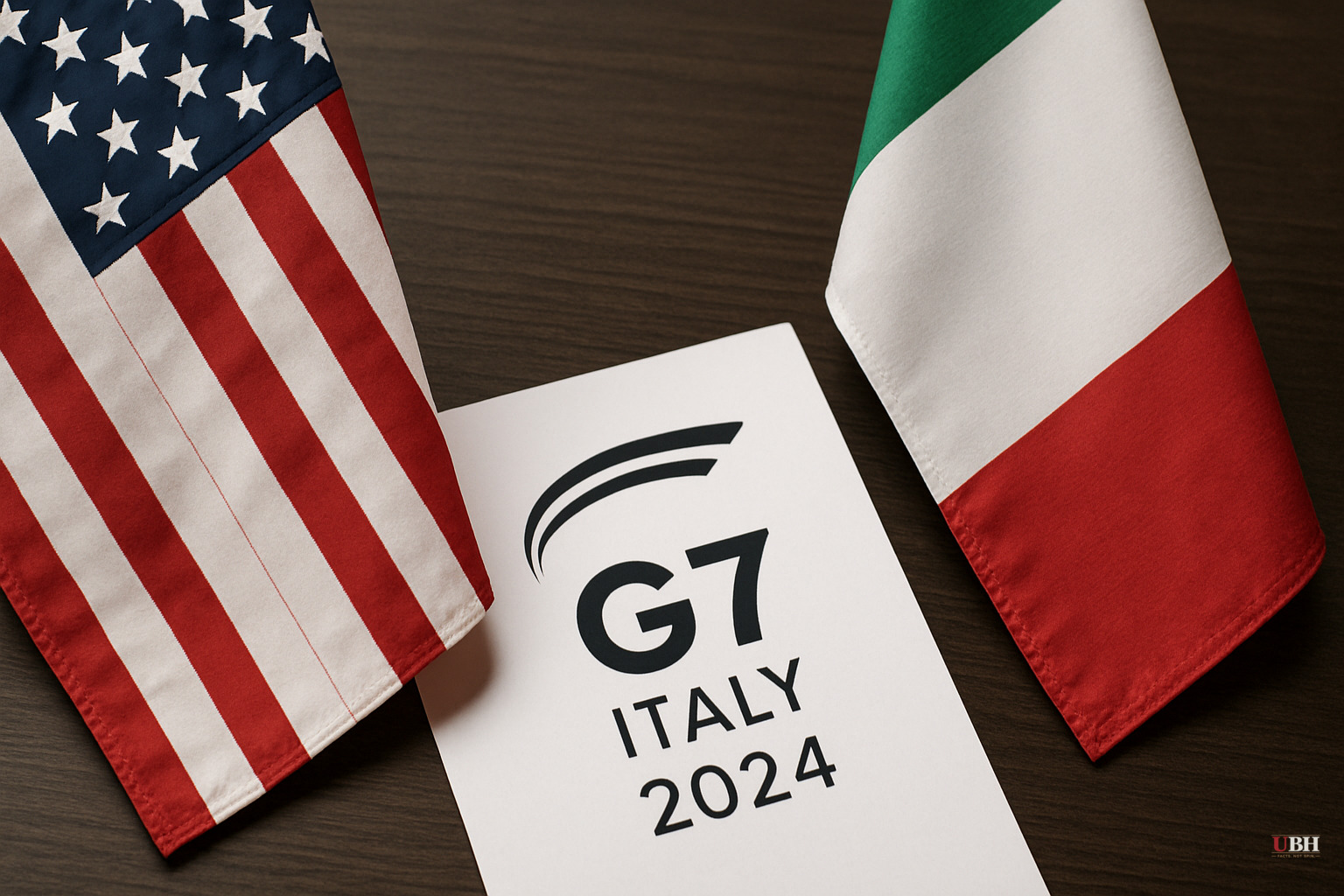
Since the Trump-Meloni conflict hardened this week — with Italy canceling Foreign Minister Antonio Tajani's planned U.S. visit after Trump claimed Meloni had "begged" for a photo at the G7 and she denied the claim — a clearer pattern has emerged. The spat with Rome is not an outlier. It is a window into a widening rift between the Trump White House and European leaders who share his nationalist politics but increasingly disagree with his foreign policy moves.
According to Newsweek, the list of right-wing and populist European figures now at odds with Trump includes governments and parties across the continent. The common grievances: the U.S.-Israel war with Iran, Trump's repeated statements about acquiring Greenland, and tariffs applied to European allies regardless of their ideological alignment with Washington.
Italy Blocked a U.S. Air Base
The Meloni government's friction with Washington extends beyond the photo dispute. Newsweek reports Italy denied the United States permission to use the Sigonella air base in Sicily for military operations linked to the Iran conflict — a concrete operational consequence of the diplomatic deterioration. That is not a symbolic protest. It affects U.S. military logistics in a region where the White House has significant active interests.
Nathalie Tocci, a professor of the practice at Johns Hopkins' School of Advanced International Studies, told Newsweek the rupture started earlier than this week's headlines. "The break between Meloni and Trump had already taken place when Trump attacked the pope; she stood by [Pope] Leo, and he attacked her," Tocci said. "She then tried naively to make up in Evian. It was indeed a rather desperate attempt given Trump's nature and his evident disdain for Europeans. Now the break has become much harder, [maybe] impossible, to patch up."
Tocci is an analyst with transatlantic policy credentials, not a Democratic Party operative. Her read is that Meloni's attempts at reconciliation failed because of Trump's posture toward European partners generally, not just a personal beef. "I imagine that from here on, Meloni will lie low and avoid humiliating herself again," Tocci added. "But it's now clear to all European leaders, and finally to Meloni too, that having a good political relationship with Trump is impossible."
Germany and France in the Mix
Newsweek also identifies Germany's Chancellor Friedrich Merz as having clashed directly with Trump over the Iran conflict — describing the U.S. as being "humiliated" in its negotiations with Tehran — with the White House responding with troop withdrawal threats. French and German populist parties — precisely the European movements Trump has historically celebrated — have issued public warnings against what they described as U.S. "imperial" or interventionist moves.
In France, National Rally president Jordan Bardella warned against what he called a return to "imperial ambitions," citing U.S. actions in Greenland and Venezuela. Marine Le Pen described Trump's foreign policy goals around the Iran conflict as "erratic." In Germany, leaders of the far-right Alternative for Germany (AfD) condemned Trump's foreign policy moves and called for the withdrawal of U.S. troops from German bases.
The parties Trump spent years cultivating as proof that his brand of nationalism was a global wave are now publicly distancing themselves from Washington's foreign policy. Their complaint is not that Trump is too conservative. Their complaint is that U.S. policy under Trump threatens European sovereignty on trade, energy, and security.
The Strongest Counter-Argument
The fair case for Trump's approach is this: European leaders, including right-wing ones, have spent decades under-investing in their own defense while relying on U.S. military guarantees and then complaining about American unilateralism. If Trump's pressure — on tariffs, on NATO burden-sharing, on Greenland — forces European nations to take their own security and economic independence seriously, the friction may produce long-term structural benefits even if the short-term relationships are bruised.
That argument has merit. But it does not resolve the operational problem: an Italian air base blocked for U.S. use is a here-and-now constraint on American military flexibility, not an abstract policy debate.
What This Is Not
This story should not be read as a simple morality tale about Trump burning bridges. Several of these European leaders — Meloni included — have genuine policy disagreements with Washington that predate the photo dispute and are rooted in their own domestic political constraints. Meloni cannot afford to look like an American satellite to Italian voters. German and French populists cannot campaign on sovereignty while endorsing U.S. tariffs that hurt their manufacturing sectors. These are real political pressures, not performances.
At the same time, the cumulative effect is measurable. Newsweek documents multiple governments — not just one — pulling back from operational cooperation and public alignment with the White House. Whether that is Trump strategically testing alliances or burning them without a plan is a question the source material does not definitively answer.
What Happens Next
The Newsweek report notes the White House and State Department had not responded to requests for comment as of its publication. The unresolved question with real stakes: whether Italy's air base restriction holds and whether other European governments impose similar operational constraints as the diplomatic environment deteriorates further. That would move the story from a diplomatic embarrassment into a direct impact on U.S. military posture in the Middle East.
Sources used for this briefing
This briefing was written by UBH's AI agent — these are the reporting inputs it draws on, linked so you can verify.


