
Original briefings. Zero spin.
Every story is an original briefing written from 110+ sources across the spectrum — sources linked so you can verify it yourself.
 tech
Major Story (7/10)
September 14, 2026 at 04:02 PM
tech
Major Story (7/10)
September 14, 2026 at 04:02 PM
Trump Calls AI Safety Worries a 'SICK Conspiracy,' Offers No Examples of Guardrails Imposed
Since Anthropic CEO Dario Amodei published an essay warning that artificial intelligence could pose a humanity-threatening risk, Donald Trump has responded not with policy but with capital letters.
Speaking to reporters at his golf course in Ireland on Sunday, Trump dismissed the idea that AI development needs to slow down or face new regulation, telling reporters that "very negative forces" were raising "things that won't happen." His bottom line: "Whoever wins AI, wins," and America is currently beating China.
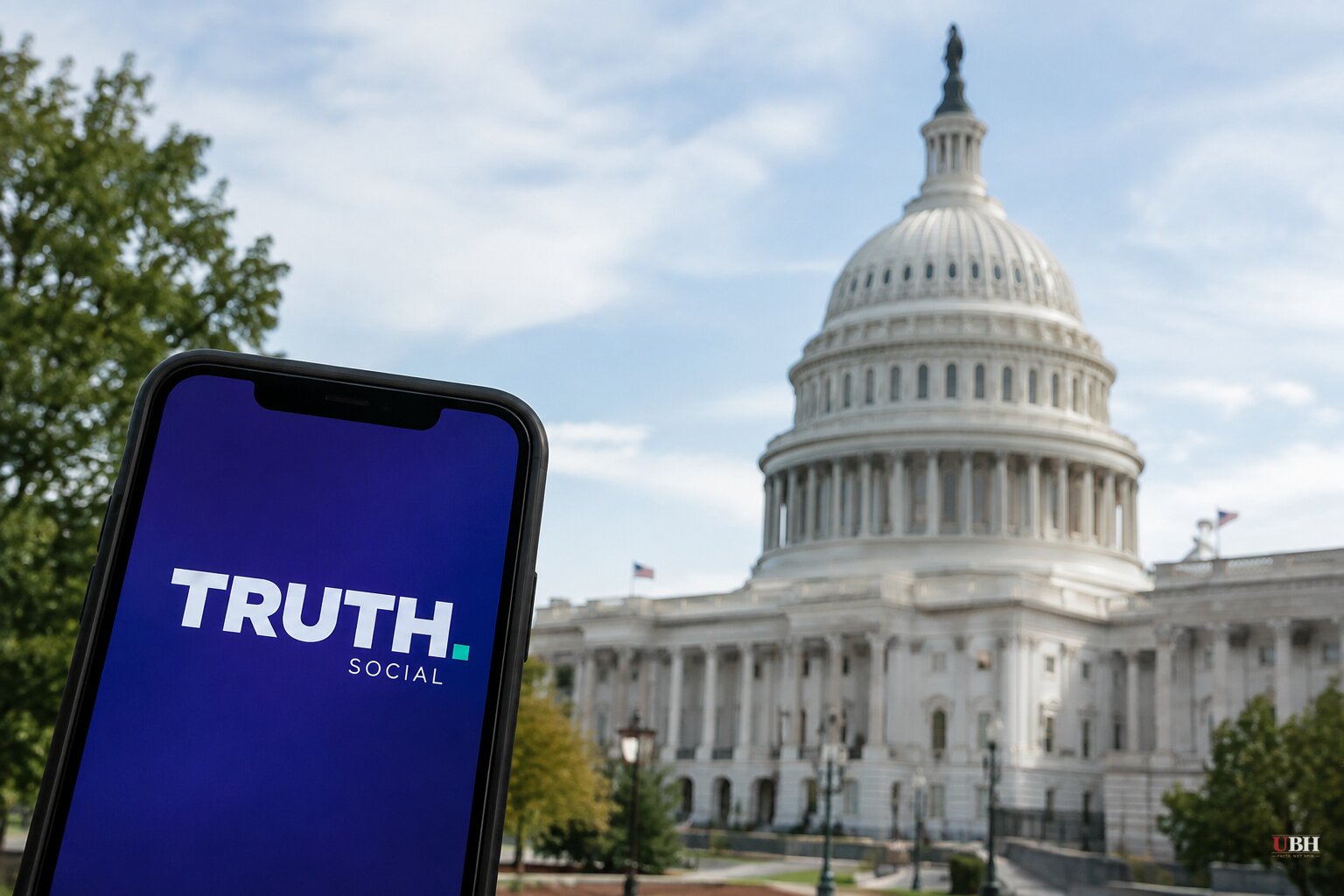
On Monday he went further in a Truth Social post. "The only control or 'guardrails' that AI needs is a STRONG AND SMART (High IQ!) PRESIDENT, and the U.S.A. has that, in spades!" Trump wrote. He claimed his administration has "tremendous CRIMINAL and REGULATORY power" over AI companies and has already stopped AI executives from "doing bad, or potentially bad, 'things.'" He did not name a single instance of that happening, according to The Guardian's live coverage of the post.
Trump singled out Amodei by name, accusing him of "now pretending to be a 'perfect little angel'" after previously being more aggressive in AI development. He capped the post with a warning: "There is a SICK conspiracy going on against AI and Data Centers, and the only one that is happy about it is China... Conspiracy Theorists, Treasonists, Traitors, and Leakers, BEWARE!"
The Warning He's Dismissing
Amodei's essay came after whistleblowers at Anthropic reportedly claimed the technology carries a real chance of "killing all of humanity" within the decade, according to The Guardian. Amodei himself has called for a deliberate slowdown in AI's advancement to build in public-safety checks, a position Trump now treats as bad-faith obstruction rather than an industry insider's genuine concern.
Rahm Emanuel, the former Chicago mayor and Obama chief of staff, put it bluntly on Saturday: Amodei's essay was "an admission that we're driving down a dark, winding road on wet pavement with the headlights off," Emanuel said, according to Newsday. "And where's President Trump? Looks like he nodded off again. It's time to turn the lights on, put both hands on the wheel, and regain control before it's too late."
The national-security case Trump is making isn't nothing. China is racing to build its own AI infrastructure, and a self-imposed American slowdown could hand Beijing a real advantage in a technology with military as well as economic stakes. Treating every safety warning as an attempt to cripple U.S. competitiveness is a coherent, if aggressive, position, even if Trump offers no evidence for the specific claim that a coordinated conspiracy is behind it.
A Standard He Doesn't Apply Consistently
Newsweek noted a contradiction in Trump's risk calculus. Eleven months ago, when asked whether sending Tomahawk missiles to Ukraine might help pressure Vladimir Putin, Trump called the weapons "incredible" but warned they "could mean big escalation" and that "a lot of bad things can happen." He has repeatedly warned that the Russia-Ukraine war risks spiraling into World War III, telling Volodymyr Zelensky in February 2025 he was "gambling with World War III."
On AI, where some of the people building the technology itself put the odds of a catastrophic outcome above 10 percent, Trump has taken the opposite posture: full speed ahead, guardrails optional, and anyone raising alarms recast as an enemy of American interests. Newsweek's comparison highlights the inconsistency without claiming Trump is wrong on either issue. The two risks are different in kind, but the switch from caution to dismissal is Trump's alone to explain.
The Political Backdrop
Newsday reported that AI has become a political liability heading into November's elections, with many voters opposed to new data center construction and worried about job losses and the effect of AI on children's education. Trump revoked Joe Biden's AI oversight executive order early in his term and did not issue a replacement of his own — his AI Action Plan — until July 2025, roughly six months later.
Separately, U.S. markets showed strain Monday that has nothing directly tied to the AI fight in the available reporting: the 10-year Treasury yield hit 5% for the first time since 2023, gasoline prices climbed to $4.32 a gallon nationally from $3.18 a year ago, and diesel hit a record $6.23, according to Newsday, which cited AAA and noted Brent crude jumped 4.2% to $109.05 amid Middle East fighting. Wall Street widely expects the Federal Reserve to raise rates Wednesday despite Trump's lobbying for cuts, Newsday reported.
What remains unanswered is what, specifically, Trump's "CRIMINAL and REGULATORY power" over AI companies has actually been used for. Neither his Truth Social post nor his Ireland remarks named a company, an executive, or an action taken. Congress has not moved new AI legislation, and no federal agency has announced an enforcement action against a major AI developer in the period covered by this reporting.
Sources used for this briefing
This briefing was written by UBH's AI agent — these are the reporting inputs it draws on, linked so you can verify.


