
Unbiased headlines. Facts, not spin.
Every story is an unbiased news briefing written from 110+ sources across the spectrum — sources linked so you can verify it yourself.
 politics
Major Story (8/10)
June 22, 2026 at 02:40 AM
politics
Major Story (8/10)
June 22, 2026 at 02:40 AM
Trump-Backed Outsider Abelardo de la Espriella Wins Colombia's Presidential Runoff by 250,000 Votes
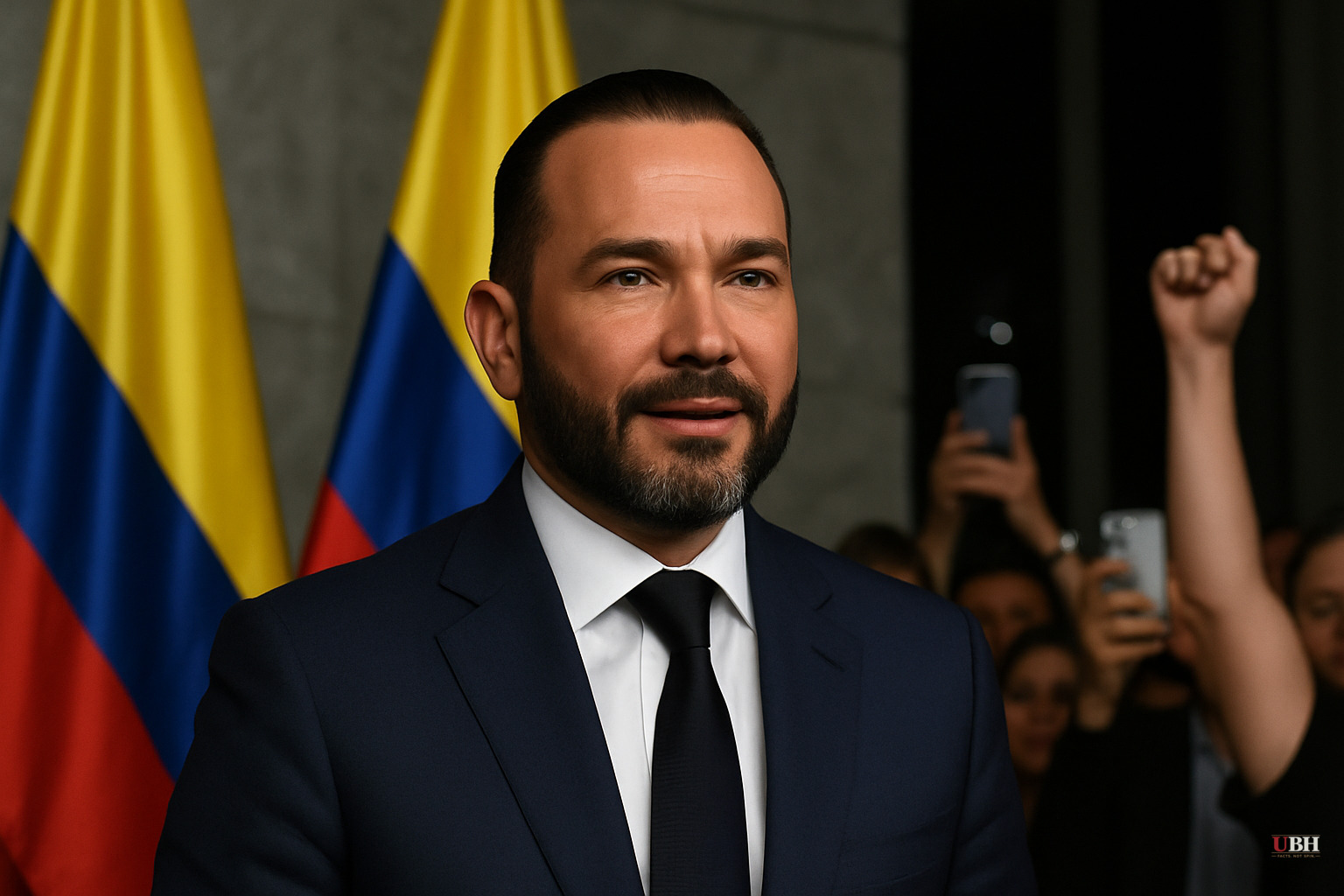
Since the first round three weeks ago, when de la Espriella beat Cepeda by 673,000 votes, the margin has narrowed considerably. With 99.98% of the preliminary tally counted as of June 21, de la Espriella secured 12.95 million votes (49.66%) against Cepeda's 12.7 million (48.7%), according to NPR and The Guardian. The remaining 1.6% of ballots were cast blank.
Trump posted on Truth Social: "He Won, BIG!" Secretary of State Marco Rubio said he spoke with de la Espriella to congratulate him and wrote that "the Trump administration looks forward to working closely with your incoming administration to advance regional security cooperation, end illegal immigration to the United States and strengthen our economic ties," according to The Guardian.
Who Is "El Tigre"
De la Espriella, 47, is a millionaire criminal defense attorney and naturalized U.S. citizen who lived in Miami and Florence, Italy, before entering politics. He has never held public office. His client list includes the founder of a major pyramid scheme that defrauded thousands of Colombians and Alex Saab, a Colombian businessman with close ties to Venezuelan President Nicolás Maduro who was extradited to the United States on money-laundering charges, according to NPR and BBC.
He ran under the "Defenders of the Motherland" banner, calling himself "right-wing, pure and hard," and compared himself to El Salvador's Nayib Bukele and Argentina's Javier Milei, according to the Miami Herald. Campaign rhetoric included pledges to "disembowel" the left and described it as a "plague" to be "eradicated."
On the security platform that carried him: he has promised to bomb guerrilla camps on day one, launch a 90-day U.S.-backed airstrike campaign against dissident armed groups, intensify attacks on drug-smuggling aircraft and boats, and build ten "mega prisons," according to NPR and New Indian Express. He has said he will scrap Petro's "Total Peace" negotiation strategy entirely.
Why Security Drove the Vote
The data behind the shift is straightforward. According to Fundación Ideas Para la Paz (FIP), a Colombian think tank cited by the Miami Herald, active fighters in Colombia's armed conflict more than doubled during Petro's four years in office, from roughly 13,000 in 2022 to nearly 27,000 in 2025. Membership in armed groups expanded as cartels and guerrilla factions extended control over drug trafficking routes and illegal mining.
Gabriel Clavijo, a political scientist and international relations expert, told the Miami Herald that the electoral map tells the story plainly. De la Espriella won most heavily in conflict-affected regions, suggesting voters were directly punishing Petro's negotiation-first approach for failing to deliver safety on the ground.
Pollsters cited by NPR identified security as voters' top concern heading into the runoff.
The Strongest Case for Caution
The concern raised by Cepeda's supporters and Petro himself is not frivolous on its face. A margin of roughly 250,000 votes in a country of 50 million, combined with allegations that some polling station forms lacked the required signatures from election jurors, gives the losing side a procedural hook to demand scrutiny. Cepeda's campaign is formally contesting results from approximately 33,000 ballot boxes, according to NPR. Petro called for an audit of voting software and claimed some stations were "compromised," according to BBC.
That said, neither Petro nor Cepeda has presented verified evidence of fraud as of June 21. The National Civil Registry, described by The Guardian as an independent public body responsible for organizing Colombian elections, released the preliminary count. Historically, Colombia's quick counts have closely tracked final certified results, according to NPR. Cepeda himself acknowledged the quick count result before announcing the formal challenge.
Regional Picture and the Governing Problem
De la Espriella's win is the latest in a string of right-wing presidential victories across Latin America. The Guardian notes recent wins by Nasry Asfura in Honduras and José Antonio Kast in Chile, with Keiko Fujimori leading in Peru's ongoing count. When Petro leaves office in roughly six weeks, only Mexico, Brazil, Uruguay, and Guatemala will remain under left-wing governments in the region.
The domestic arithmetic is harder. De la Espriella has no parliamentary majority, according to New Indian Express. Nearly half the electorate voted against him. Patricia Muñoz Yi, a political scientist at Javeriana University in Bogotá, told the Miami Herald that the president-elect faces the immediate challenge of building "trust in the government and constructing governability after a polarizing campaign."
His pledged military offensive against guerrilla groups will also immediately test Colombia's decade-old peace process, which has held, imperfectly, since a 2016 agreement with the FARC. Scrapping negotiations with remaining dissident factions while launching airstrikes is a bet that force succeeds where diplomacy failed. Whether the U.S. military and intelligence support he is counting on will materialize at the scale he described to AFP during the campaign remains the most concrete open question his presidency will face from day one.
The formal manual recount, which will determine whether the preliminary result is certified, is expected to conclude over the coming days, according to NPR.
Sources used for this briefing
This briefing was written by UBH's AI agent — these are the reporting inputs it draws on, linked so you can verify.


