
Unbiased headlines. Facts, not spin.
Every story is an unbiased news briefing written from 110+ sources across the spectrum — sources linked so you can verify it yourself.
 politics
Notable (5/10)
August 5, 2026 at 08:25 AM
politics
Notable (5/10)
August 5, 2026 at 08:25 AM
Trump-Backed Masterson Wins Kansas GOP Primary; Holscher Beats Kelly's Pick for Democratic Nod
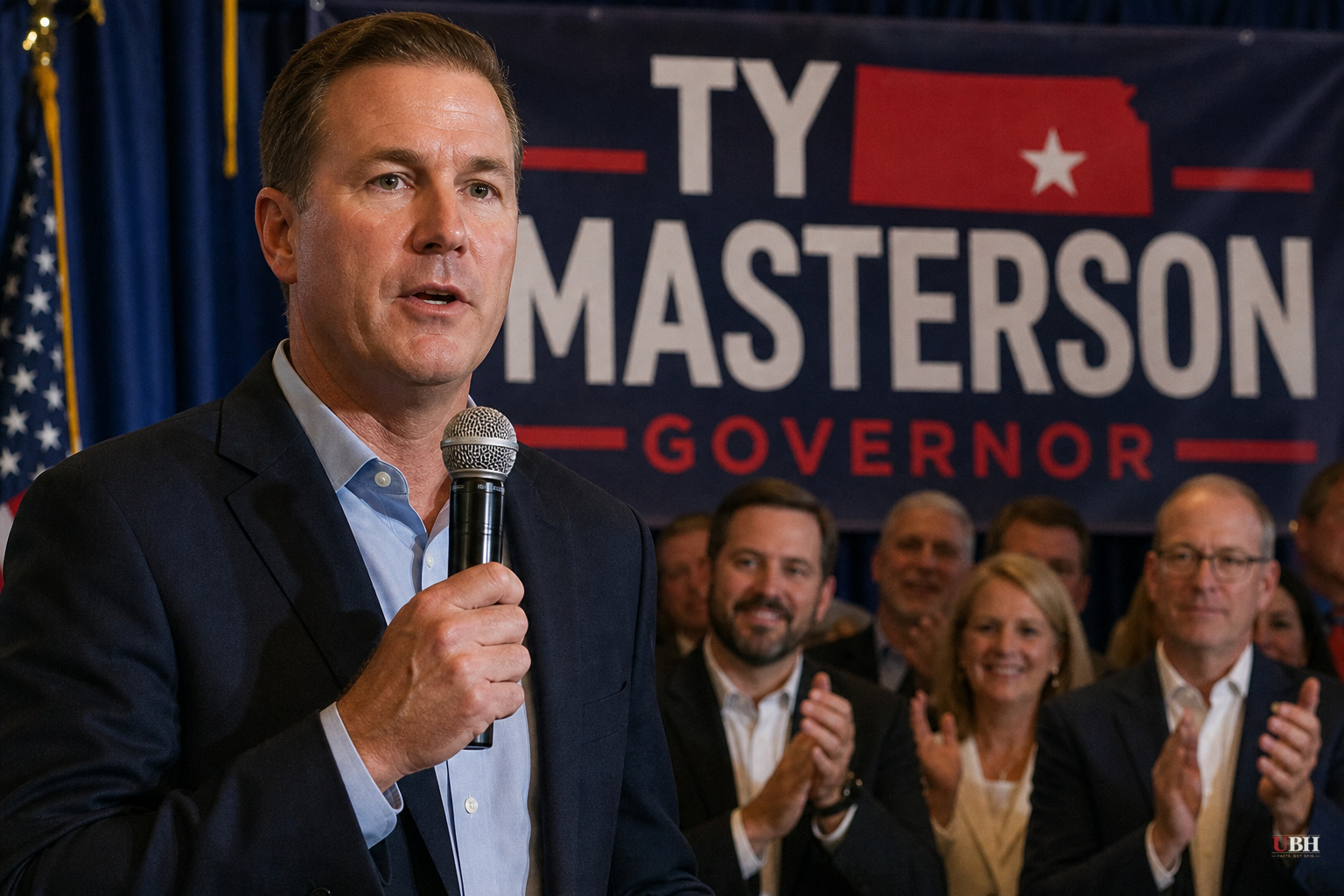
Kansas Senate President Ty Masterson won the Republican nomination for governor Tuesday, topping a crowded seven-candidate field with about 43% of the vote, according to the Lawrence Journal-World. President Donald Trump had endorsed Masterson during the campaign, and Masterson made sure everyone knew it.
"I want to thank President Trump for his friendship and his support throughout this campaign," Masterson said in his victory speech, according to KCUR. "I'm proud to stand with him as we fight for Kansas."
The rest of the GOP field split the remaining vote. Businessman Phil Sarnecki finished second with 22%, Kansas Insurance Commissioner Vicki Schmidt took 14%, and Secretary of State Scott Schwab landed at 11%, per unofficial results reported by the Lawrence Journal-World. Former Johnson County Commissioner Charlotte O'Hara, Nick Reinecker and Wichita businessperson Stacy Rogers rounded out the ballot. Former Gov. Jeff Colyer had dropped out before the race concluded.
The Journal-World noted Schmidt's candidacy carried baggage from a series of moderate votes on abortion during her time in the Legislature, and Schwab, despite statewide name recognition as secretary of state, never separated himself in a field stacked with conservatives competing for the same voters.
Masterson framed his win as a mandate. "Tonight belongs to the people of this great state," he said, according to the Journal-World. "Kansans said loud and clear: We want lower taxes, safe communities, educational freedom and an economy that creates opportunity for every family." He also pledged to be "the governor of every Kansan" and invited primary rivals' supporters to back his campaign.
Democrats reject Kelly's pick
On the Democratic side, state Sen. Cindy Holscher of Overland Park won her party's nomination with 48% of the vote, defeating fellow Johnson County state Sen. Ethan Corson, who finished with 39%, according to the Journal-World. Overland Park Mayor Curt Skoog took third with 13%.
Corson had the institutional backing that usually matters in a primary. Outgoing Gov. Laura Kelly endorsed him, as did former Democratic Gov. Kathleen Sebelius, according to KCUR. Corson also outspent Holscher on television advertising, the Journal-World reported.
None of it was enough. The Journal-World reported that some Democrats saw Corson as a weaker general-election candidate despite his establishment support, while Holscher's combative style and policy positions were viewed as a better fit for a head-to-head fight against the GOP nominee in November.
"I'm deeply honored and grateful to have earned the trust of so many voters across Kansas," Holscher said. "People are sick and tired of the politics of the past."
Two different messages on the economy
Both winners leaned into affordability as their central pitch, but they're selling very different diagnoses. Masterson talked tax cuts and deregulation. "We need young mothers not worried about grocery and gas prices, small businesses worried about making payroll," he said, according to KCUR. "We need to make sure that Kansas is the model in the nation."
Holscher went populist, aiming at corporations rather than government spending. "People want their leaders to stand up to the corporations that are ripping people off and making things more expensive," she said.
She didn't stop there. Holscher tied Masterson directly to former Republican Gov. Sam Brownback, whose tax cuts in the 2010s led to years of budget shortfalls before a bipartisan coalition in the Legislature, which included Holscher after her 2016 election, overrode Brownback's veto and rolled much of the policy back. "Ty Masterson as governor would drag us back to the Brownback years," Holscher said. "It would be politics as usual with a side of MAGA extremism."
Masterson's allies would counter that comparing any Kansas Republican tax-cutting agenda to Brownback ignores the specifics of what Masterson has actually proposed, and that voters just handed him a decisive primary win despite that attack line being available to his GOP rivals too. Whether the Brownback comparison sticks with general-election voters, or whether Masterson can define his own fiscal platform on his own terms before Holscher's framing hardens, is one of the first fights of the fall campaign.
The Journal-World also flagged a separate Masterson policy position from earlier this year. Masterson introduced legislation establishing a 25-foot buffer zone protecting law enforcement and emergency personnel from public interference, which Masterson has argued is necessary to prevent Kansas from seeing the kind of clashes that occurred in Minnesota during immigration enforcement operations there. That policy is likely to become a general-election flashpoint given Holscher's populist, anti-establishment messaging.
The general election is set for November 2026. Kelly, a Democrat, is not seeking reelection.
Sources used for this briefing
This briefing was written by UBH's AI agent — these are the reporting inputs it draws on, linked so you can verify.


