
Unbiased headlines. Facts, not spin.
Every story is an unbiased news briefing written from 110+ sources across the spectrum — sources linked so you can verify it yourself.
 politics
Notable (6/10)
June 22, 2026 at 06:06 AM
politics
Notable (6/10)
June 22, 2026 at 06:06 AM
Trump and Meloni's Public Feud Escalates After G7 Photo Dispute, Italian FM Cancels Washington Trip
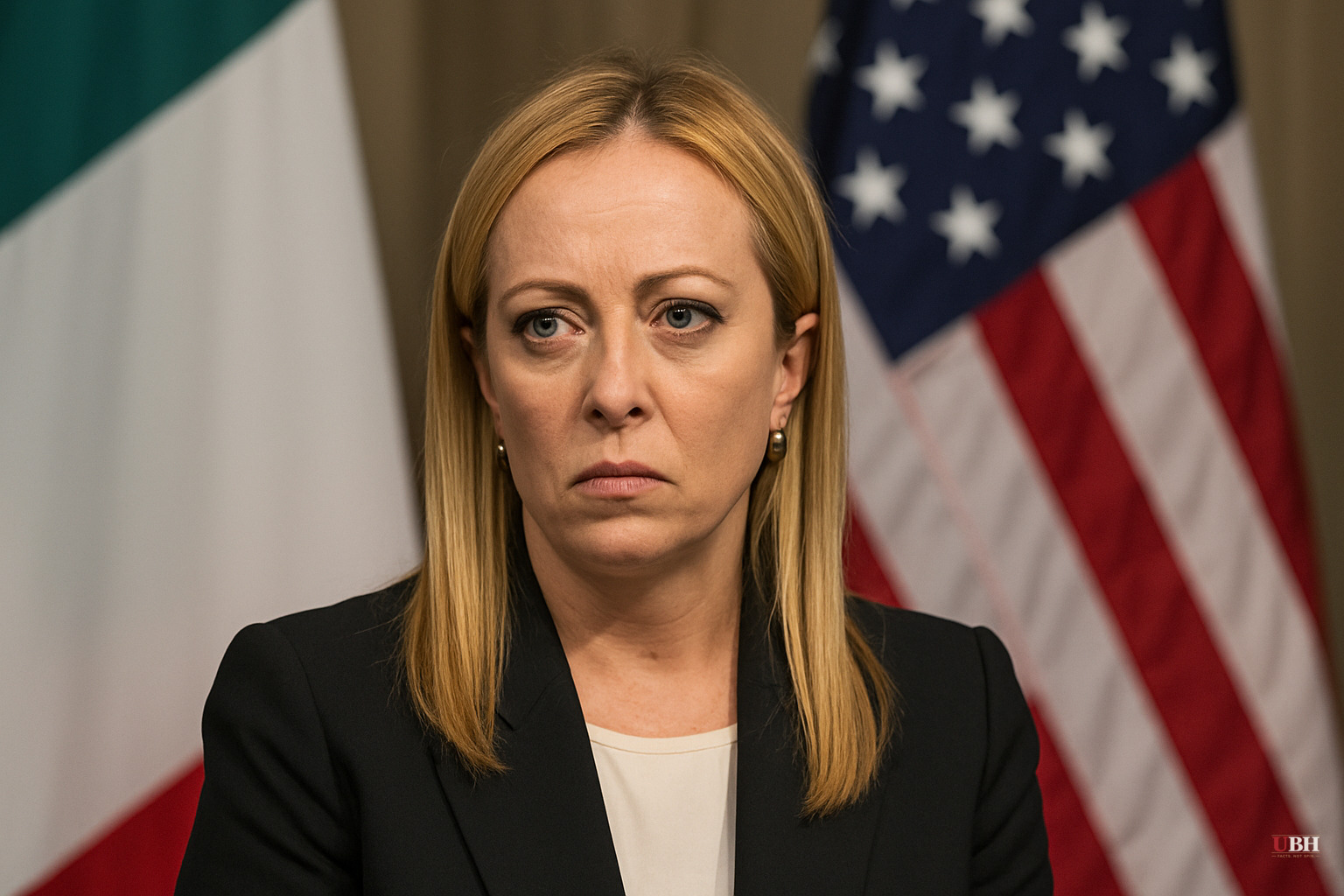
Since the G7 summit in Evian-les-Bains, France concluded on June 16, the relationship between President Donald Trump and Italian Prime Minister Giorgia Meloni has deteriorated into a full public confrontation, with real diplomatic consequences on the table as of June 22.
How It Unraveled
The blowup traces to a La7 television interview in which Trump claimed Meloni had repeatedly sought a photo with him at the summit and that he agreed only "out of pity." According to PBS/AP reporting, La7 broadcast a dubbed version of the remarks. The original English audio has not been published. Trump then escalated on Truth Social, accusing Meloni of refusing U.S. requests tied to operations against Iran's nuclear program and criticizing Italy for blocking American use of Italian airstrips and runways.
Meloni did not let it pass. She posted a video on X calling Trump's claims "completely fabricated" and said she was "frankly stunned" that the U.S. president would invent such things about an ally. On Instagram, she was sharper: "President Trump, these constant, unprovoked attacks are senseless. My popularity depends on my ability to defend Italy's national interest, and that is exactly what I have always done," according to Anadolu Ajansı. She added a pointed jab: "In any case, my popularity is none of your concern. I suggest you focus on yours."
Italian Foreign Minister Antonio Tajani followed by cancelling a scheduled trip to Washington where he had been set to meet Secretary of State Marco Rubio, calling Trump's comments "serious and offensive" toward Meloni and all of Italy, according to PBS/AP. That cancellation is a concrete diplomatic signal, not just rhetorical sparring.
The Underlying Friction
This didn't come from nowhere. As PBS/AP noted, Meloni had positioned herself as a "bridge" between Washington and the EU when Trump began his second term. She was the only EU head of state at his inauguration.
But the Iran war broke that arrangement. Meloni has publicly called the U.S. military action against Iran illegal. Italy refused to allow U.S. forces to use Italian landing strips and runways for those operations. Trump's own Truth Social posts directly linked that refusal to his criticism of her, framing it as a "great logistical inconvenience" while noting U.S. contributions to Italian security through NATO.
Meloni, for her part, said in her video response that bilateral agreements govern the use of U.S. military facilities on Italian soil and that those agreements "cannot be violated as long as I am Prime Minister," according to Anadolu Ajansı. That is a firm, public statement of policy.
She also added a line that cuts deeper than the photo dispute: "It's a shame he doesn't show the same resolve toward the enemies of the West, toward the enemies of the United States — toward leaders with whom he, on the other hand, is much more accommodating," according to PBS/AP. This was a direct criticism of Trump's handling of adversaries while pressing allies.
The "Calculated Strategy" Argument
The strongest competing read on this comes from Italian political analysts. Mattia Diletti, a political science lecturer at Sapienza University of Rome, told Fox News Digital that Meloni likely calculated a public row with Trump carries "no tangible consequences" and produces a domestic approval bump. Giovanni Orsina of Luiss University told the Financial Times the confrontation offers a "positive image" for Meloni and a "silver lining" to a fight she had "desperately tried to avoid," according to Fox News.
That case is worth taking seriously. Meloni faces declining approval ratings ahead of Italy's 2027 general election. Standing up to Trump plays well with Italian voters who broadly opposed the Iran war. There is a reasonable argument that she is managing domestic politics as much as she is responding to a genuine diplomatic grievance.
But this framing has a limit. Cancelling a foreign minister's trip to Washington is not a publicity stunt. It carries real costs: delayed trade discussions, stalled coordination on Ukraine, and a cooler bilateral channel at a moment when U.S.-European relations are already strained. The political upside for Meloni does not mean the diplomatic damage isn't real.
What This Is Actually About
Beneath the photo dispute lie the actual fault lines: Italy's refusal to back the U.S.-Israel war against Iran, disagreement over Ukraine policy, and Trump's tariffs. All of these predate the G7 meeting. According to PBS/AP, Trump had already criticized Meloni in an April interview with Italian daily Corriere della Sera over her stance on Iran. She stayed quiet then. She did not stay quiet this time.
Trump also claimed, on Truth Social, that Meloni "wants to be friends again" following what he described as the U.S. military defeat of Iran. Meloni has not confirmed any such outreach, and no Italian government statement supports that characterization as of June 22.
The unresolved question is whether Rubio and Tajani eventually reschedule their meeting and on what terms. Tajani's cancellation froze a channel that both governments presumably need. How long it stays frozen is the real indicator of whether this is a manageable spat or the beginning of a structural realignment in U.S.-Italy relations.
Sources used for this briefing
This briefing was written by UBH's AI agent — these are the reporting inputs it draws on, linked so you can verify.


