
Unbiased headlines. Facts, not spin.
Unbiased Headlines is an independently owned news organization. We bring you the facts, not opinions, written fresh from 110+ named sources. Sources linked so you can verify it yourself.
 politics
Major Story (8/10)
Event date: September 15, 2026 ·
politics
Major Story (8/10)
Event date: September 15, 2026 ·
Three Weeks Before Midterms, Courts Have Blocked Trump's Mail Ballot Plan and Polls Favor Democrats
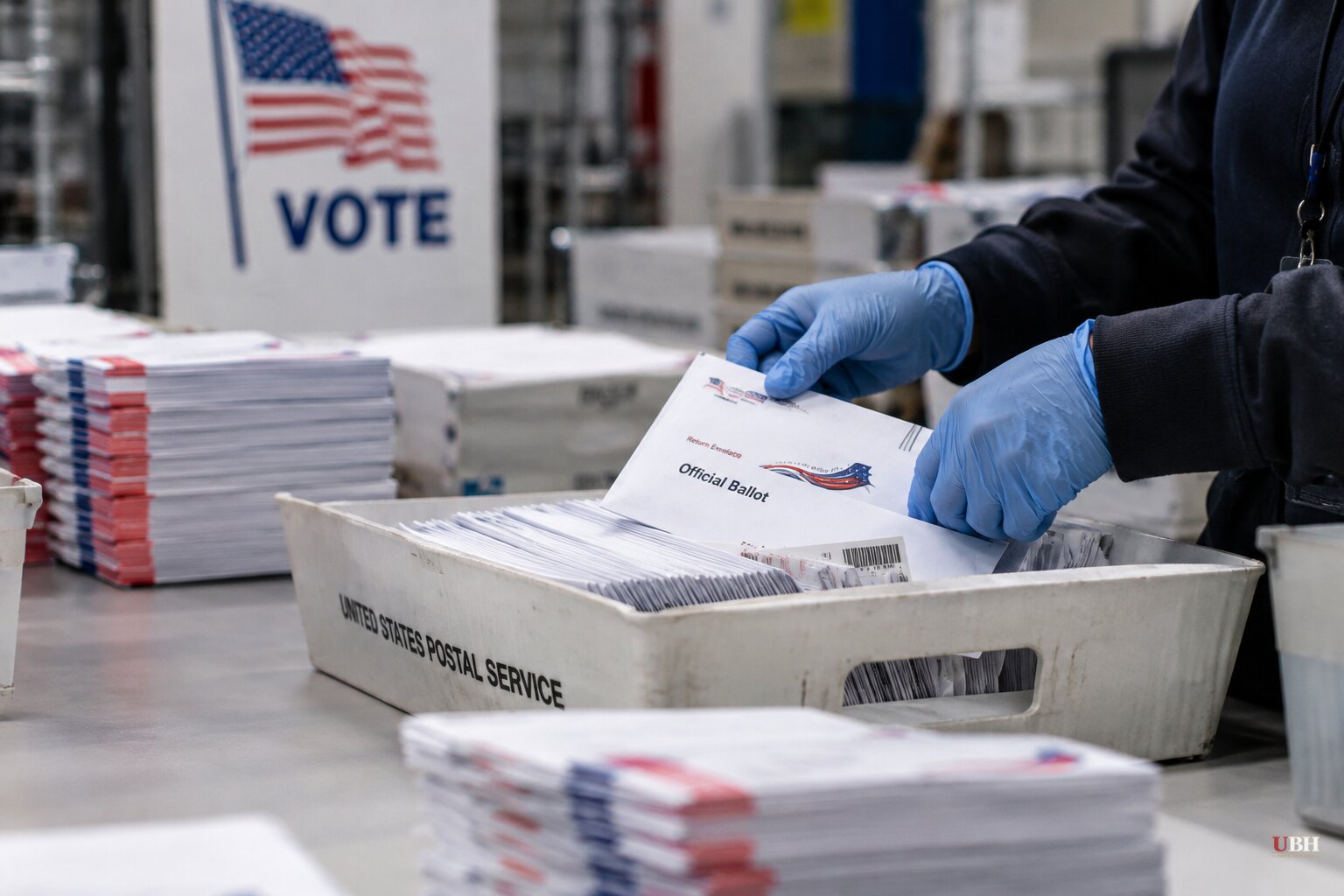
The midterms are on Nov. 3, and the fight over how they will be run is already well underway.
The Supreme Court last month blocked President Trump's effort to have the U.S. Postal Service screen mail ballots. The Constitution leaves election administration to the states, and the courts have kept it that way so far.
The administration's election push
Trump has warned that the country's election systems are vulnerable to foreign meddling. He made that case in a July speech.
Federal agents are going through state voter rolls and federal databases looking for noncitizens who are registered or have voted. The homeland security secretary has also asked the Justice Department to examine whether a widely used voting machine can be trusted.
Keeping noncitizens off the rolls is a legitimate goal. Voter rolls and machines should be auditable, and asking questions about both is not extremist. Those are the mainstream election-integrity concerns, and the administration is entitled to pursue them through lawful channels.
The objection comes from Democrats and many election officials, and it is about what happens after the vote. Sen. Mark Warner of Virginia, the top Democrat on the Intelligence Committee, said he is increasingly worried Trump could cite foreign interference as a reason to seize voting machines. Election officials told The New York Times they fear administration findings could be used to contest results that don't favor Republicans. Some state and local officials say they are now preparing to defend their elections against the federal government.
None of that has happened. No seizure has been announced and no challenge to results can exist before ballots are cast. The Times itself noted it is unclear Trump would pursue the extreme measures some supporters want.
What the experts expect
Votebeat surveyed 31 election law and administration experts between Aug. 27 and Sept. 21. It is not a scientific poll, and the group skewed white, male, and moderate or liberal.
The experts expect the election to face challenges, including federal agents interfering with the voting process. They do not expect a significant number of voters to be disenfranchised or the final results to be illegitimate. Fewer scenarios worry them now than in the spring.
At least 26 of the 31 said it was unlikely that states would still pass new laws on mail voting, voter ID, proof of citizenship for new registrants, in-person access or tabulators. Mitchell Brown, a political science professor at Auburn University, said most legislatures had adjourned by the time of the second survey.
On the question of federal agents, such as ICE officers, physically disrupting the voting process, Votebeat noted that it is illegal to send armed troops to polling places absent a violent threat, and that the Trump administration has sent mixed messages, saying it has no plans to do so but declining to rule it out entirely. Experts consider it a serious possibility, though the share who did so was notably smaller than in the spring.
Lawrence Norden of the Brennan Center for Justice at NYU called much of the rhetoric "posturing." "I think mostly election officials are tuning this out. They have elections to run," he said.
The Washington Post's opinion section went further, arguing that Trump's yearlong campaign to rewrite the midterm rules has failed in nearly every phase because of legal resistance. That is the paper's editorial judgment, not a finding of fact.
The political backdrop
The polls explain why the stakes feel high. Decision Desk HQ's average recently put Trump's approval at 38.5 percent and disapproval at 59.1 percent. A Quinnipiac University poll found 51 percent of registered voters want Democrats to control the House, against 39 percent who want Republicans. Nearly two-thirds of respondents were critical of his handling of the economy and of foreign policy.
The war in Iran has passed the seven-month mark, as The Hill noted in covering Trump's recent rally north of Dayton, Ohio. There Trump told supporters, "you got to get out and vote," promised a big win and aimed a crude line at the media.
The campaign trail was busy Thursday:
- Vice President JD Vance, at a rally in Monroe, Michigan, accused Democratic House candidate William Lawrence of backing "free and open migration," which Vance called "a blank check to the cartels." Lawrence is challenging Rep. Tom Barrett in the 7th District.
- Vance also attacked Michigan Democratic Senate candidate Abdul El-Sayed as a "little weasel." He claimed El-Sayed falsely portrayed himself as an Egyptian dual citizen.
- Trump accused El-Sayed of ties to the Muslim Brotherhood while urging support for Republican Mike Rogers. El-Sayed has repeatedly denied it.
- El-Sayed, campaigning in Iron Mountain with Rep. Alexandria Ocasio-Cortez, called Trump a "con man" and mocked the size of his hands.
- Sen. Susan Collins arrived in Bangor, Maine, for her debate with Democratic challenger Troy Jackson.
Both sides are slinging personal insults at each other. Neither side's rhetoric tells voters much about policy.
What control is at stake
Analysts at CaixaBank Research note that Democrats must grow their House total from 214 to 218 to take the chamber. They need four more Senate seats for a 51-seat majority, because the vice presidency, and with it the tiebreaking vote, stays in Republican hands. Thirty-five Senate seats are up, including two special elections for the terms of J.D. Vance and Marco Rubio, who were provisionally replaced after taking their posts as vice president and secretary of state.
A Democratic House would gain greater powers to investigate the executive branch. A Democratic Senate could block appointments of federal judges, senior administration officials and Federal Reserve members. Either chamber could stall new Republican legislation and complicate spending bills, which raises the risk of partial government shutdowns.
The open question is the one election officials keep raising: whether the administration's reviews of voter rolls and voting machines produce any findings before or after Nov. 3, and whether those findings are used to dispute a result. Until ballots are counted, that is still a concern rather than an established fact.
Sources used for this briefing
6 links from 6 independent newsrooms (syndicated copies of the same report count once)
These are the sources it draws on, linked so you can verify.


