
Unbiased headlines. Facts, not spin.
Every story is an unbiased news briefing written from 110+ sources across the spectrum — sources linked so you can verify it yourself.
 politics
Major Story (7/10)
August 4, 2026 at 11:14 PM
politics
Major Story (7/10)
August 4, 2026 at 11:14 PM
Third Whistleblower Alleges DEA Tracked Fentanyl Shipments Instead of Seizing Them
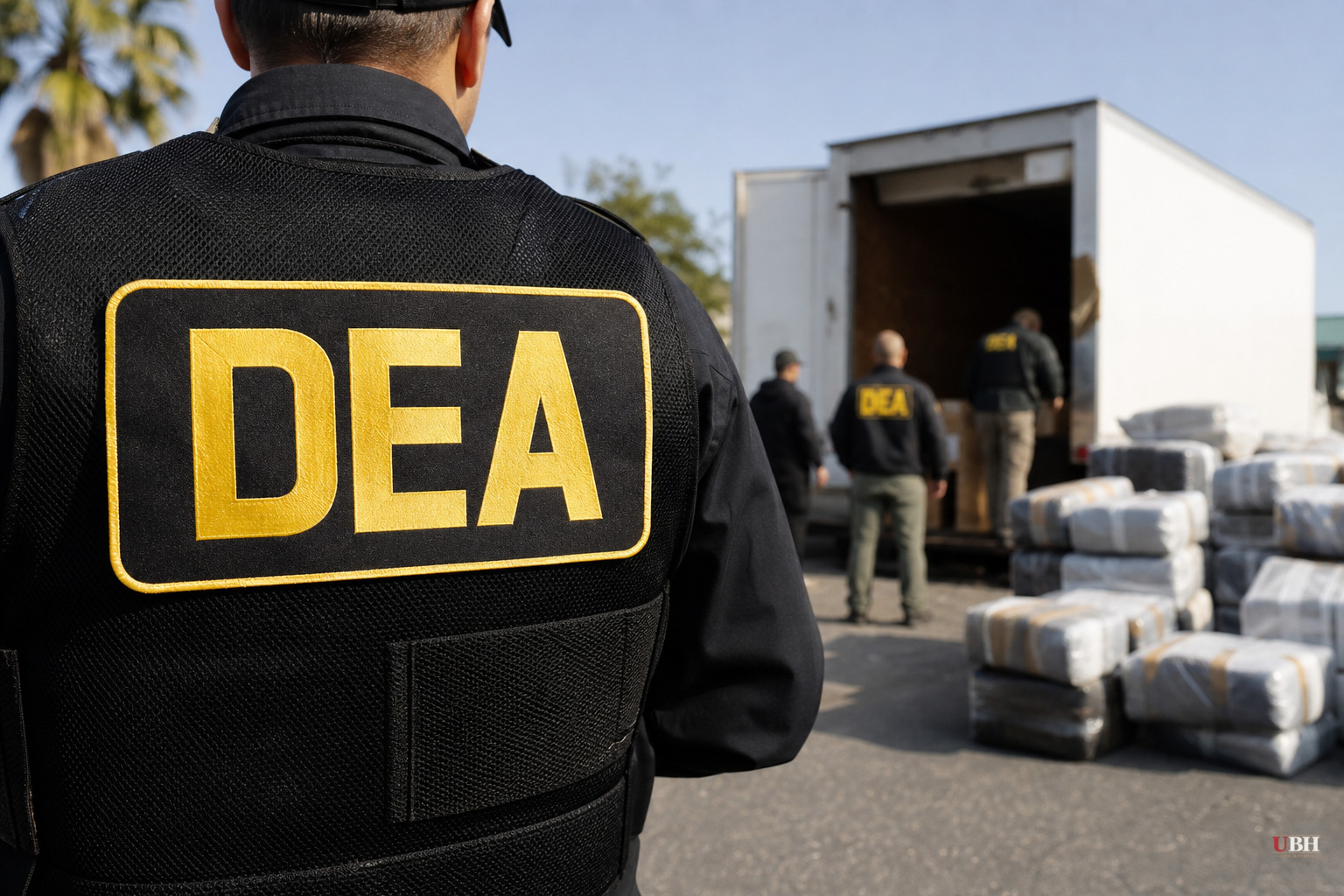
A third whistleblower has filed a complaint describing a Drug Enforcement Administration operation that allegedly let a known fentanyl courier make repeated deliveries through New Mexico without arrest, according to the Daily Signal. The new 20-page complaint, filed by a DEA special agent whose name is redacted, is the latest addition to a Justice Department inspector general investigation that began with a first whistleblower earlier this year.
The complaint describes a November 2022 shipment from Arizona to New Mexico that agents were instructed to track rather than intercept. It alleges the same courier made at least five more large deliveries in the following months, each one carrying 50,000 to 100,000 fentanyl pills and 20 to 40 pounds of methamphetamine, according to the document cited by the Daily Signal.
The courier was not arrested until June 2023. When agents finally moved, they found him carrying 19 kilograms of methamphetamine and 7 kilograms of fentanyl, the complaint states. The DEA says as little as two milligrams of fentanyl can be lethal depending on body size and tolerance, meaning a single kilogram carries enough to kill roughly 500,000 people.
The complaint also quotes a DEA agent telling a training session, "We walk fentanyl," while adding that federal prosecutors were aware of the practice. That line is now central to the whistleblower's account of how routine the monitor-don't-arrest approach had become inside the office.
Three whistleblowers, one pattern
This is the third person to come forward with a similar account. Former DEA Special Agent David Howell was first, alleging the agency let hundreds of thousands of fentanyl pills into New Mexico because Justice Department prosecutors wanted to track shipments and build a larger case against trafficking networks. Kevin Small, a financial investigator who worked as a contractor for the DEA's Albuquerque office, backed up parts of that account in a separate complaint.
The DOJ's Office of Inspector General interviewed Howell and Small on consecutive days last week, according to the Daily Signal, before the third complaint surfaced.
Alex Uballez, the former U.S. Attorney for the District of New Mexico who oversaw the program, has publicly defended it. He told the Associated Press the approach saved lives, was essential to gathering intelligence on trafficking networks, and that "the bigger fish are worth catching."
That is the strongest case for the operation as designed: federal prosecutors sometimes let smaller players run so they can identify suppliers, financiers, and distribution networks further up the chain. Controlled deliveries are a recognized law enforcement tool used across drug and human trafficking investigations, and taking down a courier alone often does little to stop the flow of product. If the strategy produced convictions against higher-level traffickers, that is a legitimate law enforcement trade-off, not automatically a scandal.
But three whistleblowers are now describing gaps between that stated rationale and what happened on the ground. If a courier made six or more deliveries carrying up to 100,000 pills each without arrest over roughly eight months, the volume of fentanyl that entered circulation during the surveillance period is the open question nobody has answered publicly. There is no indication in the available complaints of what larger case, if any, resulted from tracking this particular courier, or whether the intelligence gathered justified the amount of product that reached the street.
Retaliation allegations add a second track
Both Small and the third whistleblower allege retaliation by Jeffrey Armijo, the assistant special agent in charge of the DEA's Albuquerque office. The new complaint cites a March 28, 2025, conversation in which Armijo allegedly screamed, "This is a one way conversation and this stays within my office," and threatened the agent for raising concerns.
Retaliation against whistleblowers is illegal under federal law regardless of whether the underlying program was justified. If Armijo did threaten agents for reporting concerns up the chain, that is a separate and independently prosecutable matter from whether the fentanyl-tracking strategy itself was sound policy.
No charges have been filed against Armijo, Uballez, or any DEA official in connection with either the fentanyl operation or the alleged retaliation. The Justice Department has not announced findings from its inspector general probe, and none of the allegations in these complaints have been proven in court. Uballez's defense of the program as a deliberate, prosecutor-approved strategy also has not been directly rebutted by any of the three whistleblowers regarding its legal authorization, only its execution and consequences.
What happens next depends on the inspector general's findings, which have not been released. The number of overdose deaths, if any, tied specifically to the tracked shipments described in these complaints has not been established by any source, and that remains the central unanswered question in a case that has now drawn three separate accounts describing the same practice from inside the same office.
Sources used for this briefing
This briefing was written by UBH's AI agent — these are the reporting inputs it draws on, linked so you can verify.


