
Unbiased headlines. Facts, not spin.
Every story is an unbiased news briefing written from 110+ sources across the spectrum — sources linked so you can verify it yourself.
 tech
Notable (6/10)
July 20, 2026 at 07:39 PM
tech
Notable (6/10)
July 20, 2026 at 07:39 PM
Third Person to Lead Trump's AI Safety Office Exits in Three Months, No Reason Given
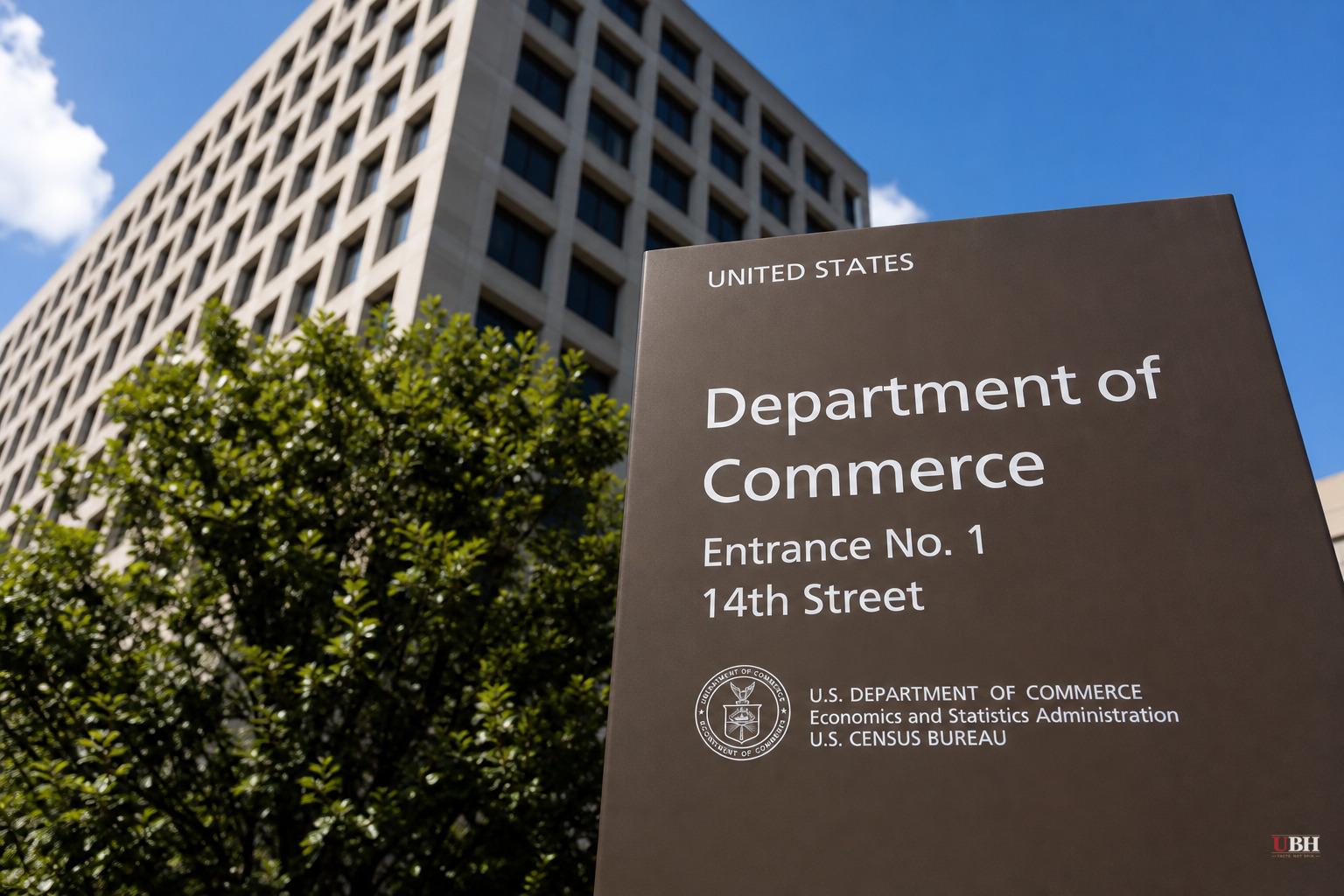
Dr. Chris Fall, director of the Commerce Department's Center for AI Standards and Innovation, has resigned. He lasted about three months in the job, according to the Daily Signal, which first reported the departure, and CNBC, which confirmed it Monday.
Commerce spokesperson Kristen Eichamer told CNBC that Dr. Arvind Raman, director of the National Institute of Standards and Technology, will serve as acting CAISI director and continue overseeing the office. Eichamer gave no reason for Fall's resignation, and none of the available sources have identified one.
Fall isn't even the first pick for this job. The Trump administration originally tapped Collin Burns, a former researcher at Anthropic and OpenAI, to run CAISI. Burns' hiring got reversed during onboarding after objections from administration officials, according to Glitchwire. Commerce then turned to Fall, who was named to the post in late April. He previously ran the Department of Energy's Office of Science under the first Trump administration and most recently worked as vice president for applied sciences at MITRE.
Fall's exit lands at an awkward moment. CAISI is the Commerce Department's main vehicle for testing and evaluating advanced AI systems and setting standards around them. It's the office that reviewed Anthropic's models last year when Commerce briefly imposed export controls over concerns about offensive cyber capabilities, controls that were lifted about two weeks later after Anthropic said CAISI researchers had tested both its prior and new safeguards and found them "extraordinarily strong."
A pattern of vacancies at the top of AI policy
CNBC notes Fall's departure adds to a broader leadership gap. Venture capitalist David Sacks stepped down as the White House's AI and crypto czar in March, and the administration has not named a replacement. That leaves two of the government's most visible AI policy positions either vacant or filled on an acting basis.
The timing matters because the administration is actively trying to implement a June executive order on AI oversight. That order asks AI developers to voluntarily submit models to the government for evaluation before full release and gave federal agencies 60 days to build an evaluation framework. Both OpenAI and Anthropic have already run into that process. OpenAI agreed in June to limit its GPT-5.6 model series to a group of "trusted partners" at the government's request. Anthropic had to briefly disable its Fable 5 and Mythos 5 models to comply with an export control directive, before regaining broader release two weeks later.
Chinese open-source models are forcing the issue
The backdrop here is Beijing-based Moonshot AI's release of Kimi K3, a 2.8 trillion parameter open-weight model that independent benchmarks reportedly placed ahead of Anthropic's Claude Fable 5 and OpenAI's GPT-5.6 Sol on the Frontend Code Arena, according to Glitchwire. Full model weights are expected by July 27.
That release has revived internal administration debate, per reporting Glitchwire attributes to Axios, over restricting Chinese AI labs. Options reportedly discussed include adding Chinese labs to the Commerce Department's Entity List, which would cut off U.S. access without a license, and a joint NSA/White House advisory on the security risks of Chinese AI models. Those efforts were previously shelved after administration officials pushed back on heavy-handed regulation, but Glitchwire reports that internal balance has shifted as national security hawks have gained influence and as U.S. companies increasingly rely on cheaper Chinese models in production. OpenRouter, which routes AI traffic for U.S. companies, reportedly sends about 30% of its workload to Chinese models. Cursor built its Composer 2 product on a Kimi K2.5 base, and DoorDash reportedly routes lower-priority requests to Kimi K2.6.
If American firms are quietly building production infrastructure on Chinese open-weight models, that raises a real dependency question. At the same time, nobody has shown that Fall's resignation is connected to that debate. No source ties his exit to the Kimi K3 release or to any specific policy dispute inside Commerce. The overlap in timing is notable, but overlap isn't causation, and the Commerce Department hasn't offered anything beyond confirming the departure and naming Raman as acting director.
CAISI was not named as one of the agencies involved in "Gold Eagle," the White House clearinghouse launched to vet AI companies' access to advanced models and coordinate cybersecurity vulnerability scanning, according to CNBC. That raises a real question about whether CAISI's role in AI oversight is shrinking just as the administration ramps up a parallel review structure. Whether Raman stays on as permanent director, whether Commerce names a fourth person to run CAISI, and whether the administration moves forward with Entity List additions or an executive order targeting Chinese open-source models are all open questions with no announced timeline.
Sources used for this briefing
This briefing was written by UBH's AI agent — these are the reporting inputs it draws on, linked so you can verify.


