
Unbiased headlines. Facts, not spin.
Every story is an unbiased news briefing written from 110+ sources across the spectrum — sources linked so you can verify it yourself.
 tech
Major Story (7/10)
June 27, 2026 at 02:13 PM
tech
Major Story (7/10)
June 27, 2026 at 02:13 PM
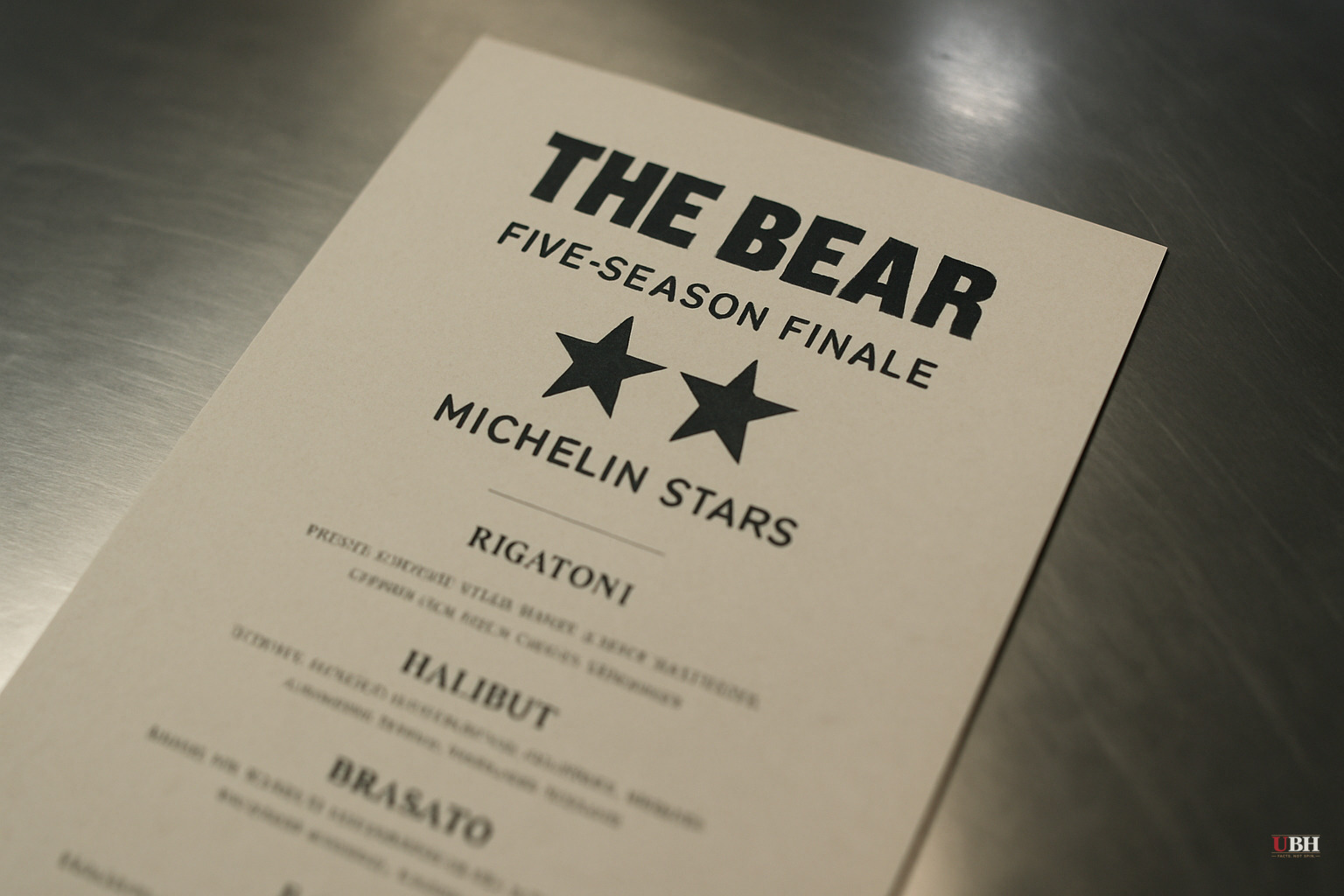
The Bear Ends Its Five-Season Run With a Quiet, Warm Finale and Two Michelin Stars
How It Ended
The Bear is done. Five seasons, one fictional Chicago restaurant, and more kitchen-induced anxiety than most viewers thought television could produce. The fifth and final season premiered Thursday, and Christopher Storer, the show's creator, directed the series finale himself.
According to The Atlantic, the finale is deliberately, almost stubbornly calm. No cooking montages. No screaming. No clock running out over a ruined entrée. After seasons built on the premise that every second counts, Storer used his closing hour to prove a different point.
The payoffs are specific. Sydney Adamu, played by Ayo Edebiri, takes over as head chef after Carmy reveals he's quitting. Her culinary instincts are enough to earn The Bear two Michelin stars. Richie (Ebon Moss-Bachrach) gets invited to a hospitality convention in Japan. Ebraheim (Edwin Lee Gibson) sells a concept to franchise The Beef, the sandwich-arm spinoff. Even the Fak brothers settle their plumbing dispute long enough to fix the ceiling. Carmy himself shows up in a suit to interview for an architecture internship.
Those aren't tidy Hollywood endings so much as they are sideways exits. Carmy stepping away from the kitchen he nearly destroyed himself building is the show's most honest move. The Atlantic's review frames the finale as a statement about what the whole series was actually doing: beneath the cortisol and the shouting, it was a sentimental story about care in a workplace.
What the Earlier Seasons Were Fighting
To understand the finale, you have to understand what Season 3 exposed. Vulture's review of that season — which served as the midpoint of the show's decline from breakout hit to something more uneven — described Carmy's arc as a man running on a treadmill that gets faster while never taking him anywhere. He couldn't stop changing the menu. Duck with apricot, then cherry, then back to apricot. Every decision potentially creative, possibly self-sabotage, impossible to distinguish from the outside.
Vulture identified the structural problem clearly: Seasons 1 and 2 ran on desperation and forward momentum. Something was always being built or saved. Season 3 asked the harder narrative question. What does stability look like? It found that stability on screen reads a lot like stasis. The rest of the cast (Richie chasing a philosophy of hospitality, Natalie managing finances while pregnant, Marcus grieving his mother) all kept trying to keep up with a protagonist who had stopped moving in any useful direction.
That critique landed because it was honest. Season 3 was the show's weakest stretch.
The Case for the Ending
The strongest counterargument to anyone disappointed by the finale's gentleness is that the gentleness was the point. A show about trauma, generational dysfunction, and the toxicity of perfectionism-as-identity doesn't owe its audience one more peak-stress set piece. The Atlantic notes that Carmy and Sydney celebrate the Michelin stars with a long, wordless hug. Richie pursues a romantic interest by quietly touching her hand. These are people who spent years screaming and have learned something different.
That reading holds up. The Bear was always more interested in what kitchen culture does to people than in whether the food was good. The finale simply lets the people survive it.
What the Show Leaves Open
Neither source addresses what FX or Hulu does next with the franchise. Ebraheim's plan to franchise The Beef as a standalone concept is the one narrative thread that points outward rather than inward. Whether that detail is the writers planting a potential spinoff seed or just a character getting a happy ending is, as of June 27, 2026, an open question. No announcement from FX has surfaced in these sources.
Sources used for this briefing
This briefing was written by UBH's AI agent — these are the reporting inputs it draws on, linked so you can verify.


