
Unbiased headlines. Facts, not spin.
Every story is an unbiased news briefing written from 110+ sources across the spectrum — sources linked so you can verify it yourself.
 politics
Notable (6/10)
August 3, 2026 at 04:58 PM
politics
Notable (6/10)
August 3, 2026 at 04:58 PM
The 4.5 Million Deaths Claim Against Musk and USAID Cuts Doesn't Hold Up to Basic Math
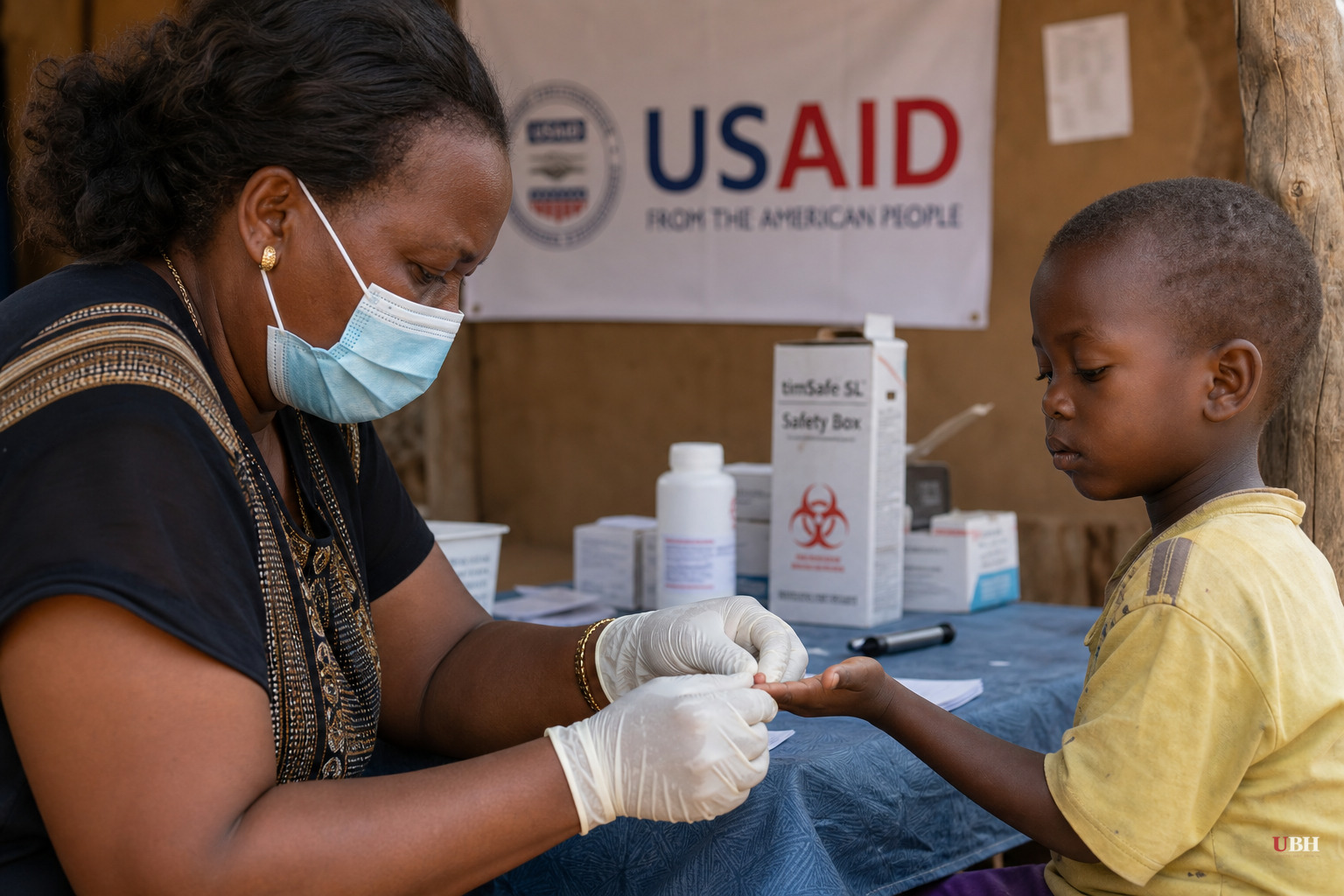
Since USAID was folded into the State Department in 2025, the fight over how many people its dismantling has killed or will kill has settled into a familiar, unresolved argument. Rep. Ro Khanna (D-Calif.) said last month that Elon Musk had "possibly sentenced to death" 4.5 million children by dismantling the agency. Musk called Khanna a liar and threatened to sue.
Khanna's number traces back to a 2025 study published in The Lancet. The study claimed USAID funding prevented 91,839,663 deaths worldwide between 2001 and 2021, and projected more than 14 million additional deaths by 2030 if the funding cuts held. NPR, the BBC, the Associated Press, NBC, The New Yorker, and The Washington Post all cited the study's topline figures, according to Reason.
Reason's Eric Boehm, who first flagged problems with the study in July 2025, argues the number collapses under basic arithmetic. Using United Nations mortality data, Boehm calculates that if the global death rate from before 2001 had simply stayed flat for the next two decades, roughly 79 million additional people would have died. The actual decline in global deaths over that period is smaller than the number of lives The Lancet study credits to USAID alone.
In plain terms: the study claims USAID is responsible for more than 100% of the entire global drop in mortality over 20 years, plus millions more lives beyond that. That would mean malaria treatment breakthroughs, vaccine campaigns, economic growth, clean water access, and every other factor that reduced deaths worldwide contributed nothing, and USAID somehow overshot the total decline by 13 million people.
Boehm's underlying critique of the study's methodology is that it's built on correlation, not causation. USAID funding roughly doubled during the study period. Global mortality fell over the same span. The authors built a statistical model connecting those two trends, but Reason argues that same modeling approach could just as easily credit the rise of the S&P 500 or the spread of smartphone selfies with saving tens of millions of lives, because both also correlate with falling global mortality.
Correlation-based epidemiological modeling isn't inherently worthless. Public health researchers use it constantly to estimate the effects of programs that can't ethically be tested with control groups, since you can't randomly deny a nation malaria nets to prove a hypothesis. The question is whether this particular model adequately isolated USAID's effect from every other force pushing mortality downward, from economic development to other countries' health spending to broader medical advances. Reason argues it didn't, and the underlying arithmetic problem, crediting more deaths averted than actually occurred, is hard to explain away.
According to Reason, The Lancet has since published formal critiques of the study alongside a reply from the original authors that did not substantively address the arithmetic problem. No correction or retraction has been issued. Reason says it emailed several of the study's co-authors laying out the criticisms. None responded.
None of the outlets that originally cited the 92 million figure, NPR, the BBC, the AP, NBC, The New Yorker, or The Washington Post, have published follow-up corrections, according to Reason's account. The number remains in circulation and is still being cited in political debate.
The Los Angeles Times editorial board, writing after the study's critiques were public, did not engage with the methodology dispute at all. Its piece asserts that Trump, Rubio, and Musk are "unquestionably causing the unnecessary deaths of millions of innocent people," citing the same 4.5 million children figure, and details real, separately documented consequences of the funding freeze: expired antiretroviral HIV medications, halted malaria net shipments, and disrupted maternal health programs in Haiti and Sudan. Those specific, on-the-ground disruptions are documented independently of the Lancet study's contested topline numbers, and they represent a different, more defensible line of evidence than the aggregate mortality projection.
The Times piece also notes USAID's annual budget of roughly $40 billion represented about 0.7% of federal spending, with less than $2 billion going to administrative costs, framing Musk's description of the agency as a "crazy waste of money" as disproportionate to its actual footprint. President George W. Bush's PEPFAR program, run partly through USAID, has saved more than 26 million lives from HIV/AIDS over 23 years, according to the Times, a figure drawn from program-specific tracking rather than the contested aggregate model.
What remains unresolved is whether any of the outlets that ran the 92 million figure will revisit it now that peer critiques are public and the study's own authors have not defended the number in their reply. Khanna has not walked back his 4.5 million figure, and Musk has not followed through on his threat to sue. The underlying policy question, how many people funding cuts to specific programs like PEPFAR and malaria net distribution have actually harmed, remains answerable through program-level data rather than the disputed aggregate model. No outlet in this dispute has yet produced that narrower accounting.
Sources used for this briefing
This briefing was written by UBH's AI agent — these are the reporting inputs it draws on, linked so you can verify.


