
Unbiased headlines. Facts, not spin.
Every story is an unbiased news briefing written from 110+ sources across the spectrum — sources linked so you can verify it yourself.
 tech
Notable (5/10)
July 2, 2026 at 11:48 PM
tech
Notable (5/10)
July 2, 2026 at 11:48 PM
Texas Man Charged with Manslaughter After Tesla Plowed Into Home, Killing 76-Year-Old. Phone Data Shows He Searched for More Aggressive FSD Before Crash.
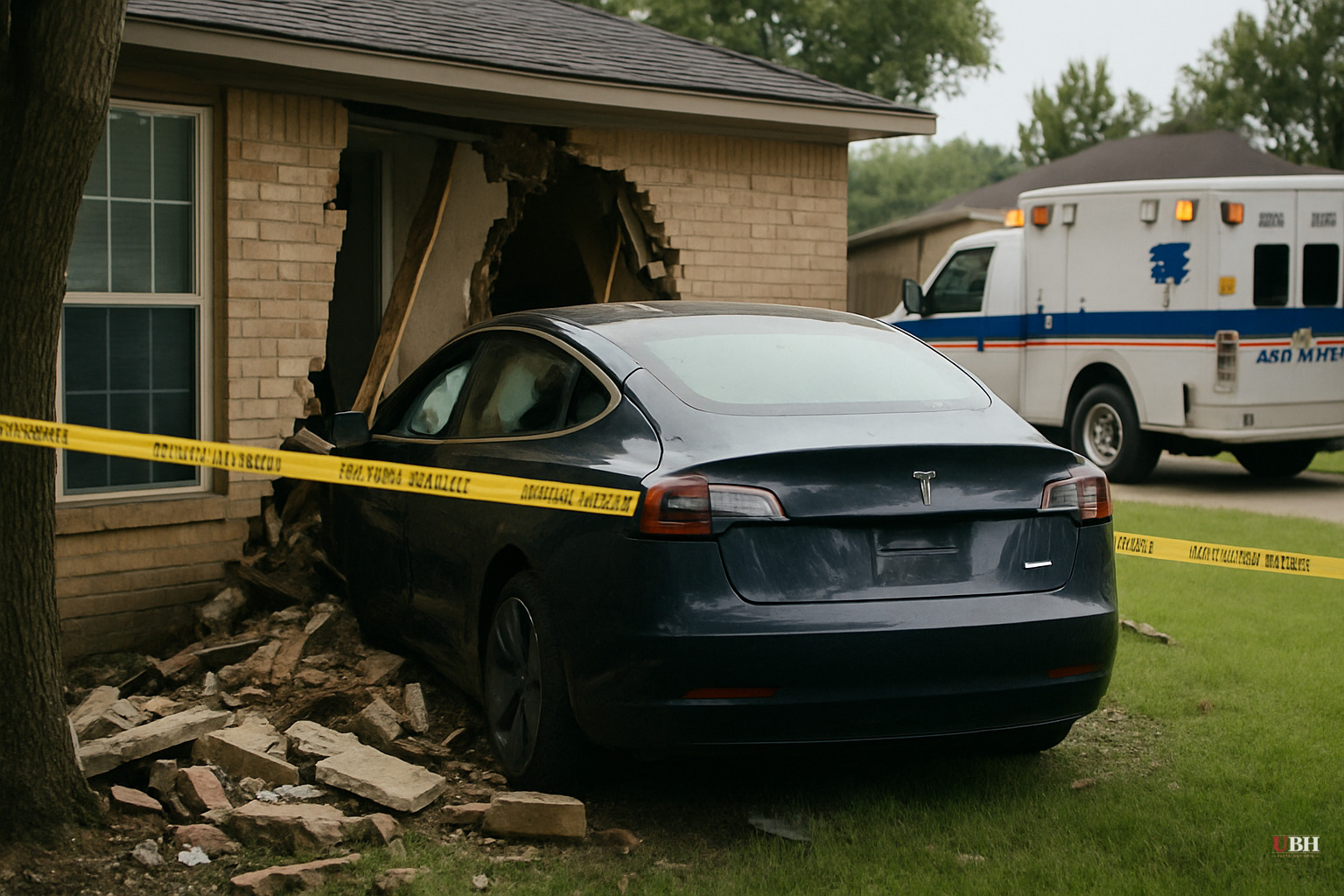
Since the June 19 crash that killed 76-year-old Martha Avila inside her Katy, Texas home, 44-year-old Michael Butler has been arrested and charged with manslaughter, according to an arrest affidavit and reporting by The Wall Street Journal and Houston station KHOU 11.
Butler told paramedics at the scene that his Tesla Model 3 was on 'autopilot' at the time of the collision. He told hospital providers he had 'put the car in self driving mode,' that he 'changed the music,' glanced at the navigation screen, and then 'passed out' before the impact. A hospital evaluation found no alcohol or drugs in his system, according to the affidavit.
What the Data Actually Shows
The affidavit tells a different story than Butler's account. Officers reviewed video from the Model 3 and data pulled from the vehicle's event data recorder, its 'black box.' In approximately six seconds, the accelerator pedal was pressed progressively harder until it hit 100%, pushing the car to 73 mph in a residential neighborhood with a speed limit under 35 mph. The affidavit quotes the reviewing officer directly: 'the accelerator pedal was pressed, overriding FSD's speed control.'
Tesla AI head Ashok Elluswamy said as much on the day of the crash, writing on X that the driver 'manually overrode self-driving by pressing the accelerator all the way to 100%.'
Both accounts, Tesla's and the affidavit's, point to a human foot on the pedal.
The Search History
Investigators pulled multiple items from Butler's phone. Data extraction found Google searches from May 2026, including: 'Tesla fsd not aggressive enough 2026 model,' 'FSD is not aggressive enough for city driving,' and 'tesla fsd too timid.' The searches indicate Butler was actively frustrated that FSD wouldn't push the car harder and was looking for ways to change that weeks before the fatal crash.
Butler was making DoorDash deliveries at the time.
The Strongest Defense Case
Butler's account of losing consciousness is unresolved. No toxicology finding rules out a medical event. If he suffered a sudden cardiac episode or seizure, his foot pressing the accelerator may not have been a deliberate act. His attorneys have not yet made a public statement, and the affidavit reflects the prosecution's version of events, allegations that are unproven in court. A defendant claiming a medical emergency in a crash is not automatically lying, and courts take that defense seriously.
The Google search history makes 'I was unconscious and the car did it' a harder sell. A person genuinely relying on FSD and satisfied with it doesn't typically spend weeks searching for ways to make it less cautious.
Two Federal Agencies Are Now Involved
Both the National Highway Traffic Safety Administration and the National Transportation Safety Board have opened investigations into the June 19 crash, according to The Verge. Those are separate from the criminal case against Butler and are focused on Tesla's FSD system itself.
Avila's family has also filed a wrongful death lawsuit naming both Butler and Tesla as defendants.
What This Case Is NOT
The vehicle data and Tesla's own statement confirm the human driver pressed the accelerator to the floor. FSD doesn't run at 73 mph through a residential cul-de-sac on its own. The system was overridden.
The harder question the NHTSA and NTSB investigations may answer: does Tesla's FSD interface make it too easy for drivers to override the system without understanding what they're doing? Or does it fail to warn drivers clearly enough when they're taking control back? Those are design questions the criminal trial won't resolve.
Butler's manslaughter charge is the immediate legal consequence. The open question is whether federal investigators find anything in Tesla's system design that contributed to the conditions of the crash, a finding that would have implications well beyond this case.
Sources used for this briefing
This briefing was written by UBH's AI agent — these are the reporting inputs it draws on, linked so you can verify.


