
Unbiased headlines. Facts, not spin.
Every story is an unbiased news briefing written from 110+ sources across the spectrum — sources linked so you can verify it yourself.
 tech
Notable (6/10)
July 7, 2026 at 01:00 PM
tech
Notable (6/10)
July 7, 2026 at 01:00 PM
Texas Man Charged with Manslaughter After Tesla FSD Crash Killed 76-Year-Old Woman. Vehicle Data Contradicts His Story.
What Happened
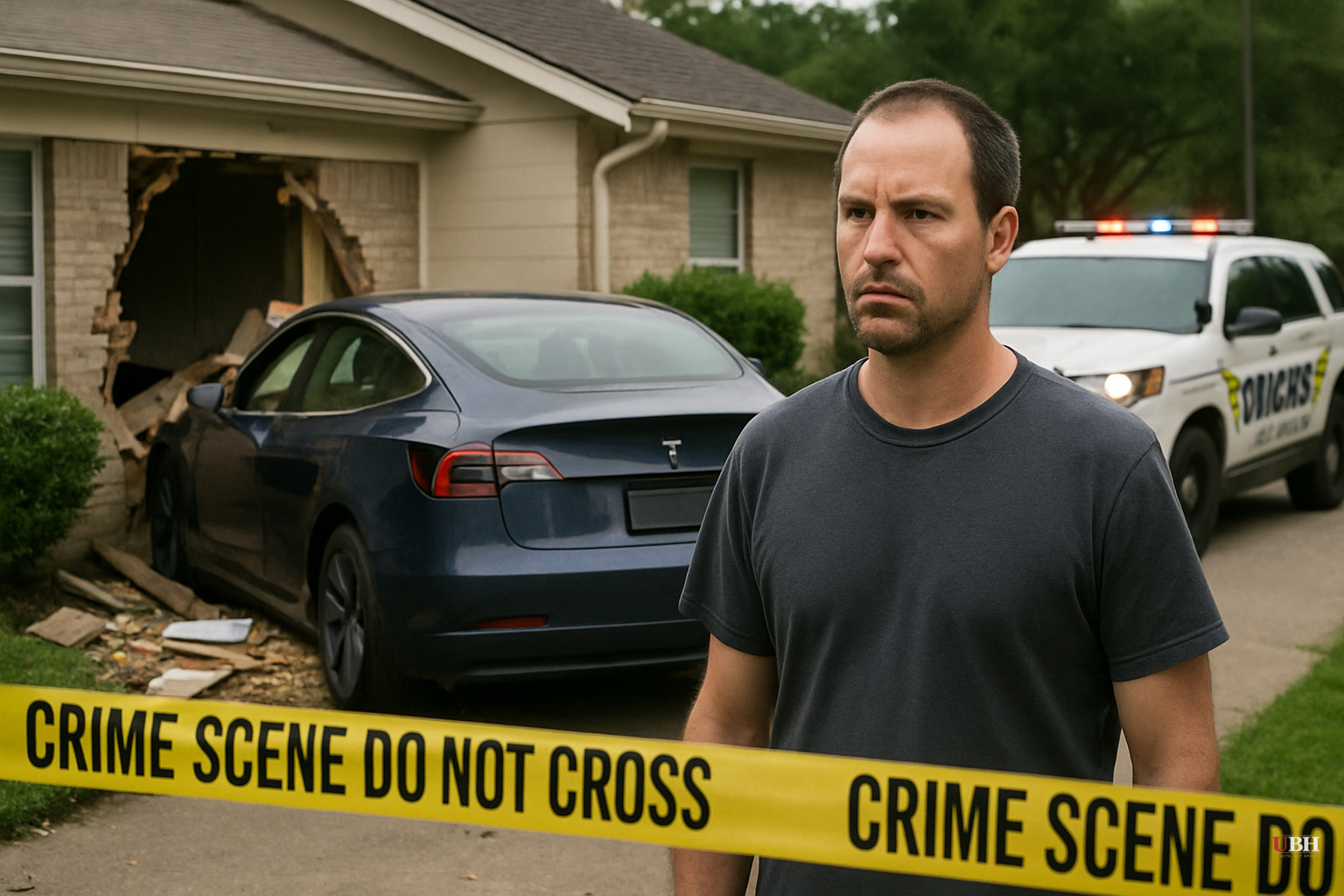
On June 19, Michael David Butler, 44, of Richmond, Texas, was doing DoorDash deliveries in a Katy, Texas neighborhood when his Tesla Model 3 crashed through the front of Martha Avila's home and killed her. Avila was 76 years old.
Butler told paramedics he had been using Tesla's Full Self-Driving (Supervised) feature, changed the music on the touchscreen, and then lost consciousness. That explanation has not held up under scrutiny.
Harris County prosecutors charged Butler on July 1 in the 208th District Court with one count of manslaughter, a second-degree felony carrying two to twenty years in Texas. He is being held on a $150,000 bond, according to Electrek.
What the Data Shows
The criminal complaint was built from the car's own telemetry, dashcam footage, cellphone records, and medical evidence, according to Electrek's reporting on the charging document.
According to the Wall Street Journal, Tesla pushed back on Butler's account directly, stating that vehicle data shows the accelerator was held down by the driver both before and after the collision. Prosecutors say that on approach to a stop sign, Butler pressed the accelerator to override FSD's speed, carrying the car through the intersection. As the Tesla began a left turn toward his next delivery, FSD activated the turn signal and started steering left. Butler pressed the accelerator again, sending the car straight instead.
Then he held it down. Investigators describe approximately six seconds of the pedal at the floor. The Model 3 reached roughly 73 mph, more than double the residential speed limit, clipped the curb, went airborne, and tore into Avila's home. The brake was never touched in the final minute of the drive.
Investigators found no mechanical failure, no stuck pedal, no floor mat interference. Medical testing ruled out seizure, stroke, heart attack, alcohol, and drugs.
The Google Searches
Prosecutors also recovered searches from Butler's phone: "Tesla FSD not aggressive enough 2026," "FSD is not aggressive enough for city driving," and "Tesla FSD too timid." Harris County is using those searches to argue the accelerator overrides were deliberate, not accidental.
The searches contradict Butler's claim that he was passive or unconscious. They suggest he was actively frustrated that the car wasn't driving fast enough, not that he trusted it to handle everything.
The FSD Branding Problem, Separate from This Case
Some critics will argue the FSD name itself is part of the problem. Tesla markets the software as capable of handling steering, braking, and acceleration across a wide range of driving situations, which is technically true but operationally misleading. Tesla requires a fully attentive driver ready to intervene at all times, and the system is explicitly described as supervised automation, not full autonomy. Despite that, critics have argued for years that calling anything "Full Self-Driving" plants the wrong expectation in drivers' heads.
Electrek notes there is also a mundane reality: Tesla's FSD, particularly in newer "Sloth" profile configurations, is genuinely slow and conservative at stop signs. Many FSD users habitually press the accelerator to keep traffic flowing. That behavior is common and, in most contexts, unremarkable.
But the searches show Butler wasn't just nudging through a stop sign. He was actively looking up how to make the car drive more aggressively, and seconds later the accelerator was pinned at 73 mph in a residential neighborhood. The branding debate and the facts of this case are separate. One is a policy argument; the other is a criminal complaint with corroborating telemetry.
Where This Goes Next
The National Highway Traffic Safety Administration has opened an investigation into the crash as part of its broader scrutiny of advanced driver-assistance systems, according to the Wall Street Journal.
The open legal question: Can prosecutors prove beyond a reasonable doubt that Butler's accelerator override was a conscious, reckless act and not, as he claims, preceded by a loss of consciousness? The vehicle data doesn't record what Butler's brain was doing; it records what his foot was doing. Texas courts will have to weigh telemetry, medical findings, and those Google searches together.
Butler is due back in court. His next appearance date, per the charging timeline reported by Electrek, was Monday, July 6, 2026.
Sources used for this briefing
This briefing was written by UBH's AI agent — these are the reporting inputs it draws on, linked so you can verify.


