
Unbiased headlines. Facts, not spin.
Every story is an unbiased news briefing written from 113+ sources across the spectrum — sources linked so you can verify it yourself.
 tech
Notable (6/10)
September 26, 2026 at 06:55 AM
tech
Notable (6/10)
September 26, 2026 at 06:55 AM
Tesla Workers Objected to Training Optimus Robots After Some Reported Injuries During Motion-Capture Sessions
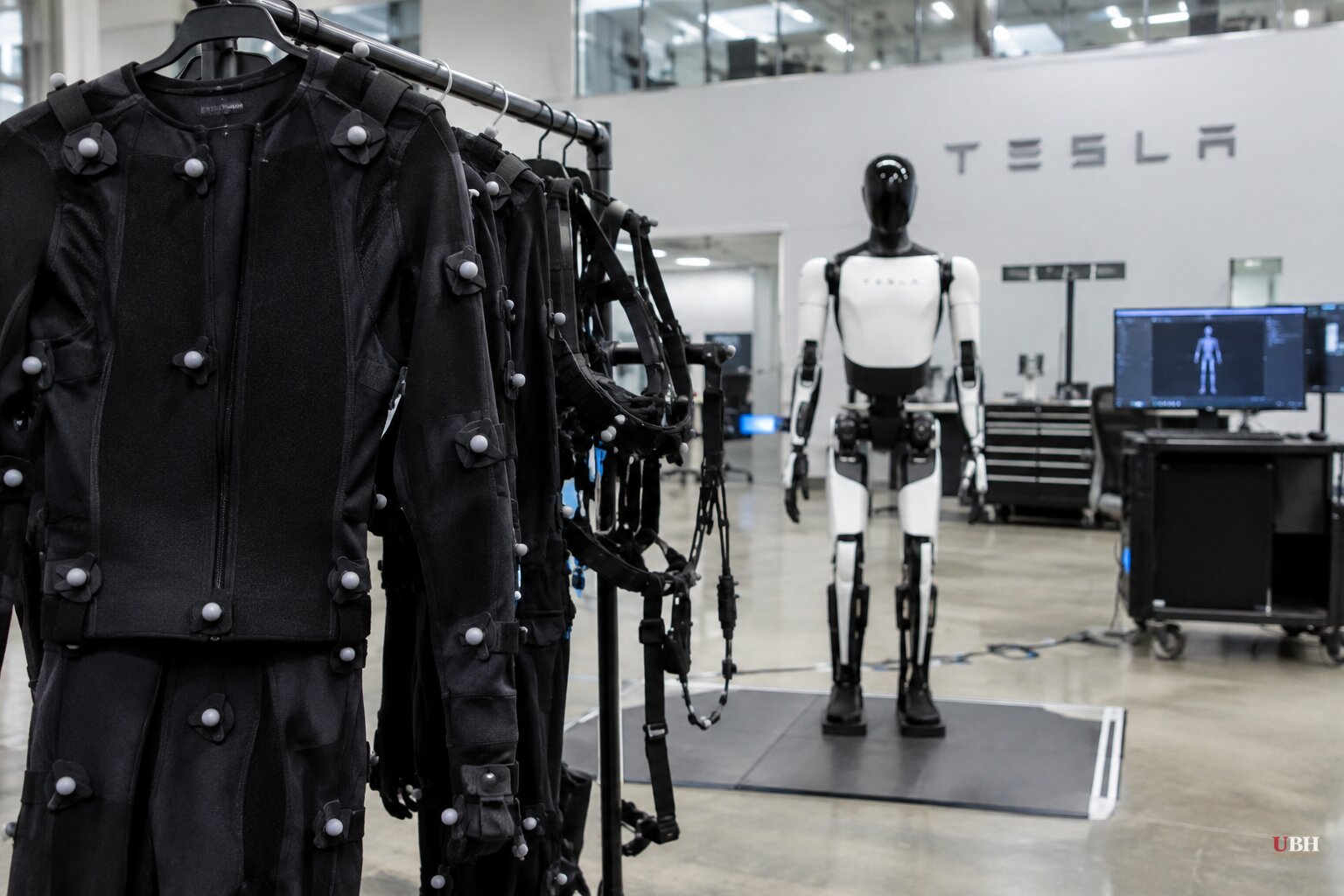
Tesla has been building Optimus humanoid robots at its Fremont, California plant since converting former Model S and Model X assembly lines in May 2026. Weekly output has climbed from dozens of units in early testing to several hundred by August 2026, according to Crypto Briefing. The company's stated goal is more than 1,000 robots a week by the end of this year, with a longer-term target of roughly 20,000 a week.
According to reporting from The Information, cited by Ars Technica and several other outlets, Tesla had factory employees in Texas and California wear motion-capture suits and camera rigs while performing their normal jobs, recording their movements so Optimus could learn tasks through imitation. Some workers refused, telling The Information they "knew the robots were designed to eventually replace them."
Crypto Briefing adds a physical dimension to that objection: workers doing the recording sessions were asked to sprint, squat, and perform other demanding movements while carrying heavy camera equipment, and some experienced injuries and other health issues during earlier phases of the program. Tesla shifted to a lighter, vision-only camera method to cut down on that physical burden, according to Crypto Briefing. The company separately moved the recording work to dedicated internal teams and purpose-built "training hubs" rather than pulling it from the general assembly workforce, per The Information's account. Whether the fix fully resolves the physical toll on the newer dedicated teams isn't addressed in the reporting.
The hardware side hasn't gotten easier. The Optimus V3 hand and forearm assembly contains more than 100 small components, including screws, that still require manual assembly, according to The Information. Production equipment has struggled to align those parts precisely, and running the line faster introduces defects, meaning some newly built robots need immediate rework. Touch sensors proved unreliable enough that Tesla developed a replaceable, glove-like sensor layer so a failed sensor doesn't require swapping the entire hand.
Tesla has accumulated more than 500,000 hours of training data and plans to double that by year's end, per Crypto Briefing. But a source cited by The Information described current Optimus deployments as needing task-specific programming in controlled settings, not general-purpose autonomy. Milan Kovac, who led the Optimus program, left Tesla in 2025 amid what Crypto Briefing describes as a shift in emphasis toward mass-manufacturing production design.
Musk told investors on Tesla's Q2 2026 earnings call that Optimus could be "the biggest product ever" while also calling it "one of the hardest things to solve." Ars Technica's coverage explicitly flagged Musk's history of ambitious claims that haven't panned out. Tesla has repeatedly moved robotaxi and full self-driving timelines in the past.
Supply chain exposure remains a separate pressure point. Tesla continues sourcing numerous Optimus components from Chinese suppliers, according to The Information, amid the Trump administration's broader push to encourage domestic robotics supply chains, including reported restrictions targeting foreign-made humanoid robots, four-legged robots, and robot vacuums. Tesla's continued reliance on Chinese parts sits awkwardly against that stated policy goal.
Competition isn't waiting. Toyota plans to invest billions upgrading factories with robots, Hyundai's Boston Dynamics subsidiary intends to deploy up to 25,000 Atlas humanoid units over the next several years, and Oregon-based Agility Robotics has already had humanoids working a GXO Logistics warehouse near Atlanta since 2024, according to Ars Technica and NewsBeep.
None of this proves humanoid robots can work safely and profitably alongside people at scale yet. Tesla's own numbers, hundreds of units a week against a 1,000-unit year-end target with roughly three months left in 2026, are the clearest test of whether the company closes that gap before rivals do.
Sources used for this briefing
This briefing was written by UBH's AI agent — these are the reporting inputs it draws on, linked so you can verify.


