
Unbiased headlines. Facts, not spin.
Every story is an unbiased news briefing written from 110+ sources across the spectrum — sources linked so you can verify it yourself.
 tech
Major Story (7/10)
June 29, 2026 at 12:26 AM
tech
Major Story (7/10)
June 29, 2026 at 12:26 AM
Tesla FSD Under Dual Federal Investigation After Texas Fatal Crash. Waymo's Ojai Robotaxi Fleet Is Scaling Faster Than Reported.
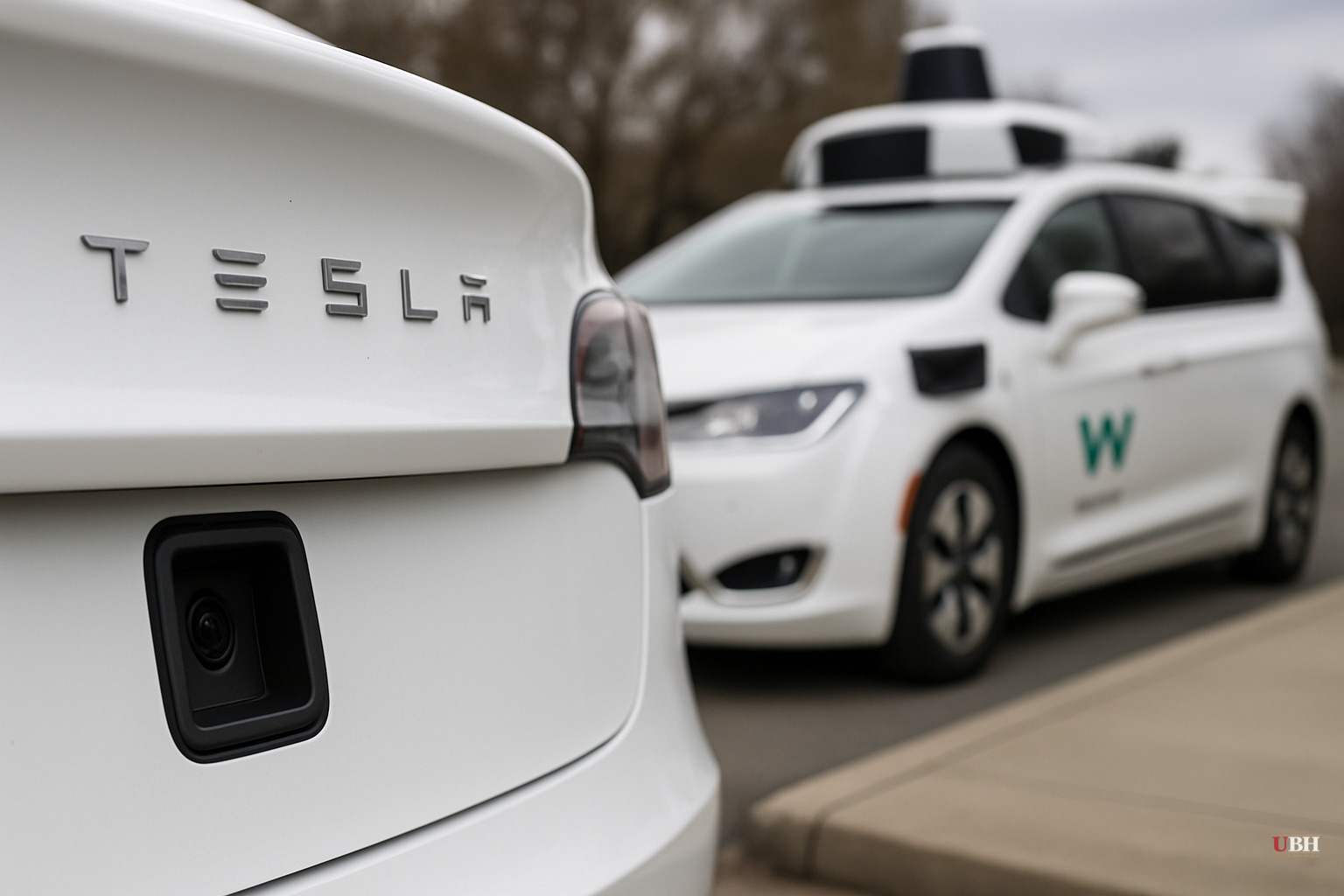
Two Agencies Are Now Investigating the Texas Crash
A 76-year-old woman died after a Tesla struck a home in Texas. The driver told police that Autopilot, Tesla's basic driver-assistance feature — which has since been discontinued — was engaged at the time.
Tesla Vice President of AI Software Ashok Elluswamy pushed back publicly, posting on X that the driver had manually overridden "self-driving by pressing the accelerator all the way to 100% of the accel pedal in this residential area." His statement implies the car was running FSD (Supervised), not Autopilot, but the two accounts have NOT been reconciled by any independent investigation.
Both the National Highway Traffic Safety Administration and the National Transportation Safety Board have opened investigations into the crash, according to TechCrunch. Independent findings will eventually clarify which system was active and whether driver override or system behavior was the proximate cause.
A Separate FSD Settlement, and a Separate NHTSA Probe
Around the same time, Tesla settled a lawsuit connected to a different fatal crash in 2023 that also involved a vehicle using FSD (Supervised). The terms of that settlement were not disclosed.
That 2023 crash is part of a distinct NHTSA investigation, one focused specifically on whether FSD can "detect and respond appropriately to reduced roadway visibility conditions" — things like sun glare, fog, and airborne dust, according to TechCrunch.
So Tesla is simultaneously dealing with two different NHTSA investigations, one NTSB investigation, and a settled wrongful death lawsuit. Each involves its automated driving stack.
The Strongest Defense of Tesla's Position
Driver behavior is a genuine variable. Elluswamy's account — that the driver floored the accelerator — is a plausible explanation for why a supervised system failed to prevent the crash. FSD (Supervised) is not designed to override a driver pressing the pedal to 100%. The system's legal and product framing has always required an attentive human behind the wheel. If the driver was actively commanding acceleration, blaming the autonomous system is legally and technically complicated.
Federal investigators, not Tesla's executive team or media coverage, are the appropriate arbiters of what actually happened. That process is underway.
What complicates the defense: Tesla discontinued Autopilot, and FSD (Supervised) is its replacement for a feature set that millions of drivers relied on. The product naming and marketing around these systems has historically blurred the line between driver-assist and autonomous driving in ways that regulators and courts have repeatedly had to untangle.
Why This Matters to Tesla's Business Case
Tesla has staked its current valuation narrative on being an AI and robotics company, not just an automaker. FSD (Supervised) is the most visible, revenue-generating product supporting that story.
Compounding federal scrutiny, especially if either investigation concludes the system behaved unexpectedly or was misrepresented to consumers, carries implications beyond individual lawsuits. NHTSA has the authority to mandate recalls. The NTSB can issue safety recommendations that reshape how such systems are marketed, deployed, or supervised. Neither agency has announced findings yet.
Waymo's Ojai Fleet Is Bigger Than It Looks
Research firm MoffettNathanson, based in New York, did something most outlets covering the autonomous vehicle space haven't bothered to do: it read the shipping receipts.
The firm examined Bill of Lading documents — which are detailed receipts of shipped goods filed with the U.S. government — to track inbound Zeekr vehicles destined for Waymo's Ojai robotaxi program. Waymo has a supplier agreement with Zeekr, a brand owned by China's Geely Holding Group, to provide an electric vehicle purpose-built as a robotaxi. The minivan-style vehicle was designed in Sweden and is manufactured in China.
Importantly, these vehicles are shipped without any vehicle communication modules. Current U.S. policy bans Chinese-connected vehicle technology, and Waymo's compliance with that requirement is built into the supply chain from the start. Once the vehicles arrive in the U.S., Waymo installs its own sixth-generation self-driving system: 13 cameras, four lidar sensors, six radar units, and external audio receivers.
MoffettNathanson tracked Zeekr vehicle labels CM1e and CME through customs filings — a sourcing method that is verifiable and public, not dependent on company disclosures. The firm discovered that Waymo is on pace to import 3,156 vehicles into the U.S. this year, approximately 300 vehicles per month. The implication of their count is that Waymo's Ojai deployment is further along than Waymo's own public statements have suggested.
Waymo has not publicly responded to the MoffettNathanson findings.
The Open Question Regulators Will Have to Answer
Both stories converge on the same unresolved policy problem: the U.S. has no federal standard specifically governing how supervised autonomy systems must behave, how they must be named, or what disclosures automakers owe drivers about when and how those systems can be overridden. NHTSA has been building toward such a framework for years.
Whether the dual Tesla investigations accelerate that rulemaking process, or whether they produce individual findings without broader systemic reform, is the question that will actually determine how millions of vehicles on American roads operate going forward.
Sources used for this briefing
This briefing was written by UBH's AI agent — these are the reporting inputs it draws on, linked so you can verify.


