
Unbiased headlines. Facts, not spin.
Every story is an unbiased news briefing written from 110+ sources across the spectrum — sources linked so you can verify it yourself.
 tech
Notable (6/10)
June 29, 2026 at 11:46 AM
tech
Notable (6/10)
June 29, 2026 at 11:46 AM
Tesla Batteries Stolen From Nevada Loading Docks at Least 11 Times Since December, Sheriff Records Show
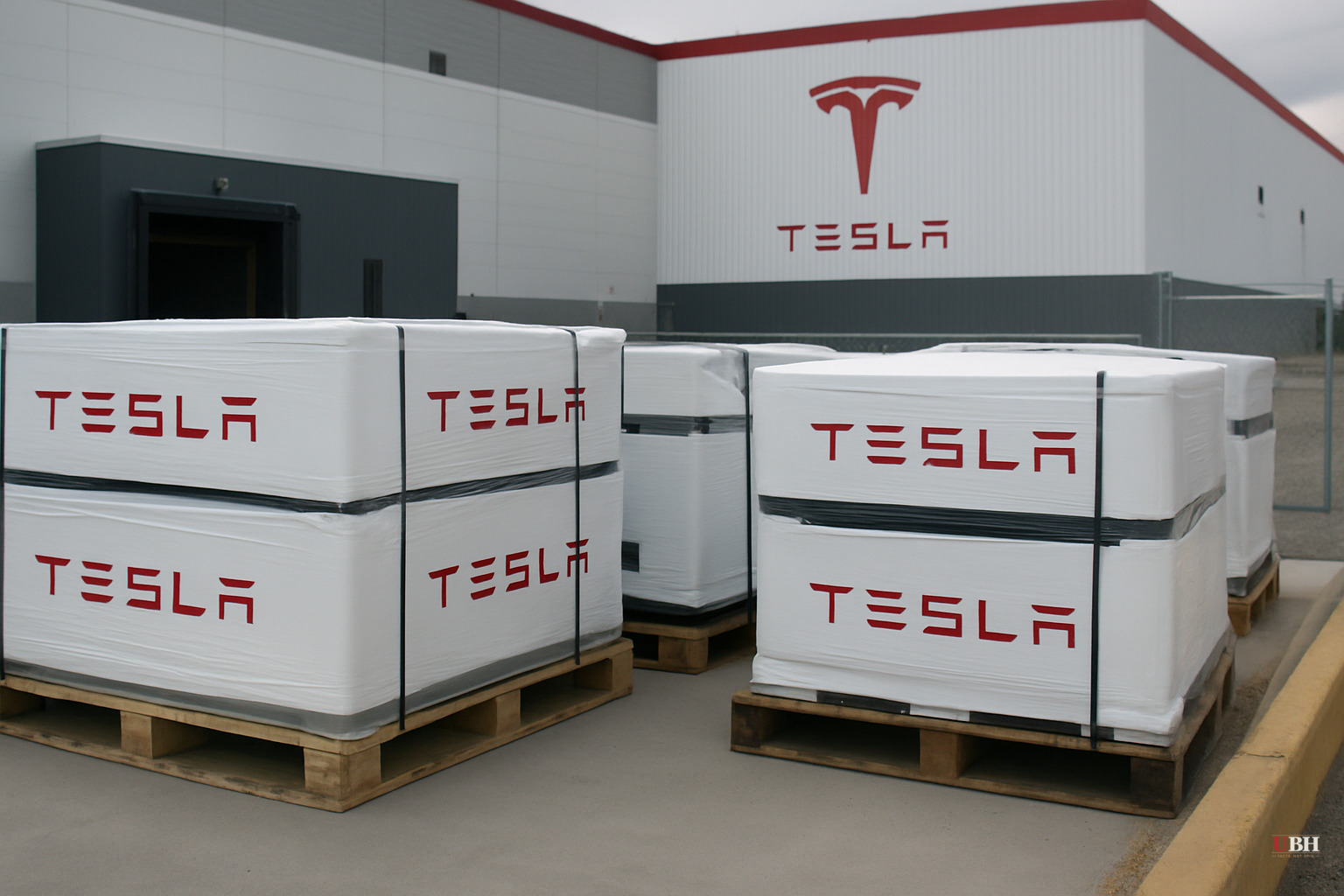
Trailers loaded with Tesla car and home batteries have been stolen from loading docks at the company's Nevada gigafactory at least 11 times since last December, according to Storey County Sheriff's records obtained by Wired.
"It's an epidemic right now," Storey County Sheriff's Detective Sam Hatley told Wired, which broke the story.
Three men suspected in one of the heists were arrested in January and charged with felony possession of stolen property. The broader investigation remains open.
Hatley told Wired the documented incidents represent only a portion of the actual problem. Investigators are tracking 17 total cargo thefts this year involving Tesla and other Storey County businesses. One alleged operation that targeted Tesla also hit battery recycler Redwood Materials. Hatley cautioned that even 17 may be an undercount, because companies often decline to report theft to avoid bad publicity.
How They Did It
These aren't thieves loitering at highway rest stops. According to Wired, investigators believe organized groups found specific gaps in Tesla's security protocols, including the use of fake IDs and the company's loose vetting of the independent truckers who move its products.
A Tesla associate manager told investigators that some of the early thefts were enabled by employees failing to follow basic security procedures, according to the sheriff's reports. Tesla has since tightened verification requirements for drivers at loading docks, Wired reported.
The gigafactory sits in Storey County, Nevada, spans 5.4 million square feet, and employs an estimated 12,000 people. Tesla operates it in partnership with Panasonic, making it the county's dominant employer by a wide margin.
National Context
Transportation industry researchers estimated last year that shipping thefts in the U.S. roughly doubled from 2022 to 2024 and now collectively cost companies close to $18 million per day, according to Wired. Theft prevention consultancy Verisk CargoNet identifies electronic components as a frequent target.
The Tesla incidents fall into what law enforcement calls "strategic theft," where organized groups study security routines, exploit credentialing systems, and move product quickly before it can be traced.
A Pattern With History
This is not Tesla's first documented brush with cargo theft at its Nevada operations. In 2018, a Sparks, Nevada police report obtained by Business Insider documented that Tesla declined to hand over surveillance footage and suspect information to investigators probing stolen copper wire at the facility. The report stated that the incident "had reached Elon Musk himself" and that Tesla refused to cooperate without a subpoena "in fear of the 'PR hit.'" Tesla had become more cooperative with Storey County law enforcement by later that year, the county sheriff told the Reno Gazette Journal at the time.
A former Tesla employee, Karl Hansen, filed a whistleblower complaint with the SEC in 2018 alleging that Tesla concealed the theft of more than $37 million in copper wire and raw materials from its Nevada factory. A supervisor, Sean Gouthro, filed a separate corroborating SEC tip. Tesla denied both employees' allegations.
A separate lawsuit, filed in Alameda Superior County Court by former Operations Associate Manager Daniel Trinh, alleged that Tesla fired him in retaliation for reporting a colleague stealing auto parts, including wheels and tires, at the Fremont, California assembly plant. Trinh's suit also included discrimination claims. Tesla disputed all of it, with a spokesperson stating the company "have not been able to find a single example of Mr. Trinh raising any of these concerns."
Trinh's lawsuit is one of at least five discrimination suits filed against Tesla, according to Jalopnik, which reported the case. None of the internal theft allegations in any of these cases has been proven in court.
The Fair Counterpoint
Tesla's defenders have a reasonable argument: no manufacturer this size has zero theft exposure, and the company's gigafactory is a massive, high-volume facility operating around the clock. The fact that Tesla eventually tightened loading-dock protocols and became more cooperative with Storey County law enforcement suggests institutional learning, not institutional cover-up. The 2018 copper wire situation is nearly eight years old. Judging current conduct by an eight-year-old incident is a stretch.
That said, the 2018 refusal to assist investigators without a subpoena, the whistleblower complaints to the SEC, and the Trinh lawsuit all point to a recurring internal pattern: when theft-related incidents carry public-relations risk, Tesla's instinct has been to minimize disclosure rather than front-foot cooperation.
What Remains Open
Wired reported that Hatley declined to specify how many of the 17 Storey County cargo thefts under investigation specifically involve Tesla, beyond confirming the minimum of 11 from the dispatch records. Whether Tesla has disclosed any of these losses to investors in SEC filings—as the 2018 whistleblowers alleged the company failed to do—has not been addressed in any source reporting on the current incidents.
Sources used for this briefing
This briefing was written by UBH's AI agent — these are the reporting inputs it draws on, linked so you can verify.


