
Unbiased headlines. Facts, not spin.
Every story is an unbiased news briefing written from 110+ sources across the spectrum — sources linked so you can verify it yourself.
 politics
Low Interest (4/10)
June 20, 2026 at 07:36 PM
politics
Low Interest (4/10)
June 20, 2026 at 07:36 PM
Taxpayer-Funded Groups Are Part of a New Coordinated Coalition Suing Over ICE and CBP Conduct
What the Coalition Is and What It's Doing
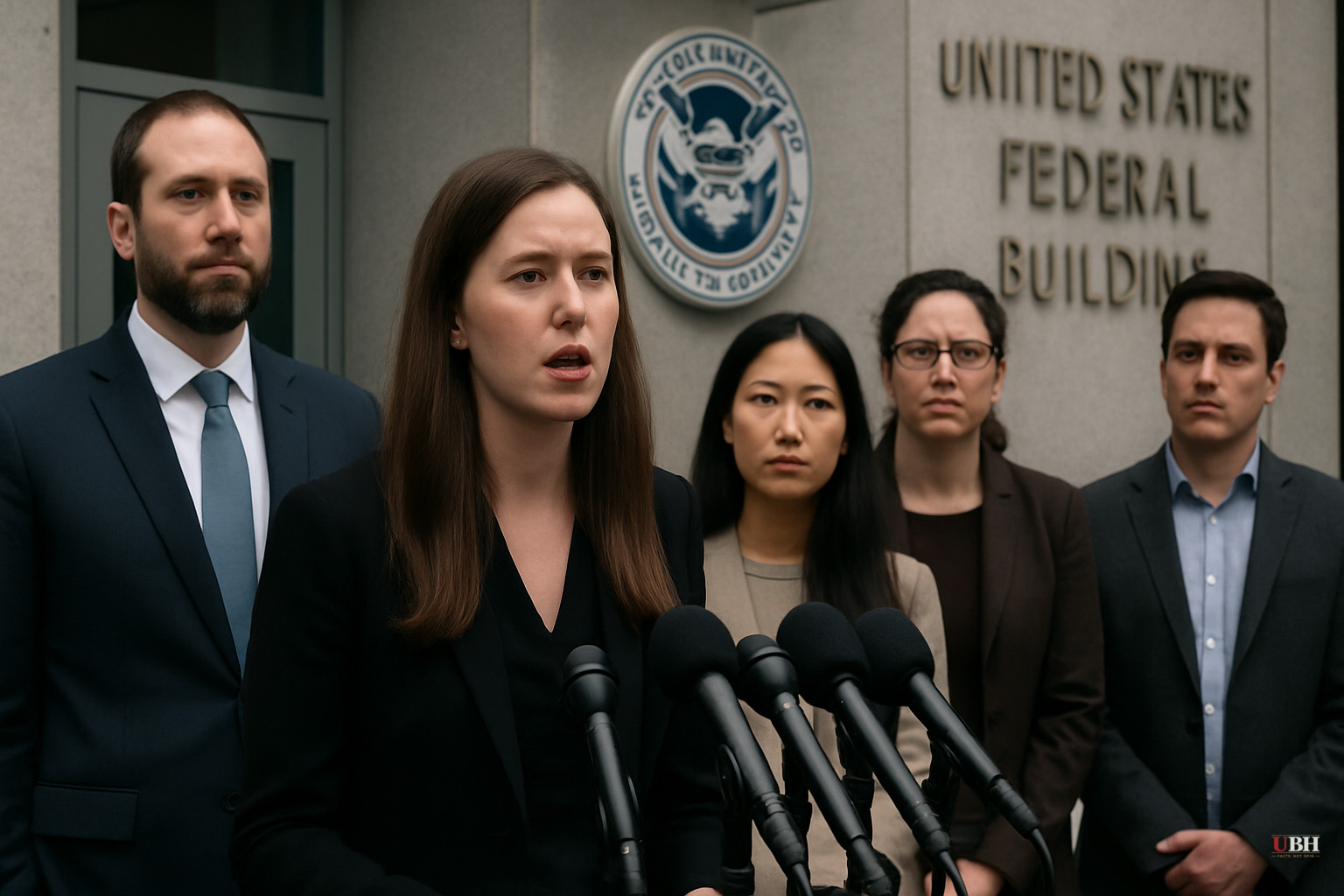
A new national litigation network is targeting the Trump administration's immigration enforcement agencies in federal court. The coalition is led by Democracy Forward, chaired by Democratic lawyer Marc Elias, and UnidosUS, a Hispanic advocacy organization that leans left. Additional partners include the National Immigrant Justice Center, the Roderick and Solange MacArthur Justice Center, and the Institute for Justice, a libertarian-leaning legal group.
The coalition's strategy centers on the Federal Tort Claims Act, a law that allows individuals to sue the U.S. government for personal injury, property damage, or wrongful death caused by the wrongful or negligent conduct of federal employees. It strips away sovereign immunity, which normally shields the government from lawsuits. More than 100 attorneys from 60 organizations gathered in Chicago last week for training sessions on FTCA litigation, according to the Daily Signal.
Democracy Forward President Skye Perryman described the Chicago convening as "just the beginning of what will be a coordinated network of attorneys representing people harmed by federal officers' actions." Perryman said her organization would provide training, research, litigation guidance, and screening tools to partner groups.
The Taxpayer Money Question
That raises a separate question. UnidosUS and the National Immigrant Justice Center have both reportedly received federal government grants, according to the Daily Signal and figures cited from the Capital Research Center.
On UnidosUS: the group received $11.2 million from taxpayers in 2023, representing about 20% of its budget, according to the Capital Research Center. From 2008 to 2017, the federal government provided about $38 million to the organization. It received no grants from 2018 through 2020 during the first Trump administration. During the Biden administration, the organization received $35.9 million in federal grants from 2021 through 2023.
On the National Immigrant Justice Center: in 2024, NIJC received $2.6 million — about 32% of its revenue — from government grants, according to the Capital Research Center.
By contrast, the MacArthur Justice Center, which holds $89.6 million in net assets, does not appear to receive government funding. There is also no evidence that the Institute for Justice receives government funding.
If UnidosUS or NIJC received federal grants and are now coordinating litigation against the federal government, that is a legitimate question about how taxpayer money flows through the nonprofit ecosystem. Robert Stilson, senior research analyst at the Capital Research Center, put it plainly: "Unidos is a good illustration of sending significant federal grant money to recipients with openly political agendas. It's sending taxpayers' money to groups representing one side of the political spectrum."
A UnidosUS spokesperson did not respond to inquiries from the Daily Signal about the government grants. An NIJC spokesperson also did not respond.
Is This Lawfare or Legitimate Tort Law?
Stilson drew a useful distinction. "The Federal Tort Claims Act is for individuals wronged by government employees, and it could be legitimate complaints," Stilson told the Daily Signal. He specifically said he would NOT call this lawfare, while also noting that Democracy Forward and UnidosUS are "clearly politicized."
The FTCA covers things like a Border Patrol agent damaging someone's property, an ICE detention facility providing inadequate medical care, or an officer using excessive force. These are statutory torts, not constitutional challenges to immigration policy. A lawsuit alleging that a specific federal employee caused a specific harm to a specific person is a different animal than broad constitutional or policy challenges to immigration enforcement.
The strongest concern critics raise is not that the law is being misused on its face, but that a coordinated, well-funded coalition using politically motivated organizations could flood the administrative claims process and federal courts with cases designed to impose maximum friction on enforcement, regardless of individual merit. That concern is real and worth watching.
The strongest counter-argument is equally straightforward: the FTCA is one of the few mechanisms ordinary people have to hold federal agents accountable for misconduct. If ICE officers are crossing legal lines, individuals harmed have a right to sue. The existence of political organizers who support that litigation doesn't automatically make the underlying claims false.
UnidosUS President Janet Murguía previously stated: "As mass deportation efforts escalate, holding the federal government accountable for abuses of power, excessive force, and misconduct is critical to protecting our communities and mitigating the harm these enforcement actions cause."
What the Source Set Doesn't Resolve
The Daily Signal is the only source available here, and it leans right. The article does not include on-record responses from Democracy Forward, UnidosUS, or the National Immigrant Justice Center beyond Perryman's and Murguía's public statements. It does not name a specific lawsuit filed under this initiative or a specific plaintiff. Those are meaningful gaps for a story about an ongoing legal campaign.
The Institute for Justice's participation is also worth noting. IJ is libertarian, not left-wing, and has a long record of suing the federal government over civil liberties and property rights across administrations of both parties. Their presence in the coalition suggests the coalition's legal theory isn't purely partisan, even if some of its leading members are.
What Comes Next
The coalition has signaled it intends to move from the training phase to active FTCA administrative claims and then federal litigation. Democracy Forward has already filed more than 150 lawsuits against the Trump administration in the first year of Trump's second term and dozens more in the first six months of 2026, according to the Daily Signal. The unresolved question with direct legal consequence: whether any of the participating organizations' government grant agreements contain restrictions on using those funds for litigation against the federal government. If they do, a violation of grant terms would be an actual enforceable issue, not just a political talking point. That determination would belong to the relevant awarding agencies.
Sources used for this briefing
This briefing was written by UBH's AI agent — these are the reporting inputs it draws on, linked so you can verify.


