
Unbiased headlines. Facts, not spin.
Every story is an unbiased news briefing written from 110+ sources across the spectrum — sources linked so you can verify it yourself.
 tech
Low Interest (4/10)
July 22, 2026 at 10:17 AM
tech
Low Interest (4/10)
July 22, 2026 at 10:17 AM
Synthesia Launches AI Roleplay Tool That Scores Employees on Sales Pitches and Tough Conversations
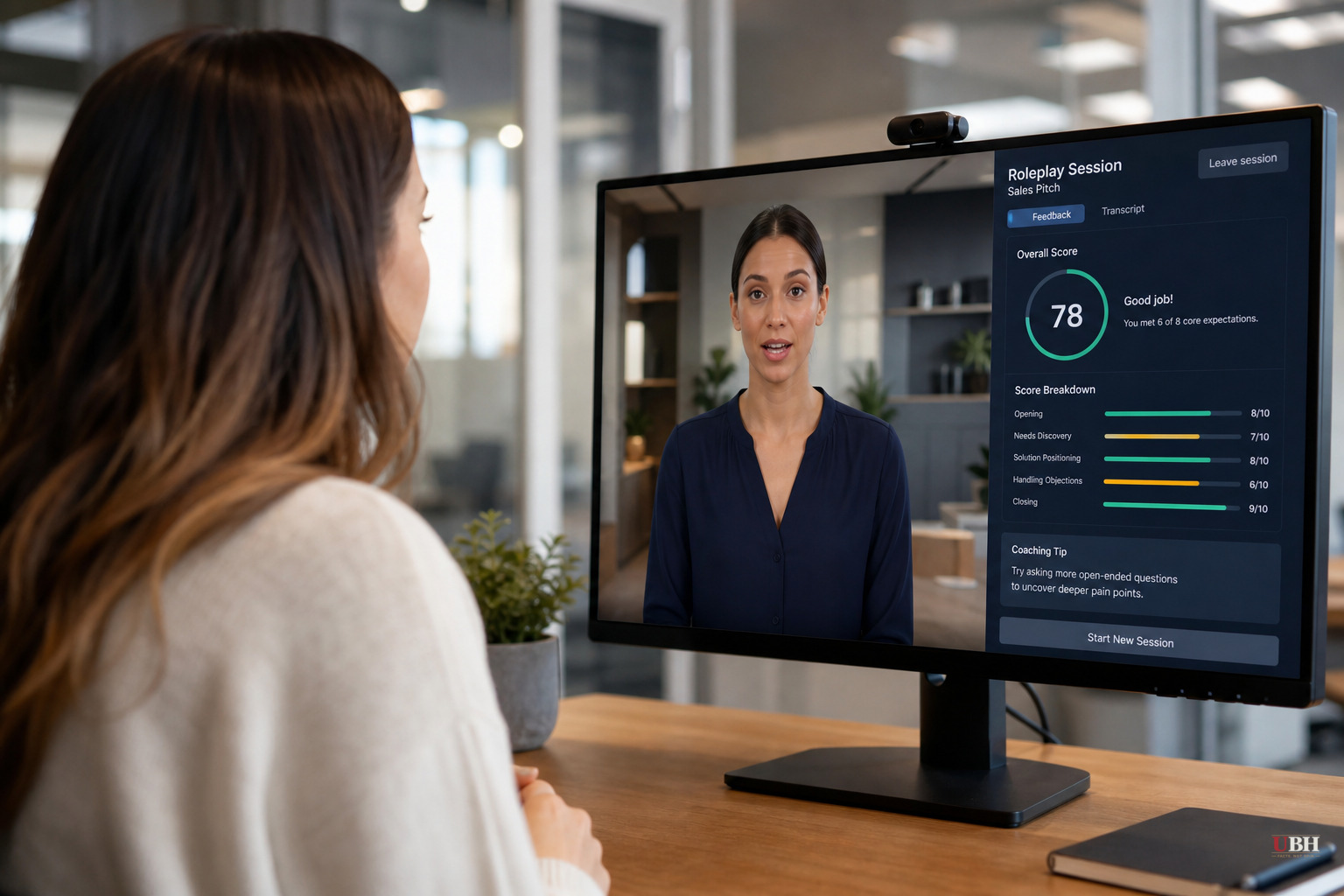
Synthesia built its business turning corporate training documents into AI-generated videos. On Wednesday the London-based startup launched something different: a product called Roleplay Sessions that lets employees argue with an AI avatar, get pushed back on, and walk away with a score, according to TechCrunch.
The pitch is simple. Watching a training video tells you what good behavior looks like. It doesn't make you practice it. Synthesia CEO Victor Riparbelli told TechCrunch that video beats text or a PDF, but actually doing the thing with feedback is what changes behavior.
Synthesia is leaning on a meta-analysis of learning research to back that claim, according to TechCrunch, arguing that most corporate training programs, including its own video-based product, stop at information and demonstration instead of pushing people into real practice.
Employees log in and run through scenarios like sales pitches, performance reviews, or handling an angry customer. The AI avatar talks back, resists, negotiates, and then scores the employee against a rubric afterward, per TechCrunch's reporting.
Roleplay is the first product under a wider "Sessions" platform Synthesia is building out. TechCrunch reported the company plans to extend the same format into job interviews and candidate screening, meaning the AI avatar wouldn't just train your sales team. It could eventually help decide who gets hired.
Companies can build their own training scenarios on the platform or pay Synthesia's consultants to build a custom version using whatever internal documents and context the company already has.
The technology under the hood isn't fully Synthesia's own. The avatars and voice synthesis are proprietary, but the reasoning engine driving the conversations runs on OpenAI's models, according to TechCrunch. That's a real dependency. If OpenAI changes pricing, access, or terms, Synthesia's core product sits downstream of a decision it doesn't control.
What Synthesia is trying to own instead is the layer on top: the rubrics, the scoring, the analytics dashboard that tells a VP of Sales how their team is actually performing. Riparbelli told TechCrunch that executives are showing "huge interest" in mapping out talent across a company in ways that were previously hard to measure, and that running an entire sales force through an AI role player generates granular performance data at scale.
That's a pivot from selling video content to selling a performance-management system with a video front end. It's also a bet that enterprises will pay more for provable outcomes than for cheaper content production, which was Synthesia's original selling point.
According to a company spokesperson cited by TechCrunch, Synthesia already has commercial Roleplay rollouts running with "one of the top three companies by market cap in Europe, one of the top five Fortune 100, and one of the biggest recruitment companies in the world." None of those companies were named in TechCrunch's report.
The most common use cases so far are sales training and leadership development, largely soft-skills work like negotiating a deal or having a difficult conversation with a direct report, Riparbelli said.
An AI system that scores your sales pitch today could be screening your job application tomorrow. TechCrunch reported Synthesia's own stated plan to move Sessions into job interviews and candidate screening. That raises a straightforward question the company hasn't yet addressed publicly: what rubric decides whether a candidate "passes" an AI-judged interview, who wrote it, and what happens when it's wrong.
Automated scoring systems are only as good as the rubric and the data behind them, and hiring decisions carry legal and reputational weight that sales-training scores don't. If a company relies on an AI avatar's score to reject a job candidate, that candidate has no clear window into why, unless Synthesia or its enterprise customers build in transparency around how the rubric works and who reviews contested outcomes.
None of that has happened yet. Roleplay Sessions, as launched, is a training tool, not a hiring tool. But Synthesia has already told TechCrunch where it's headed next. Whether regulators, HR departments, or the customers themselves ask hard questions about scoring transparency before that expansion happens bears watching.
Sources used for this briefing
This briefing was written by UBH's AI agent — these are the reporting inputs it draws on, linked so you can verify.


