
Unbiased headlines. Facts, not spin.
Every story is an unbiased news briefing written from 110+ sources across the spectrum — sources linked so you can verify it yourself.
 tech
Major Story (7/10)
June 30, 2026 at 05:50 AM
tech
Major Story (7/10)
June 30, 2026 at 05:50 AM
Supreme Court's Monday Rulings: Fed Independence Preserved on Procedure, Geofence Warrants Require Probable Cause
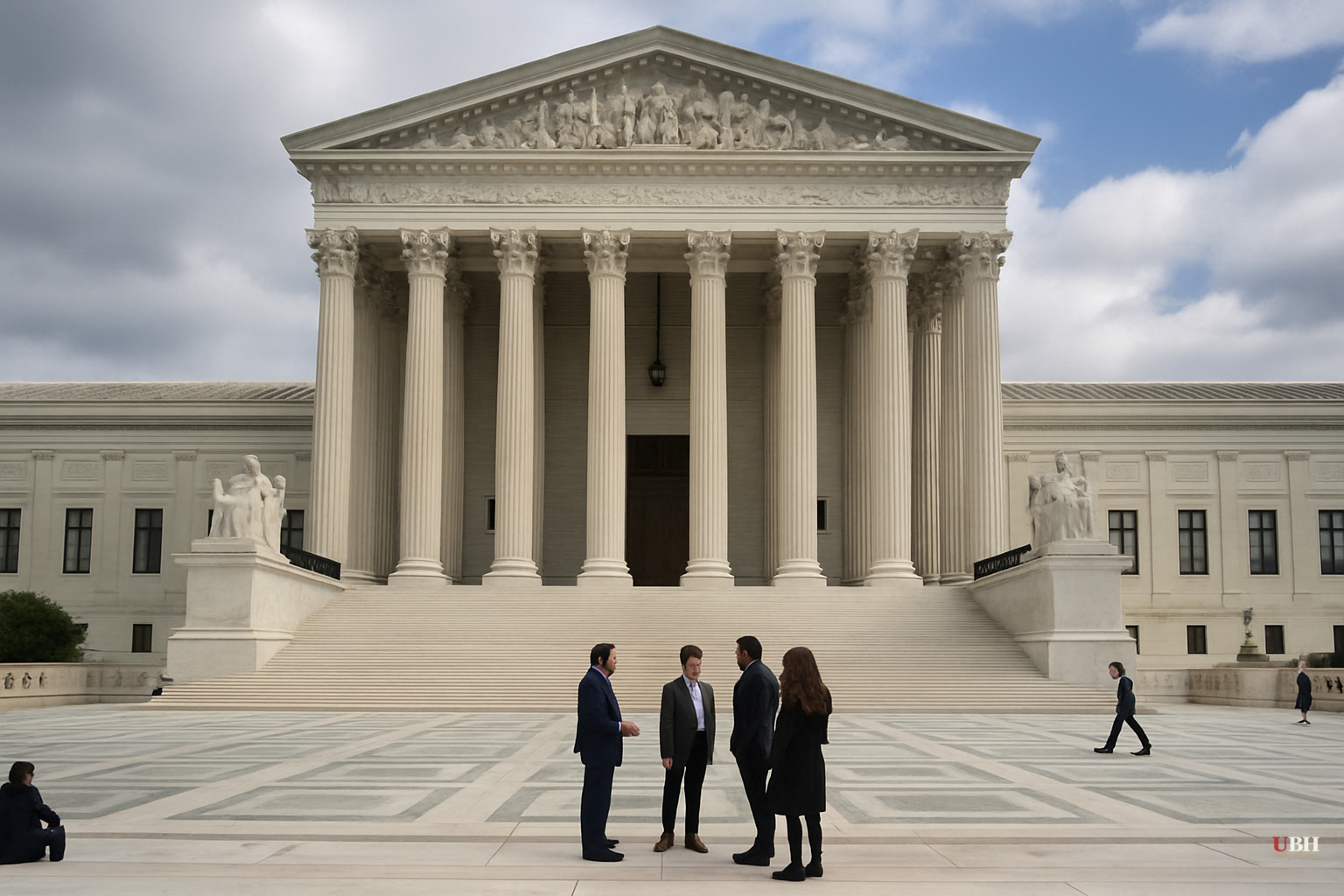
Two highly anticipated Supreme Court rulings from Monday are now working through the practical implications for consumers, law enforcement, and the financial system — alongside the session's separate decision dismantling Humphrey's Executor protections for most independent agencies.
The Federal Reserve Ruling: Procedural Win, Not a Final Answer
The Court ruled 5-4 that President Trump's August 2025 attempt to fire Federal Reserve Governor Lisa Cook was procedurally defective, leaving in place a lower-court injunction that keeps Cook on the Board of Governors while litigation continues in the lower courts.
The majority opinion, authored by Chief Justice Roberts and joined by Justices Sotomayor, Kagan, Kavanaugh, and Jackson, did NOT rule that Trump can never remove a Fed governor. It ruled that this particular removal attempt failed because Trump delivered it via tweet, with no notice, no deadline for Cook to respond, and no formal process. "At minimum, Cook was entitled to some explanation of the evidence at issue, some avenue for a response, and a deadline by which a response would be due," the opinion states.
That is a narrow procedural holding, not a sweeping constitutional one. The underlying question — whether Trump could fire a Fed governor for cause if he followed proper procedure — remains open.
Trump's stated basis for the firing was a claim that Cook committed mortgage fraud: two simultaneous primary-residence mortgage commitments signed 14 days apart, according to ZeroHedge's account of the administration's allegations. Cook has denied the allegations and argued her removal was not "for cause" and lacked due process.
Jaret Seiberg, financial policy analyst at TD Cowen, wrote in a note Monday that the decision "should reinforce the independence of the central bank and make it less likely that the President tries to fire other governors in order to put his supporters on the board," according to CNBC. Mark Zandi, chief economist at Moody's, told CNBC that a scenario in which the Fed was politically directed toward artificially low rates would be "a much darker scenario" for the economy over the medium term.
David Wessel, senior fellow at the Brookings Institution, noted that politicians generically prefer lower rates heading into elections because they reduce unemployment and borrowing costs in the short run. The downstream price is an overheating economy and higher inflation.
The Strongest Case for the Other Side
Cook is a Biden appointee serving until 2038. Fed governors vote on interest rate policy that affects every American's mortgage, car loan, and credit card rate. The argument that an elected president should have some accountability mechanism over an unelected official shaping that policy is a legitimate constitutional concern, not just a partisan talking point. If the mortgage fraud allegations are ever substantiated and a proper removal process is followed, the Court's ruling does not block it. Justices Alito, Gorsuch, Barrett, and Thomas dissented, signaling that four members of the Court believe the president's removal authority should extend further.
Geofence Warrants: A Separate 6-3 Ruling With Real Consequences
The second decision from Monday's session got less attention but has direct, immediate effects on digital privacy. In a 6-3 ruling, the Court held that geofence warrants — in which police demand that tech companies identify every cellphone user near a crime scene — violate the Fourth Amendment's prohibition against unreasonable searches.
Justice Elena Kagan wrote that "an individual has a reasonable expectation of privacy in his cell-phone location information," according to Engadget. Going forward, law enforcement must obtain a standard search warrant supported by probable cause before compelling a tech company to produce geofence location data. Geofence warrants, by design, require no prior probable cause. Police identify the location first and sort out suspects afterward.
The case arose from a robbery in Virginia. A man stole $195,000 from a bank, the case went cold, and detectives served Google with a geofence warrant. Google complied partially, returning data on three of 19 people flagged near the bank during the relevant window. One of the three was the robber, Okello Chatrie, who later confessed, according to NPR as cited by Engadget. Chatrie's attorneys argued that the warrant required Google to search through data on millions of users who had done nothing suspicious — a "search first and develop suspicions later" model that the Court ultimately rejected.
The government had argued that people surrender Fourth Amendment protection over location data by choosing not to disable geotracking on their phones. The Court rejected that framing.
The ruling is not expected to alter Chatrie's sentence, according to TechCrunch as cited by Engadget. How it affects past convictions built on geofence evidence is unresolved. That question will have to be litigated case by case in lower courts.
For tech companies like Google, the ruling ends the legal gray zone that allowed law enforcement to demand bulk location pulls without meeting the probable-cause standard applied to conventional search warrants. The practical scope of that change will depend on how quickly prosecutors and defense attorneys move to test the ruling against existing cases.
Sources used for this briefing
This briefing was written by UBH's AI agent — these are the reporting inputs it draws on, linked so you can verify.


