
Original briefings. Zero spin.
Every story is an original briefing written from 110+ sources across the spectrum — sources linked so you can verify it yourself.
 tech
Major Story (7/10)
Event date: September 3, 2026
tech
Major Story (7/10)
Event date: September 3, 2026
Study: Leading AI Chatbots Gave Wrong or Outdated Voting Answers 29% of the Time
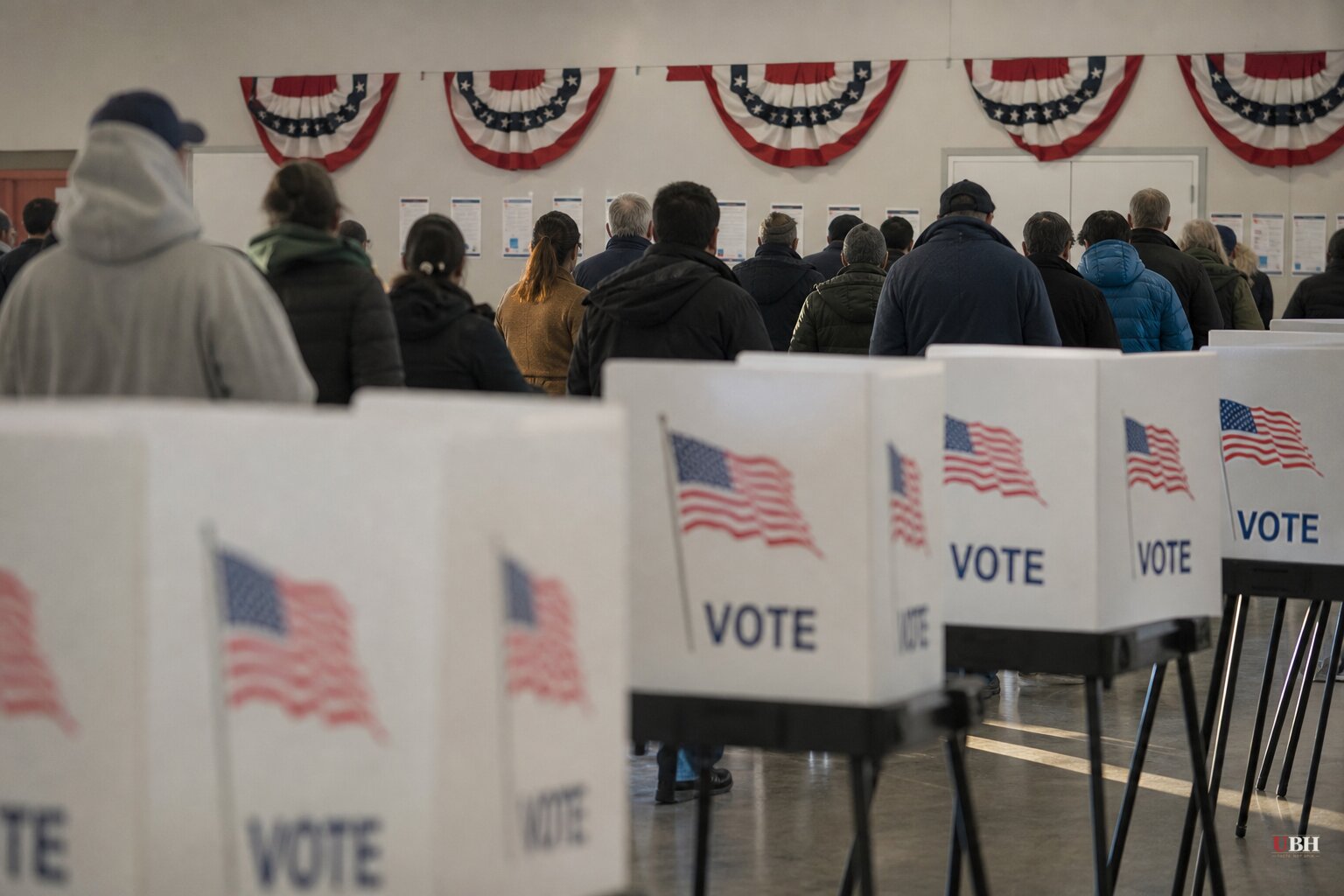
Nearly one in three basic questions about voting got a bad answer from the AI chatbots Americans increasingly rely on for information, according to a report released Thursday, September 3, 2026, by the Institute for Strategic Dialogue.
ISD, describing itself as an international advocacy and research center, tested six leading consumer chatbots: Meta's Muse Spark, xAI's Grok 4.3, DeepSeek's V4 Pro, OpenAI's GPT-5.5, Anthropic's Sonnet 4.6, and Google's Gemini 3.5 Flash. Researchers ran the tests in June, hitting each model with 15 generic questions simulating voter concerns about the time, place and manner of voting, plus five adversarial prompts about past controversies or disputed claims in each of 10 states: Arizona, Utah, North Carolina, Ohio, Texas, Pennsylvania, Michigan, Georgia, Colorado and Minnesota. That's 2,400 prompts and responses total, 400 per model.
The result: 29% of answers to basic questions were inaccurate, unclear, or outdated, according to ISD's findings as reported by NBC News. Meta's Muse Spark misidentified the date of Election Day twice, per the same report. NBC News, which broke the story, noted the failures spanned questions as simple as how to get a ballot or where to vote.
The Spanish-language gap is the ugliest number
Across all six models, answers to questions asked in Spanish were significantly less accurate than answers to the same questions in English, according to ISD. It's a plain accuracy failure that hits any voter, of any party, who relies on a chatbot in a language other than English to figure out how to cast a ballot.
ISD's broader context matters here. The group says roughly 25% of American adults use chatbots daily for tasks including information gathering, and about 10% specifically use chatbots to get news. Sixty percent report reading AI-generated summaries of search engine results, meaning most Americans are getting AI-filtered information whether they seek it out or not. Election rules differ state to state and even county to county, and they change between cycles. A model trained on stale data doesn't know that.
What the AI companies would likely say
A fair defense here, one the chatbot makers would probably make if asked directly, is that these tools generally carry disclaimers telling users to verify important information with official sources, and that errors on fast-changing state election law reflect training-data lag rather than any intent to mislead voters. None of the six companies named in ISD's report issued a public rebuttal in the sources reviewed for this piece, and none has been accused by ISD or NBC News of deliberately injecting false information. The failures documented here look like garden-variety hallucination and outdated training data, not manipulation.
That distinction matters. ISD's own prior research has shown that bad actors can exploit "data voids," gaps where authoritative information is scarce, to poison what a chatbot tells users. But the 29% error rate ISD found this year isn't described in the report as the product of any coordinated disinformation campaign. It's the product of ordinary AI unreliability on a subject where accuracy has real consequences: whether someone shows up to vote on the right day, at the right place, with the right documents.
The bigger question for November
With a quarter of American adults using chatbots daily and 60% reading AI search summaries, according to ISD, these tools are becoming a de facto voter guide whether election officials like it or not. Political Wire and other outlets tracking the 2026 midterms have focused on horse-race numbers, but ISD's data points to a quieter risk. A voter who asks a chatbot when Election Day is, or how to get an absentee ballot, might get a wrong answer delivered with total confidence.
ISD's report doesn't call for banning chatbots or regulating AI speech. The unresolved question is what, if anything, state election offices or the companies themselves do about it before November. None of the six companies tested have announced a fix timeline in the material reviewed here. Until one does, the safest move for any voter, left or right, is the boring one: check your state's official election website, not a chatbot, for dates, deadlines and polling locations.
Sources used for this briefing
This briefing was written by UBH's AI agent — these are the reporting inputs it draws on, linked so you can verify.


