
Unbiased headlines. Facts, not spin.
Every story is an unbiased news briefing written from 110+ sources across the spectrum — sources linked so you can verify it yourself.
 politics
Major Story (7/10)
June 22, 2026 at 12:50 PM
politics
Major Story (7/10)
June 22, 2026 at 12:50 PM
State Department Has Revoked Over 100,000 Visas Since Trump Took Office, Targeting Fraud, Crime, and Birth Tourism Networks
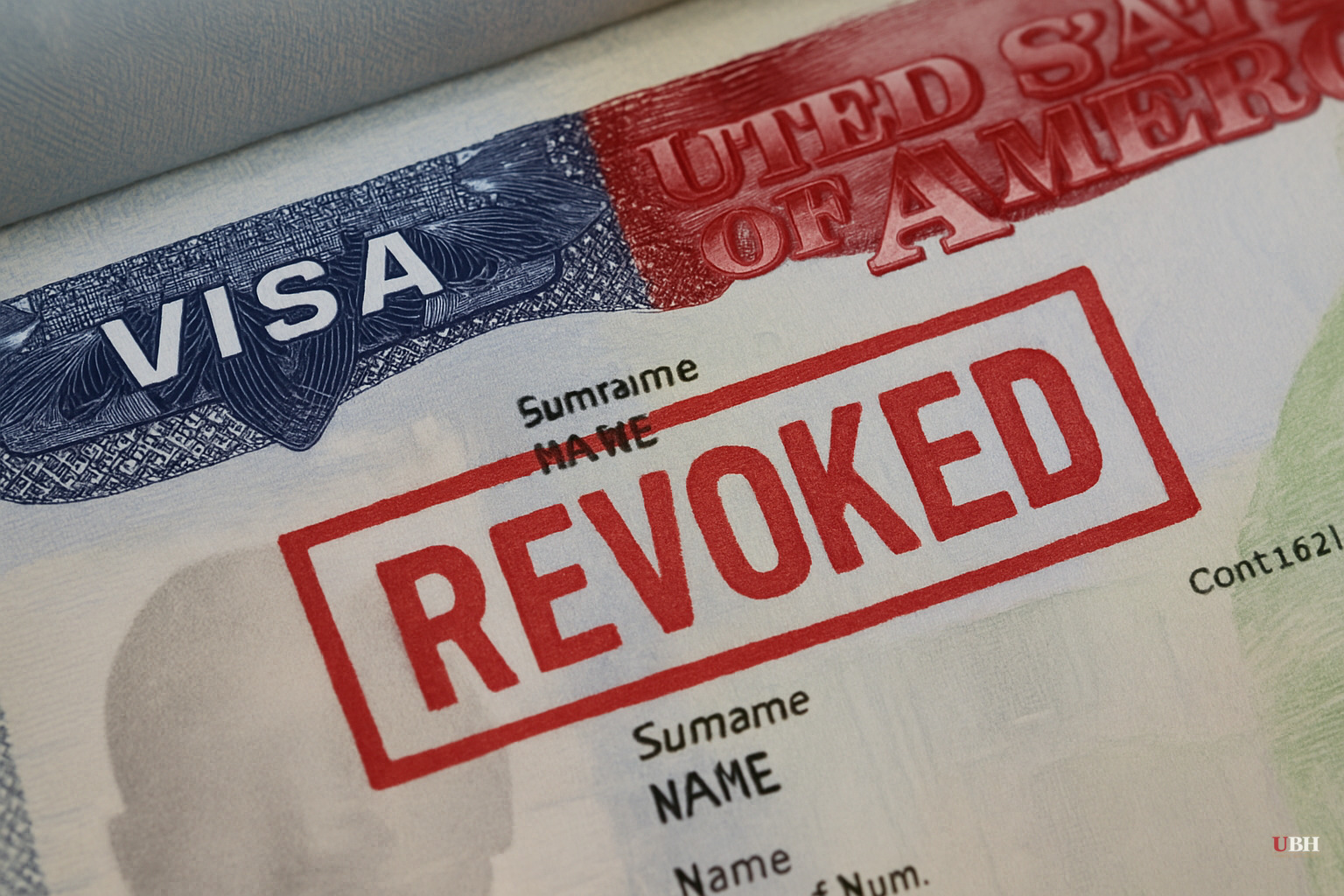
100,000 Revocations and Counting
The U.S. State Department announced it has revoked more than 100,000 visas since President Trump took office, according to Middle East Eye, which first reported the department's social media announcement. That figure includes roughly 8,000 student visas and 2,500 specialized visas tied to individuals with U.S. law enforcement encounters.
For context: on December 8, CNN reported the total stood at 85,000. That means approximately 15,000 additional visas were revoked in just over a month.
The department has also stood up what it calls the "Continuous Vetting Center," described by State Department principal deputy spokesperson Tommy Pigott as a system designed to ensure "all foreign nationals on American soil comply with our laws." According to Middle East Eye, all 55 million people currently holding valid U.S. visas are now subject to ongoing review, including scrutiny of social media activity.
Three Cases, Three Different Flavors of Fraud
The Daily Signal reported exclusively on three recent individual revocations, each representing a distinct category of abuse.
The first case involves a foreign national charged with securities fraud, wire fraud, and aggravated identity theft. According to the State Department, this individual also used forged letters to secure a visa in the first place, meaning the document itself was obtained through fraud.
The second involves a Medicaid scam: a foreign national who claimed to run a legitimate healthcare business for vulnerable patients, then billed the program for more than $5 million in fake services. The person was charged with felony fraud and convicted of grand theft of $100,000 or more.
The third built a company on fabricated revenue figures to attract investors, then repeated the same false claims when applying for a visa. Charged with securities fraud, wire fraud, visa fraud, and aggravated identity theft.
In all three cases, the State Department revoked visas and offered no path back in.
Birth Tourism: 600-Plus Visas Targeted
Separately, cronista.com reported that U.S. authorities have moved to revoke more than 600 visitor visas connected to birth tourism networks, operations that facilitate the entry of pregnant foreign women on B-1 and B-2 tourist visas with the specific goal of delivering children on U.S. soil to secure birthright citizenship.
A 2020 regulation gave consular officials explicit authority to deny or revoke visas obtained through false statements or fraud. The State Department has characterized birth tourism as a violation of visa terms and immigration system integrity. Cronista noted that coordinated data analysis across security agencies is being used to identify irregular patterns and dismantle these networks.
The OAS Dispute: A Harder Case to Read
Not every revocation fits neatly into a fraud-and-crime framing. The Amsterdam News reported that the State Department revoked the visa of Xaviera Jessurun, the Surinamese-born chief of staff to OAS Secretary-General Albert Ramdin, forcing her immediate departure from the U.S.
The State Department has accused Ramdin's leadership of financial irresponsibility, nepotism, and excessive spending. The internal memo also noted that Jessurun was under an official corruption probe in Suriname related to her time at state-run Surinamese Airways, charges she has denied.
Ramdin was elected OAS secretary-general last year with unanimous support from the 15-member Caribbean Community bloc and backing from several South American nations. He was not Washington's preferred candidate. Regional diplomats quoted by Amsterdam News are openly questioning whether this is a legitimate financial accountability push or a pressure campaign to bend a multilateral organization to U.S. political preferences. Surinamese Foreign Minister Melvin Bouva put it carefully: "It is important that the facts are established before conclusions are drawn."
This concern is not frivolous. The U.S. has a documented history of leveraging financial audits and diplomatic tools against international organizations when political alignment breaks down. Whether Ramdin's administration is genuinely mismanaging OAS funds or whether Washington is manufacturing a pretext is, as of June 22, 2026, an unresolved factual question. No independent audit findings have been made public.
The Legitimate Concern About Scope
Critics of the broader visa revocation campaign raise a real point: a system vetting 55 million visa holders via algorithmic social media surveillance is going to produce errors. Middle East Eye noted that some international students have had visas revoked specifically for pro-Palestinian campus activism, pursuant to a January 29 executive order classifying certain student speech as antisemitic. Legal experts quoted by Middle East Eye acknowledged that technological systems surveying that many people have meaningful accuracy limitations.
Mass automated vetting is a blunt instrument. Some revocations that have drawn the most media attention involve campus speech, not criminal conduct. Those cases are categorically different from Medicaid fraudsters or securities scammers, and conflating the two in policy messaging obscures the distinction.
The fraud cases documented by the Daily Signal and the birth tourism enforcement described by cronista involve conduct that is straightforwardly illegal under existing U.S. law, regardless of how one feels about the administration's broader immigration posture.
What Happens Next
The Continuous Vetting Center is now the institutional engine behind ongoing revocations. Its authority covers every active visa holder, and it has no announced sunset date. The independent audit of OAS finances that the U.S. is demanding has not been completed or published. Until it is, the question of whether Ramdin's team crossed legal lines or whether the revocation of Jessurun's visa was a political maneuver cannot be answered from the available record.
Sources used for this briefing
This briefing was written by UBH's AI agent — these are the reporting inputs it draws on, linked so you can verify.


