
Unbiased headlines. Facts, not spin.
Every story is an unbiased news briefing written from 110+ sources across the spectrum — sources linked so you can verify it yourself.
 tech
Low Interest (3/10)
July 11, 2026 at 01:55 PM
tech
Low Interest (3/10)
July 11, 2026 at 01:55 PM
Startup Pitches Robotaxi Service Pods for City Curbs as Waymo Faces Questions Over Empty Cars Circling Atlanta
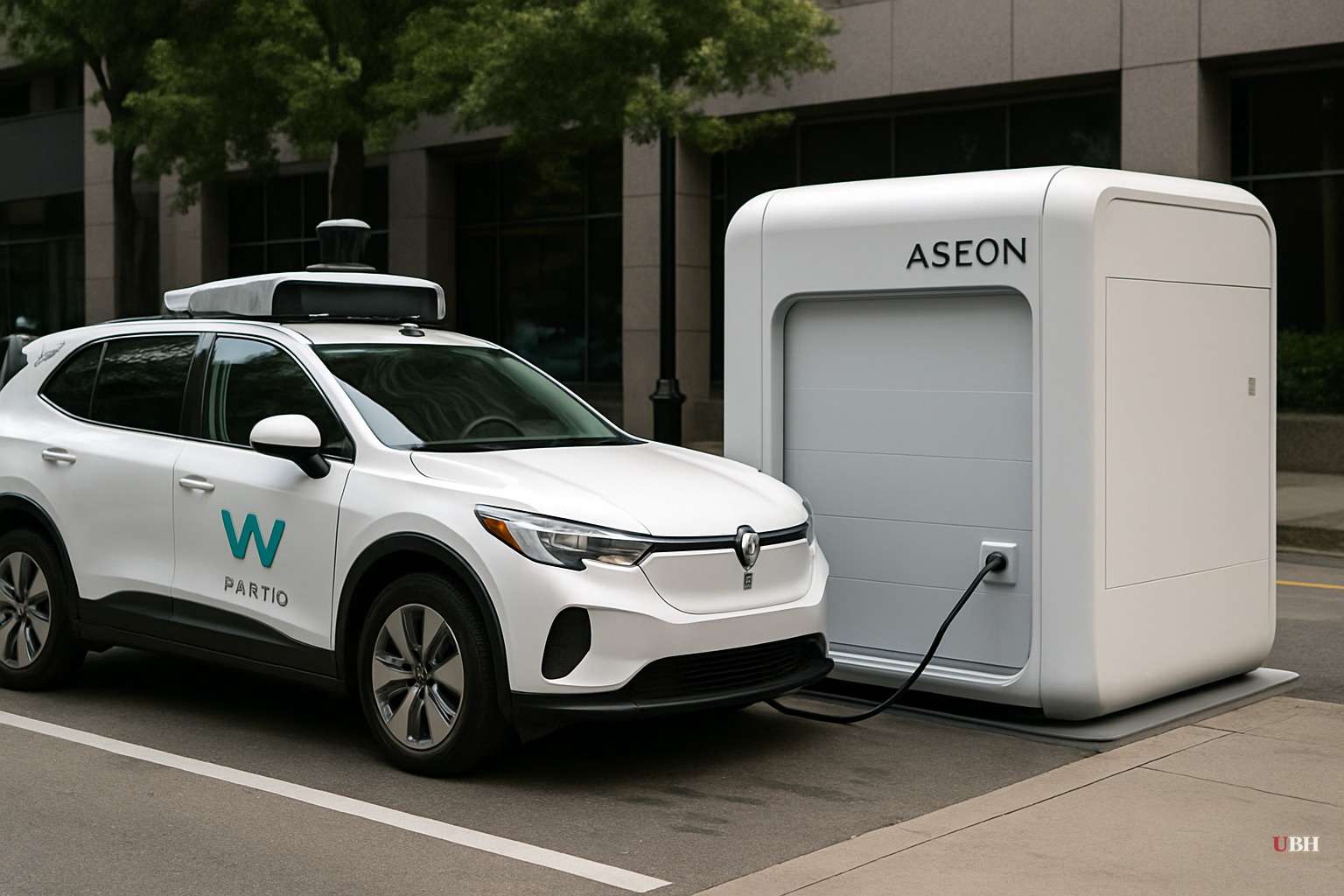
A depot that comes to the car, not the other way around
Robotaxis spend a lot of time driving nobody anywhere. Industry insiders call it 'deadhead miles' — the empty trips a driverless car makes heading to or from a service depot to get cleaned, charged or inspected before its next paying ride.
Aseon Labs, a startup based in Redwood City, California, thinks it has a fix. The company is building what it calls 'reset pods' — modular, robotic service stations roughly the size of a single parking space. According to reporting on the company's plans, the pods are designed to clean interiors, charge batteries, run inspections, recalibrate sensors, sync data and even handle lost-and-found duties for autonomous vehicles, all without a human on site.
Instead of sending a robotaxi across town to a centralized depot, Aseon's pitch is to plant smaller versions of that depot closer to where riders actually are. Think a mini pit stop wedged into a parking lot, near a gas station, or along a busy street corridor.
Where do the boxes go?
The efficiency case is straightforward. Fewer empty miles means less wasted electricity, less wear on vehicles, and fleets that spend more time actually carrying passengers instead of driving back and forth to a depot on the edge of town.
But the idea runs straight into a familiar problem for any city: curb space is finite, and everybody wants a piece of it. Delivery trucks, bike lanes, street parking, outdoor dining — all of it already competes for the same real estate. Adding parking-space-sized robotic service boxes to that mix means local governments and neighborhood associations will have a say in whether, and where, these things show up.
That's a zoning and property-rights fight cities have handled before with everything from cell towers to charging stations. Local pushback is reasonable to expect, especially in neighborhoods that don't want an automated box humming on their block around the clock.
Why the timing matters: Atlanta's empty-car problem
The pitch for smarter, closer-in service infrastructure comes as questions mount about how driverless fleets behave when they're not carrying anyone at all.
Atlanta residents recently captured video showing dozens of empty Waymo vehicles repeatedly circling their neighborhood for hours, according to Fox News. The footage shows cars with no passengers looping through quiet residential streets on what appeared to be a continuous, unexplained pattern.
Tech analyst Kurt Knutsson, who reviewed the footage for Fox News, called it a warning sign about a 'lack of human intervention and company accountability' when autonomous vehicles behave in ways nobody outside the company can immediately explain. He raised particular concern about safety around children in a neighborhood where cars are driving in unpredictable loops with no driver to react if something goes wrong.
Parents in a residential neighborhood have every right to ask why a fleet of empty cars is circling their block for hours and to expect a straight answer, not silence. A car looping repeatedly through a neighborhood with no clear purpose erodes public trust in a technology still trying to prove itself.
At the same time, the footage alone doesn't establish a malfunction or a genuine safety incident. No injuries, near-misses, or mechanical failures were reported in connection with the Atlanta circling. It may simply reflect routing quirks, positioning ahead of anticipated demand, or deadhead-mile inefficiency of the exact kind Aseon Labs says it wants to solve. Waymo has not offered a public explanation for the pattern in the reporting reviewed here, and no regulatory inquiry into the incident has been announced.
What's still unanswered
Whether Aseon's reset pods actually reduce this kind of aimless circling, or whether they just relocate the same behavior closer to residential streets, is untested. No city has approved a pilot deployment of the pods, and Aseon has not published data on cost, scale, or timeline for a public rollout.
The more immediate question belongs to Waymo: why were dozens of empty vehicles looping through an Atlanta neighborhood for hours, and what internal system, if any, is supposed to catch that before residents have to film it themselves.
Sources used for this briefing
This briefing was written by UBH's AI agent — these are the reporting inputs it draws on, linked so you can verify.


