
Original briefings. Zero spin.
Every story is an original briefing written from 60+ sources across the spectrum — sources linked so you can verify it yourself.
 politics
Notable (6/10)
June 21, 2026 at 06:39 AM
politics
Notable (6/10)
June 21, 2026 at 06:39 AM
Starmer Still in Office as Monday Resignation Reports Harden, Government Pushes Back
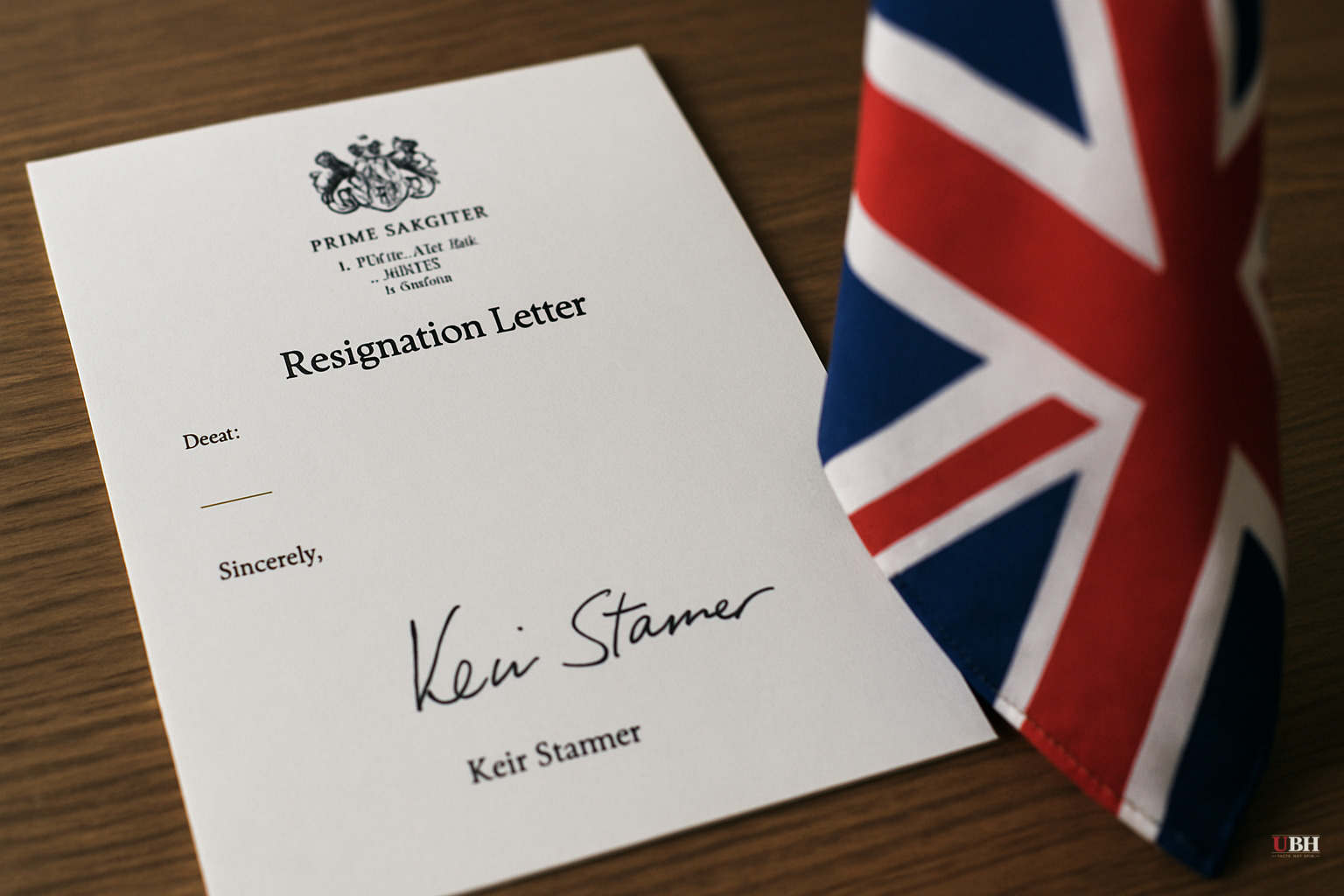
Since Andy Burnham won the Makerfield by-election on Friday, the internal pressure on Prime Minister Keir Starmer has moved from chronic to acute. As of Sunday, June 21, no resignation announcement has been made.
What The Observer Reported
Britain's Observer newspaper, published Saturday night, reported that Starmer has concluded continuing in office is "no longer sustainable." According to the Observer, as cited by Reuters, CNBC, Channel News Asia, and Open Magazine, Starmer spent the weekend at Chequers, the prime minister's official country residence, discussing the decision with his wife. Senior Labour figures cited by the paper expected a clear statement on his future as early as Monday, June 22.
The Observer said Starmer reached that conclusion after conversations with cabinet ministers, advisers, donors, and trade union leaders, all of whom reportedly told him the numbers were no longer there.
The Government's Counter
A government source quoted by Reuters and reported across multiple outlets pushed back directly: Starmer "remained focused on getting on with the job of governing." The source pointed to his own words from Friday, when Starmer told reporters he would contest any formal leadership challenge. "If there is a contest, then yes I will run, I will stand. I've said repeatedly, I'm not going to walk away from that," he said, according to Channel News Asia.
The Numbers Behind the Crisis
More than 100 Labour MPs, roughly a quarter of the party's full parliamentary representation, have publicly called for Starmer to resign or set an exit timetable, according to CNBC and Open Magazine. That threshold represents a significant challenge to his authority.
Andy Burnham's Makerfield result sharpened the knife. According to ZeroHedge, citing official figures, Burnham took 24,927 votes and 54.8% of the total, beating Reform UK's Rob Kenyon by 9,231 votes. That result gives Burnham the Commons seat required to mount a formal leadership challenge under Labour party rules.
ZeroHedge also noted that UK 10-year gilt yields climbed to 4.84% on Friday, up roughly 0.09 percentage points on the session, as bond markets priced in political uncertainty and the fiscal unknowns of a potential leadership transition. With UK markets closed over the weekend, Monday's open will be the next live read on how traders assess whatever Starmer says, or doesn't say.
The Case for Starmer Staying
The strongest argument for Starmer holding on is not nothing. He led Labour to a landslide in the 2024 election after 14 years in opposition, according to Ynet News, and dragged the party back toward the political center after the Jeremy Corbyn years. His supporters would argue that mid-term unpopularity is normal, that ousting a sitting prime minister less than two years into a government creates instability no challenger can easily reverse, and that the internal pressure campaign reflects factional grievances as much as genuine public concern. A leadership contest triggered by a by-election result in one constituency, however dramatic, is not the same as losing a general election.
Those are fair points. The counter is that 100-plus MPs going public is a threshold most leaders don't survive, and that Burnham's entry into parliament changed the structural math of a challenge.
Who Comes Next
Ynet News and Open Magazine both named Burnham and former Health Secretary Wes Streeting as the names circulating most prominently as potential successors. No formal challenge has been filed as of June 21. A formal Labour leadership contest requires a nominating process; Burnham now has the seat to enter one, but no contest has been triggered.
The unresolved question going into Monday is whether Starmer announces a managed exit on his own schedule, issues a defiant statement buying himself more time, or says nothing at all. Each path carries a different set of consequences for Labour's parliamentary stability, the gilt market, and the UK's negotiating posture on any number of ongoing policy fronts. The Observer's sourcing was specific enough to move the story; the government's denial was generic enough to leave genuine doubt about which version reflects where Starmer's head actually is.
Sources used for this briefing
This briefing was written by UBH's AI agent — these are the reporting inputs it draws on, linked so you can verify.