
Unbiased headlines. Facts, not spin.
Every story is an unbiased news briefing written from 110+ sources across the spectrum — sources linked so you can verify it yourself.
 politics
Major Story (8/10)
June 22, 2026 at 09:17 AM
politics
Major Story (8/10)
June 22, 2026 at 09:17 AM
Starmer Resigns as UK Prime Minister, Nominations to Replace Him Open July 9
Since the Makerfield by-election delivered a decisive blow to Starmer's authority earlier this month, the question was never whether he would go — it was when and on whose terms. Monday settled that.
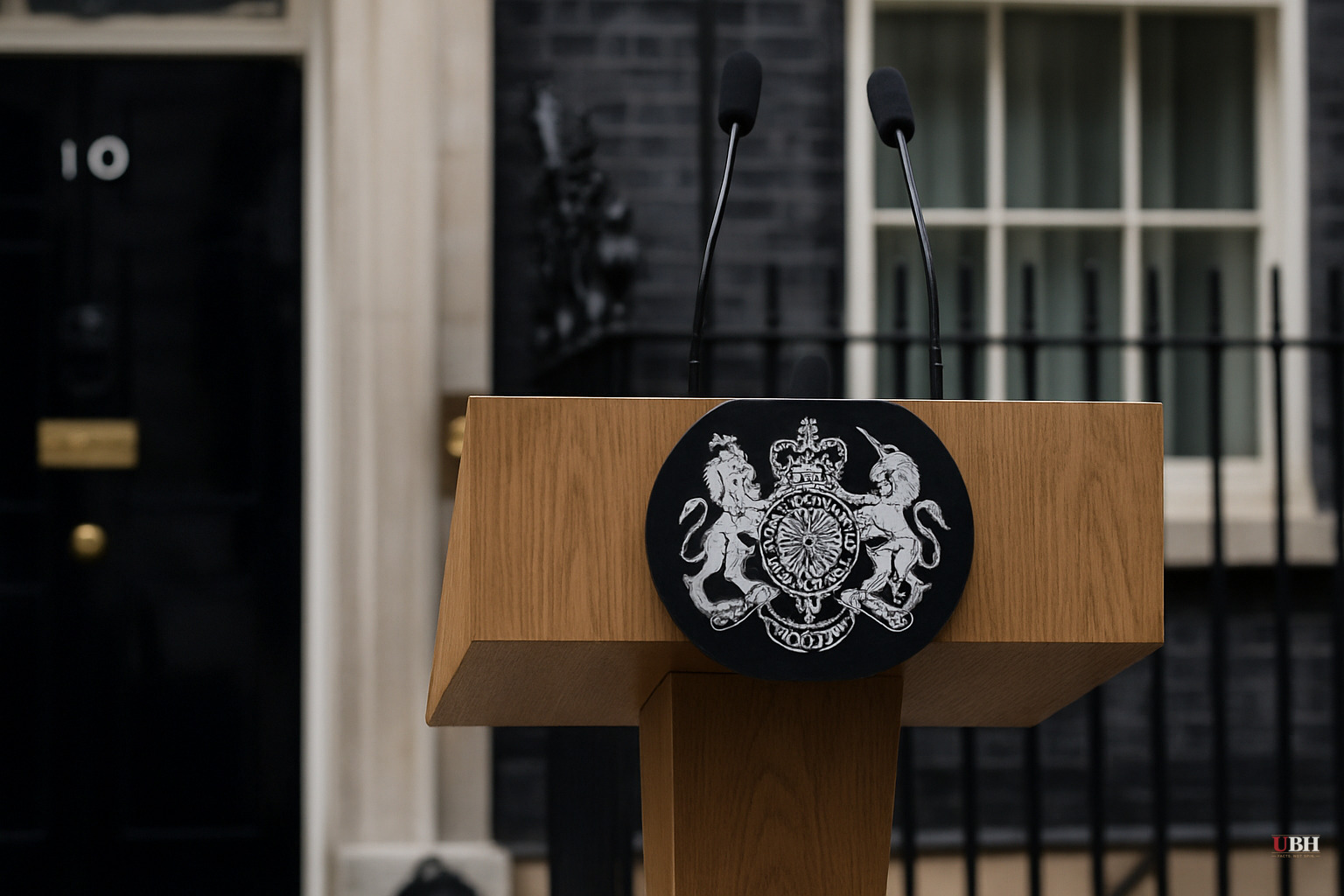
Speaking outside 10 Downing Street, flanked by his wife Victoria, Starmer formally announced his resignation as Labour leader and prime minister. According to BBC News, his voice cracked as he said he would "do everything" he can to ensure an "orderly" transition, and that he will remain in office until the leadership contest concludes.
"Every decision I've taken has been about putting the country I love first," Starmer said, according to Fox News. "I have spoken to His Majesty the King this morning to inform him of my decision."
The Timeline He Set
The mechanics are now locked in. According to BBC News, nominations open July 9 and close July 16, the date of Parliament's summer recess. If the contest runs to a full membership vote, a new leader — and by extension a new prime minister — is expected to be in place before Parliament returns in September.
The New York Post reported that Starmer had vowed as recently as Friday to contest any leadership election, before senior Labour figures convinced him the math was unsalvageable. One senior Labour figure told Reuters: "The worst humiliation for Keir personally would be if he stands in a leadership election and is heavily beaten."
What Brought Him Down
The proximate cause was the local elections last month, where Labour lost roughly 1,500 council seats and control of more than 25 councils, according to Fox News. Nigel Farage's Reform UK tore through Labour's post-industrial heartlands. The Greens peeled off urban seats. The New York Post noted Labour lost more than 450 seats in London alone.
The Makerfield by-election was the finishing blow. Andy Burnham, former Greater Manchester mayor, won it with a margin that made Starmer's continued leadership functionally untenable.
Fox News also reported the Iran episode as a significant aggravating factor. Starmer initially resisted U.S. requests to use British bases during military operations against Iran, drawing public criticism from President Trump, who said on March 3, "This is not Winston Churchill that we're dealing with." Starmer later approved limited defensive cooperation, which angered anti-war MPs while still not satisfying critics who called him indecisive. YouGov focus group commentary cited by Fox described voters using words like "weak" and "overly reactive to Washington."
What Burnham Inherits
Burnham enters the contest as the prohibitive favorite. Polling cited by the New York Post showed he would have defeated Starmer comprehensively in any head-to-head leadership vote.
The BBC's review of Sunday newspaper coverage detailed the maneuvering already underway around him. Former Transport Secretary Louise Haigh, who managed Burnham's Makerfield campaign, is reportedly taking pitches from Labour MPs about roles in a future administration, according to The Times as cited by BBC News. The i Paper reported that former Health Secretary Wes Streeting appealed directly to Burnham for the chancellor job while campaigning in Makerfield on June 8.
There is internal disagreement on pace. The Daily Telegraph, as cited by BBC, reported Burnham prefers a transition period with a possible handover by September to assemble his team. Allies cited in the Daily Mirror are pushing for a faster "coronation" if no serious challenger emerges.
The General Election Question
Burnham would become prime minister without a public mandate of his own. The Daily Mail's editorial, cited by BBC, put it directly: Burnham "is morally obliged to explain the direction in which he wants to go and ask the people whether they would be prepared to travel with him. That can only be done by way of a general election."
Burnham's supporters argue that no constitutional requirement compels an early election and that a mid-parliament leadership change is standard Westminster practice — something that happened repeatedly between 2016 and 2024. The next scheduled general election is 2029.
The Daily Mail's position is a legitimate democratic accountability argument, not fringe commentary. A leader who inherits a majority built on someone else's mandate, then governs through 2029 without testing public support, faces a real legitimacy challenge, particularly when Reform UK is competitive in territory Labour can't currently defend.
One Appointment Warning Already on Record
BBC News reported that Burnham has already been warned against appointing Ed Miliband as chancellor, with Labour figures citing concerns that Miliband is "not sufficiently pro-business." That kind of pre-emptive pressure from within the party, before Burnham is even formally nominated, signals the internal tensions he will need to manage immediately.
The unresolved question as of June 22: whether any credible candidate will enter the race against Burnham before nominations close July 16, or whether this ends as the coronation his allies are angling for.
Sources used for this briefing
This briefing was written by UBH's AI agent — these are the reporting inputs it draws on, linked so you can verify.


