
Unbiased headlines. Facts, not spin.
Every story is an unbiased news briefing written from 110+ sources across the spectrum — sources linked so you can verify it yourself.
 politics
Major Story (7/10)
June 22, 2026 at 12:02 PM
politics
Major Story (7/10)
June 22, 2026 at 12:02 PM
Starmer Out: Labour Nominations Open July 9, Burnham Leads the Field
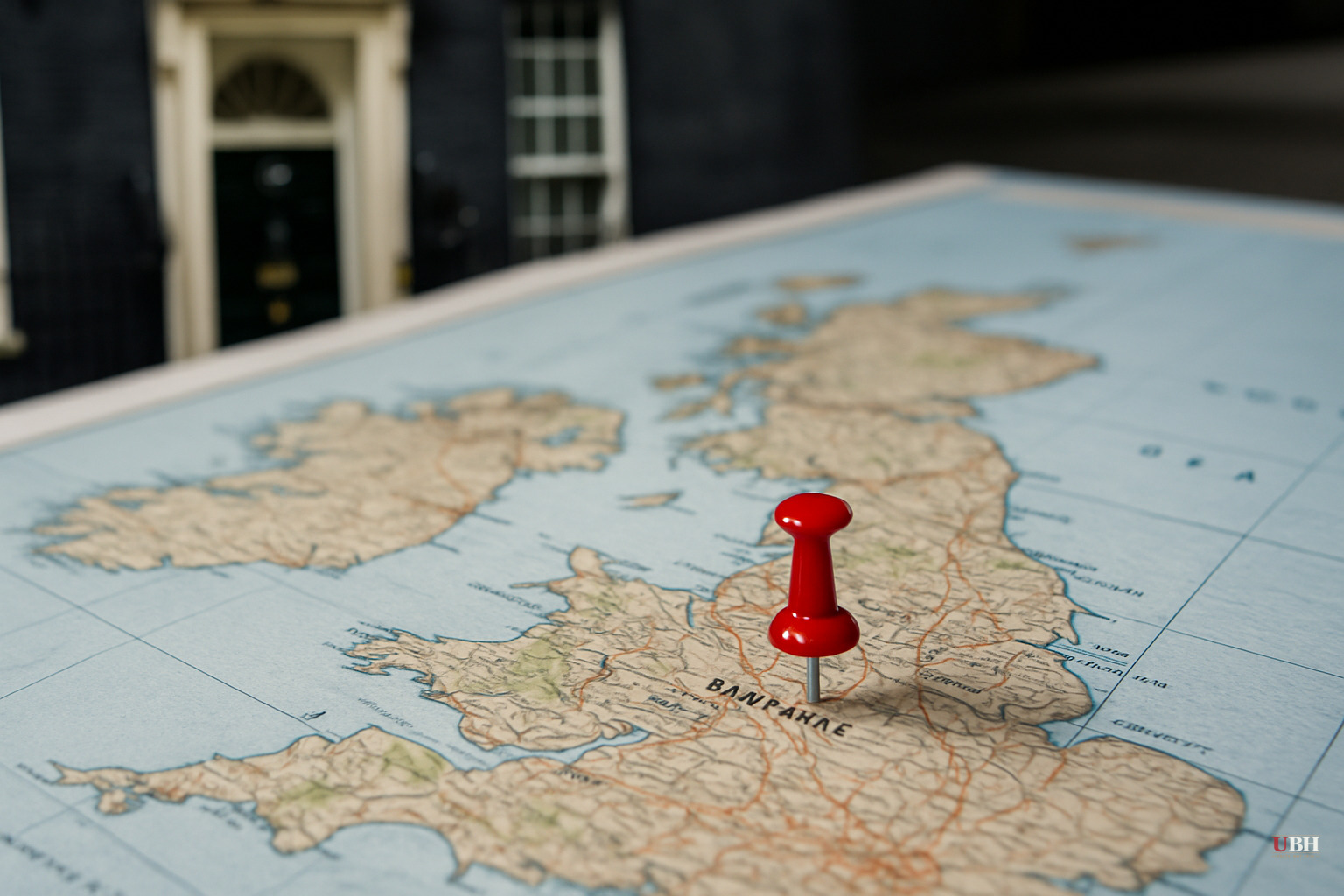
Since Starmer confirmed his resignation Monday and the prior coverage established the basic timetable, the story has moved to specifics: who runs, when, and what the markets think about it.
The Timetable Is Set
Speaking outside 10 Downing Street on Monday morning, Starmer said he had instructed Labour's National Executive Committee to draw up a succession schedule. According to ZeroHedge's report citing British media, nominations open July 9, with the full contest scheduled to conclude before the summer recess so that a new prime minister is in place before Parliament reconvenes in September.
Starmer will remain in post throughout the contest. His own words were that this ensures an "orderly handover of power."
Burnham Is the Man to Beat
Andy Burnham's path to Downing Street became viable only last week. His by-election win in Makerfield on June 18 gave him a parliamentary seat, which is a prerequisite for leading the Labour Party. Without that win, he had no route in.
According to Wired, former Health Secretary Wes Streeting, who resigned from Starmer's government last month and had already publicly committed to running in any leadership contest, has pledged his support to Burnham. Streeting's backing signals that at least part of the cabinet-level Labour establishment is coalescing around Burnham rather than fragmenting.
What the Markets Are Pricing In
The pound was trading 0.19% lower against the dollar at $1.3207 following the announcement, according to CNBC. UK 10-year gilt yields were flat at 4.8452% early Monday, though CNBC noted they had spiked Friday after Burnham's by-election result.
Kallum Pickering, chief economist at Peel Hunt, told CNBC's "Squawk Box Europe" that the market concern is straightforward: "The market now has to price in what a Burnham premiership looks like."
Pickering acknowledged the UK had achieved 1.5% real GDP growth under Starmer and had opened new trade relationships. But he stressed that the UK still carries the highest borrowing costs in the G7 and has been the most persistently inflationary G7 economy for most of the past decade. Those are structural problems that don't belong to Starmer alone and won't vanish with a new leader.
Burnham's previous remark that the UK was "in hock to the bond markets" rattled gilt investors when it surfaced. He has since walked it back, according to CNBC, actively distancing himself from that framing. Whether markets find the clarification convincing is an open question.
The Fair Case for Concern About Burnham
The concern among fiscal conservatives and market watchers isn't ideological hostility to Labour. Burnham's political brand is built on public investment, devolution, and expanding public services. In a country where the Office for Budget Responsibility has repeatedly flagged unsustainable debt trajectories, a shift toward higher spending from an already-strained baseline is a legitimate concern, not just partisan noise. Gilt markets proved with Liz Truss in 2022 that they will punish a UK government that spooks them — she resigned after just 50 days in office. Burnham's team will need to address the fiscal math clearly and early if he wins.
That said, Burnham has not yet published a leadership platform. Judging his economic policy on a single retracted comment is premature.
Seven Leaders in Ten Years
Wired counts this as the UK's sixth prime ministerial exit of the decade, while CNBC and ZeroHedge both frame it as Britain's seventh leader in ten years. The discrepancy comes down to whether you count David Cameron's 2016 Brexit resignation as starting the clock and how you count the handoffs. Since the 2016 Brexit referendum, Britain has churned through Cameron, May, Johnson, Truss, Sunak, and now Starmer.
Wired's headline called this "The UK Just Lost Its Sixth Prime Minister of the Decade." That framing, while defensible on one count, obscures that Truss's 50-day tenure was itself the product of catastrophic market failure, not a normal political transition. The revolving door isn't just a number; each exit had a distinct cause, and conflating them into a single narrative of British political dysfunction flattens what are actually very different failures.
ZeroHedge's framing leaned heavier on the "Starmer experiment is officially over" angle, which is fair as editorial color but light on the structural fiscal data that CNBC's Pickering provided. Both sources captured the resignation accurately.
What Happens Next
The unresolved question heading into the nomination period opening July 9 is whether any credible candidate challenges Burnham from Labour's more centrist wing, or whether the parliamentary party consolidates quickly. A contested race that runs close to the September parliamentary return would create weeks of policy uncertainty at a moment when UK gilt markets are already watching closely.
Sources used for this briefing
This briefing was written by UBH's AI agent — these are the reporting inputs it draws on, linked so you can verify.


