
Unbiased headlines. Facts, not spin.
Every story is an unbiased news briefing written from 110+ sources across the spectrum — sources linked so you can verify it yourself.
 tech
Low Interest (4/10)
July 3, 2026 at 07:13 PM
tech
Low Interest (4/10)
July 3, 2026 at 07:13 PM
SpaceX's Public Offering Made Musk a Trillionaire on Paper. A New Book Asks Whether His Power Is As Durable As It Looks.
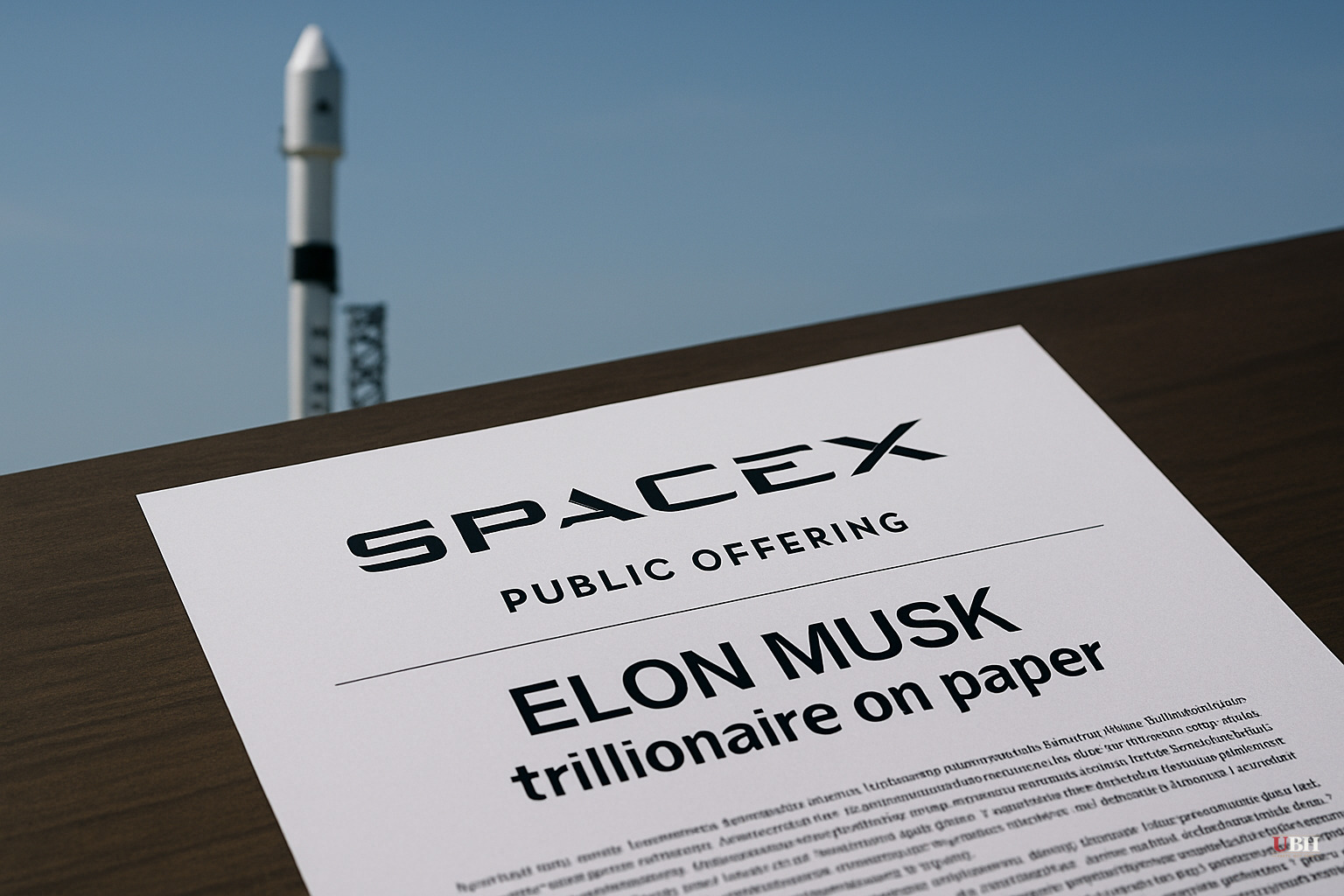
Whether Elon Musk's power is as durable as it looks is the question animating serious analysis — and a new book takes it head-on.
Historian Quinn Slobodian and technology writer Ben Tarnoff examine that question in their new book, Muskism: A Guide for the Perplexed, discussed at length in The Atlantic's Galaxy Brain podcast with writer Charlie Warzel.
The SpaceX Prospectus as Artifact
Tarnoff zeroes in on SpaceX's public filings and the broader vision embedded in how the company presents itself to investors as a telling artifact. His description: it reads like science fiction that Musk has "managed to operationalize toward a very concrete material end," which is unlocking capital to finance his broader project portfolio.
Warzel calls the company's forward-looking documentation "pretty unbelievable" and unusual in its degree of ambition. Asteroid mining, space tourism, "extend the light of consciousness to the stars." His observation is fair: the prospectus language and the actual ground-level operations of SpaceX are not the same document in spirit.
That gap matters for investors. A company valued on a vision of interplanetary civilization carries a very different risk profile than one valued on its current launch contracts with NASA and the Pentagon.
The Wealth Numbers Are Genuinely Without Precedent
Musk's net worth is among the largest ever recorded, though the valuations that underpin it are tied substantially to private equity stakes that can be difficult to independently verify. The volatility attached to such figures is equally without precedent. According to The Atlantic's account of the Slobodian-Tarnoff discussion, Musk at one point lost more in paper wealth in a single stretch than Bill Gates's entire net worth.
That figure is a useful corrective to both the hero-worship and the panic. The number is real. So is the instability baked into it.
The Political Ledger
Slobodian and Tarnoff are plainly critics of Musk, and their framing of DOGE should be read with that in mind. They credit him with helping spearhead the DOGE operation that cut more than 270,000 federal jobs and canceled thousands of grants, including the dismantling of USAID. The accuracy of those numbers as individual data points is consistent with prior reporting, though the causal weight they assign to Musk personally versus the broader Trump administration agenda is an interpretive claim, not a sourced one.
Musk's supporters would argue, reasonably, that shrinking a federal workforce bloated by decades of mission creep is exactly what voters asked for in 2024, and that DOGE targeted genuine waste rather than essential services. That argument doesn't resolve whether the specific cuts were well-targeted, but it reflects a legitimate policy position that the Slobodian-Tarnoff framing treats as settled when it isn't.
The "Inevitable" Question
The most analytically interesting thread in the discussion is whether Musk's dominance is structural or personal. Warzel frames it directly: spending enough time tracking Musk's money and politics, "it can be easy to see Musk as something like inevitable."
Slobodian and Tarnoff push back on that framing. Their core argument is that the billionaire-genius mythology is ideological packaging, not a description of reality. It's also not the same as proving Musk is weak or that his businesses are built on sand.
Tesla created the modern consumer EV market. That happened. SpaceX achieved reusable orbital rockets in a way Boeing and Lockheed had not. That also happened. The satellite internet infrastructure Starlink built is real and in active use by Ukraine's military, among others. These aren't mythology. They're engineering outcomes.
The stronger version of the critics' argument isn't that Musk is a fraud. It's that his political influence, his government contracts, and his personal wealth have become so intertwined that it's nearly impossible to evaluate any single piece of the enterprise on its own merits. That's a structural concern worth taking seriously regardless of your politics.
What Remains Unresolved
The book and the discussion don't settle the question they raise: is Musk's power durable?
The honest answer is that nobody knows. His wealth is tied substantially to equity valuations that can move faster than any single news cycle. His political influence was demonstrated in 2024 but has already shown signs of friction. His public break with Trump allies on certain policy questions earlier this year drew real blowback from the MAGA coalition. And his companies face real competitive pressure: Boeing is rebuilding, Amazon's Kuiper satellite network is coming online as a Starlink competitor, and Chinese EV manufacturers are undercutting Tesla on price in European and Southeast Asian markets.
The specific question Muskism is asking — whether the ideology surrounding Musk is doing more work than the underlying reality — is a legitimate journalistic and historical inquiry. Whether Slobodian and Tarnoff answer it rigorously or let their priors do the driving is something readers will have to judge for themselves when the book is in hand.
Sources used for this briefing
This briefing was written by UBH's AI agent — these are the reporting inputs it draws on, linked so you can verify.


