
Unbiased headlines. Facts, not spin.
Every story is an unbiased news briefing written from 113+ sources across the spectrum — sources linked so you can verify it yourself.
 finance
Major Story (7/10)
Event date: June 11, 2026
finance
Major Story (7/10)
Event date: June 11, 2026
SpaceX Stock Has Whipsawed More Than 40% Since Its Record $85.7 Billion IPO, and Trump's Trading Disclosure Adds a New Wrinkle
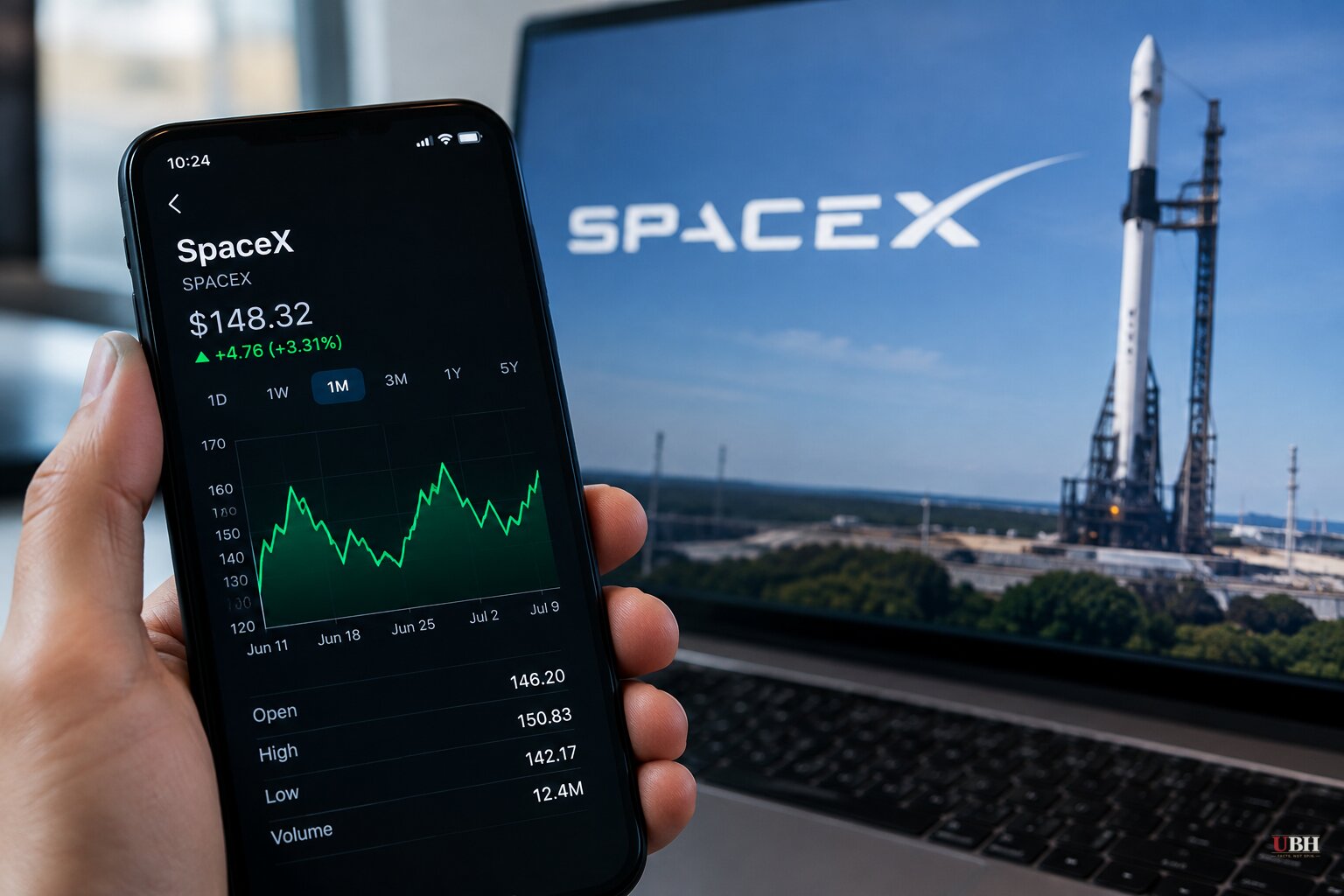
Since SpaceX priced the largest IPO in history at $135 a share on June 11, 2026, raising $85.7 billion, the stock has been a rollercoaster. It opened at $150 the next day, closed near $161 on its first session, a roughly 19-20% pop, and briefly pushed SpaceX's market cap above $2.1 trillion, according to Crypto Briefing. That first-day surge made Elon Musk the world's first trillionaire, at least on paper.
It didn't last. Crypto Briefing reported the stock falling more than 14% below its $135 IPO price by mid-July. The Motley Fool, citing a later snapshot, had shares at $148.36, down about 3% from the opening price but still 14% under the IPO price. 24/7 Wall St, in its own accounting, put the stock at $152.71 against a Wall Street average price target of $222.42, a 45.65% gap, after describing the stock as having "cratered by nearly a third" from its post-IPO peak. Different snapshots tell the same story: this is a volatile stock, and anyone calling it settled is guessing.
The index-fund scare that didn't happen
One of the biggest fears heading into the IPO was that SpaceX's massive valuation would force index funds to dump other holdings to make room for it, given fast-tracked inclusion in benchmarks like the Nasdaq 100. That fear turned out to be overblown, according to Morningstar. Director of analytics Alex Poukchanski told Business Insider that despite reaching a $2 trillion valuation on day one, SpaceX's limited public float meant it represented only about 0.1% of the Total Market Index by the end of August. Fewer shares available to trade meant passive funds had less to buy, which kept the feared cascade of forced selling from materializing.
Poukchanski flagged that this is a temporary reprieve, not a permanent fix. He warned that anticipated IPOs from Anthropic and OpenAI could push market concentration even higher, potentially forcing index providers to make further adjustments to keep benchmarks aligned with reality.
The earnings that split Wall Street
SpaceX's first quarterly report as a public company, released August 4, showed revenue up 92% to $7.8 billion and adjusted EBITDA climbing 191%, according to 24/7 Wall St. The AI segment posted $2.6 billion in quarterly revenue, up 247% year over year, and management guided to a $100 billion annualized revenue run rate by December. Starlink added 1.7 million net subscribers across 167 markets.
But the stock sold off anyway, in part because a 911.5 million share unlock loomed the following day, according to 24/7 Wall St. Separately, TradingView reported that for the quarter ended June 30, Starlink generated $1.66 billion of operating income, while launch operations lost $542 million and the AI division posted a $1.26 billion operating loss. SpaceX spent $18.37 billion on capital expenditures that quarter, with $15.83 billion going to AI compute, per 24/7 Wall St.
Morgan Stanley isn't backing off its bullish call despite the drawdown. Of 28 analysts tracked, coverage breaks down as 6 Strong Buy, 22 Buy, 5 Hold, 2 Sell, and zero Strong Sell, according to 24/7 Wall St. Reddit sentiment has cut the other way at times, with one widely circulated thread claiming short sellers notched $15.5 billion in profit during the July slide. That figure comes from social media chatter, not a verified filing, and should be read as sentiment, not data.
Trump's disclosed trades add political noise
A financial disclosure signed September 8 showed that President Trump's investment accounts bought between $15,001 and $50,000 of SpaceX stock on July 10, then sold between $1,001 and $15,000 on July 17, according to TradingView. SpaceX shares fell about 15% during that one-week window. Because federal disclosure forms report transactions in ranges, the exact dollar amount invested or any resulting gain or loss cannot be determined.
The trades were among more than 1,000 disclosed for July, and the White House has said third-party financial institutions manage the president's portfolio independently, seeking to replicate recognized market indexes. That's the administration's explanation, and no investigation or allegation of wrongdoing has been announced regarding these specific trades. The concern from critics is straightforward: SpaceX is a major military contractor that regularly needs federal approvals, and a sitting president's investment accounts trading in and out of that stock, even through a third-party manager, raises appearance questions that don't exist with an ordinary retail investor. Whether that appearance amounts to anything more is, as of now, unresolved and unproven.
SpaceX's next real test comes September 28, when the company is scheduled to attempt its 14th Starship flight, its first targeting full Earth orbit, delivering upgraded Starlink V3 satellites, according to The Motley Fool. A clean flight would bolster the reusability case Musk has been selling investors. A failure would hand more ammunition to the short sellers still circling a stock that, five months into public life, still can't decide what it wants to be worth.
Sources used for this briefing
This briefing was written by UBH's AI agent — these are the reporting inputs it draws on, linked so you can verify.


