
Unbiased headlines. Facts, not spin.
Every story is an unbiased news briefing written from 110+ sources across the spectrum — sources linked so you can verify it yourself.
 finance
Notable (6/10)
July 18, 2026 at 04:13 AM
finance
Notable (6/10)
July 18, 2026 at 04:13 AM
SpaceX Stock Down 23% Since Nasdaq-100 Debut as Starship Test Flight Aborted
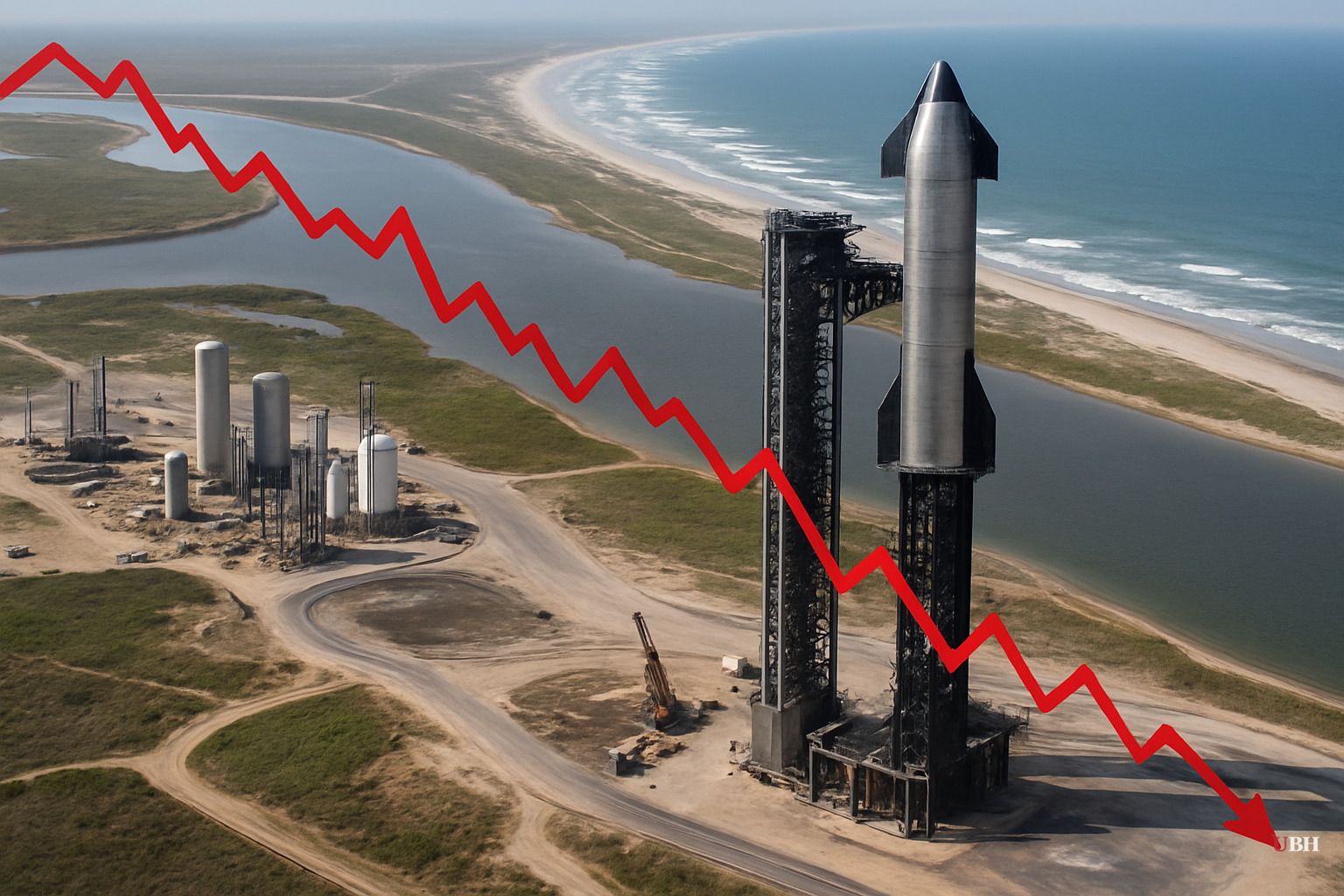
SpaceX stock has posted losses in nine of the last 10 trading days, and as of Friday's close had plummeted nearly 23% since the company was added to the Nasdaq-100. Friday's loss of 5.43% marked a sixth-straight losing day and came after SpaceX aborted a test flight for its Starship rocket, according to CNBC.
The latest hit came after SpaceX aborted a planned Starship test flight. The company was expected to launch within a 90-minute window starting at 5:45 p.m. Thursday in Texas, but an engine ignition failure forced SpaceX to scrub the launch.
"Some of the engines didn't start, triggering an automatic launch abort," Elon Musk posted on X. "Now offloading propellant. Next launch attempt hopefully in a few days."
Musk followed up by saying two Raptor engines will be removed and replaced, with another launch planned for early next week.
Why This Launch Mattered More Than Usual
Thursday's window was set to be SpaceX's first test flight of Starship V3 since the company's IPO in June, when it raised $85.7 billion — the largest initial public offering in history — pricing shares at $135, according to CNBC. SpaceX's shares have soared and dipped since its stock market debut.
With actual trading data now attached to the company for the first time, every rocket test carries stock-price consequences it never had before. That changed the moment Nasdaq fast-tracked SpaceX's inclusion in the Nasdaq-100, allowing it to join after just 15 trading days instead of the usual months-long wait, per CNBC.
Nasdaq hasn't laid out its full rationale publicly beyond the standard index-inclusion criteria, and no regulatory challenge to the fast-track has been reported.
Starship Setbacks
This isn't SpaceX's first stumble with Starship V3. A test flight in May failed when the upper stage was sent toward the Indian Ocean, and the Super Heavy booster failed to make a controlled landing in the Gulf of Mexico after five of its 33 Raptor engines failed to reignite, according to CNBC.
The Federal Aviation Administration ordered an investigation into that mishap and cleared SpaceX on Monday to resume test trials. Thursday's scrubbed launch was the company's first attempt since getting that clearance, and it still didn't get off the ground.
The Case for Not Panicking
Rocket development has always involved blown engines, scrubbed launches, and lost boosters. A scrubbed launch triggered by an automatic safety system working as designed is arguably the system doing its job, not evidence of a company in crisis.
Musk's own framing — that engines will be swapped and another attempt is coming within days — is consistent with how SpaceX has described its development process before.
What's Unresolved
Whether the stock stabilizes may depend on whether next week's launch attempt succeeds. No new FAA action has been announced beyond Monday's clearance, and SpaceX has not released a specific date for the next attempt beyond Musk's "early next week" timeline. The company also has not commented on the stock's slide directly.
Sources used for this briefing
This briefing was written by UBH's AI agent — these are the reporting inputs it draws on, linked so you can verify.


