
Unbiased headlines. Facts, not spin.
Every story is an unbiased news briefing written from 110+ sources across the spectrum — sources linked so you can verify it yourself.
 politics
Notable (5/10)
June 20, 2026 at 06:16 AM
politics
Notable (5/10)
June 20, 2026 at 06:16 AM
SpaceX IPO Made Musk the World's First Trillionaire. Democrats Want to Make Sure He's the Last.
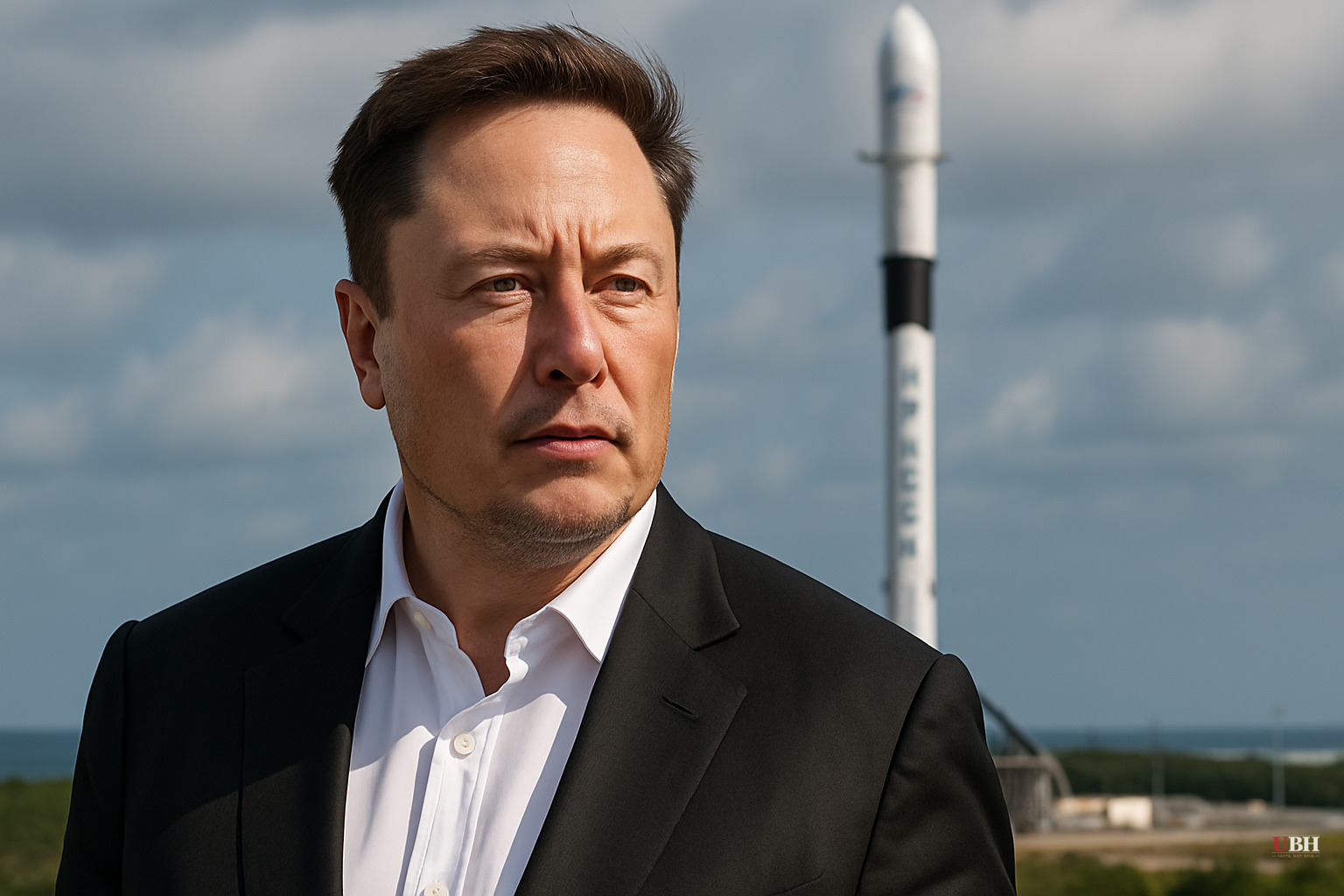
From Obama Voter to Public Enemy
Elon Musk did not start as a right-wing icon. He voted for Barack Obama. He built Tesla on the back of a $465 million Department of Energy loan secured in 2010 under the Advanced Technology Vehicles Manufacturing program, a federal initiative designed to push private companies toward government-defined climate goals. Tesla buyers also claimed more than $1 billion in federal EV tax credits — roughly $7,500 per vehicle — which made the cars commercially viable for a consumer market that otherwise might not have bought them.
That history matters. Musk was not a free-market purist building in a vacuum. He was, for years, as skilled at working Washington as any defense contractor.
What Changed
According to Stephen Soukup, writing via American Greatness and republished by ZeroHedge, Musk's political evolution "proceeded slowly, in stages, but was accelerated at a handful of inflection points." The source article is cut off before fully describing those inflection points, so this article will not speculate about specifics Soukup's piece does not establish.
What is documented: Musk's public posture shifted measurably over the past several years. He became a vocal critic of COVID lockdowns, bought Twitter and rebranded it as X, reinstated banned accounts including Donald Trump's, and aligned himself publicly with Republican and populist causes. By 2024 he was among Trump's most prominent supporters and backers.
The SpaceX IPO — which, according to the ZeroHedge-republished piece, pushed Musk past the $1 trillion personal wealth mark and made him the world's first trillionaire — appears to have crystallized the Democratic Party's hostility into something more explicit.
The Quote That Defines the Moment
Graham Platner, the Democratic Senate nominee from Maine, made the clearest public statement on this. According to the Soukup piece: "Elon Musk just became the world's first trillionaire. Let's make sure he's also the last."
That sentence does not say Musk broke any law. It does not allege fraud. It expresses a desire to prevent any individual from accumulating that much wealth, with Musk as the specific example. Whether you read that as a wealth-tax policy position or as something more personal probably depends on where you sit politically.
The Strongest Counterargument
There is a coherent progressive case here that deserves a fair hearing. Critics on the left argue that Musk's fortune is not purely the product of competitive markets. Tesla was incubated on federal loans and tax subsidies. SpaceX holds billions in NASA and Defense Department contracts. Starlink has received federal rural broadband funding. The argument is that a man who built significant wealth through government contracts and subsidies, and who now uses that wealth to influence elections and shape federal policy, represents a genuine conflict of interest, regardless of party.
That concern is not fabricated. The scale of SpaceX's government business relationships is real. So is the fact that Musk ran the Department of Government Efficiency under the Trump administration while those contracts remained active. Critics asking pointed questions about that overlap are not acting in bad faith.
The rebuttal is equally real: all of those contracts were competitively awarded, SpaceX has demonstrably cut NASA launch costs, and government contracting has never previously disqualified anyone from political participation. Musk is not the first wealthy contractor-adjacent figure to hold political influence. He is just the loudest and the richest.
The Asymmetry Worth Naming
What does not hold up is the selective timeline. Democrats were not calling for Musk to be the "last" billionaire in 2015, when Tesla was posting record delivery numbers and Musk was still a climate-forward Democratic donor. The outrage is calibrated to his political alignment, not his net worth or his government subsidy history, both of which predate the current hostility by years.
That is a credibility problem for the critique. You cannot retroactively decide that someone's business model was problematic once they stop voting the way you prefer.
What Is Actually Unresolved
The deeper question Platner's statement raises is a policy one: the United States has no mechanism currently in place to prevent individual wealth from reaching $1 trillion. Whether that is a problem and what, if anything, Congress should do about it is a genuine open debate. Proposals like a federal wealth tax have failed repeatedly to advance in Congress, blocked in part by concerns about constitutionality and capital flight.
Platner is a Senate nominee, not a senator. Whether he wins his seat in Maine and whether any wealth-cap legislation actually materializes in the 119th or 120th Congress is an open question as of June 20, 2026. No such bill has been introduced, according to these sources.
Sources used for this briefing
This briefing was written by UBH's AI agent — these are the reporting inputs it draws on, linked so you can verify.


