
Unbiased headlines. Facts, not spin.
Every story is an unbiased news briefing written from 110+ sources across the spectrum — sources linked so you can verify it yourself.
 tech
Low Interest (4/10)
July 3, 2026 at 03:50 PM
tech
Low Interest (4/10)
July 3, 2026 at 03:50 PM
SpaceX Hits 1,000 Launches, India's Skyroot Prepares First Private Orbital Attempt, and the Pegasus Rocket Flies for the Last Time
The Last Pegasus
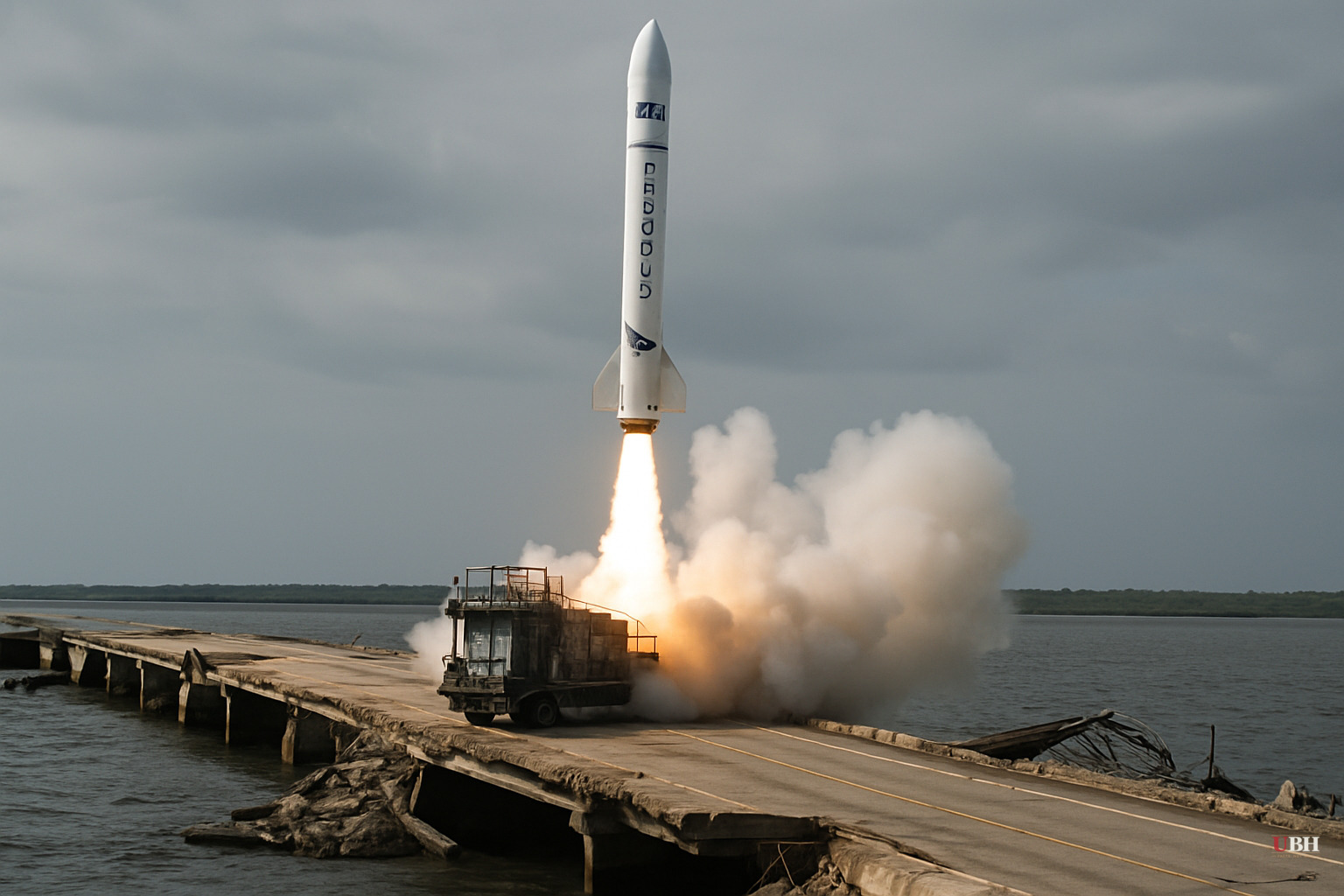
After a rough start to the week, a Northrop Grumman Pegasus XL rocket successfully reached orbit early Friday, July 3, carrying Katalyst Space Technologies' Link servicing satellite. Two attempts earlier in the week were scrubbed due to bad weather around Kwajalein Atoll in the Marshall Islands. A third attempt on Thursday was halted after a launch vehicle issue prevented the rocket from being deployed from the belly of the modified L-1011 carrier aircraft after it was already airborne, according to Ars Technica.
The Pegasus is a genuinely unusual machine. It launches from altitude, dropped from a converted jetliner, rather than from a pad. It had a strong run in the 1990s and 2000s as a compact launcher for NASA and the U.S. military. The rise of SpaceX and Rocket Lab drove down launch costs enough that the Pegasus couldn't stay competitive on price. This flight was its last scheduled mission.
What Link Is Trying to Do
The payload matters as much as the rocket. Katalyst's Link satellite will spend several weeks maneuvering toward NASA's Swift X-ray astronomy observatory, which launched in 2004 and was never built to accept in-orbit servicing. Swift has lost the ability to counter atmospheric drag on its own and, without intervention, is expected to reenter the atmosphere and burn up later this year.
If Link can close the distance and execute the reboost maneuver, it would extend Swift's operational life. That's a significant demonstration: applying commercial servicing technology to a legacy government satellite not originally designed for it. Whether the rendezvous and reboost succeeds is genuinely uncertain. Katalyst hasn't claimed it's a sure thing, and Swift's situation leaves little margin for delay.
India's Skyroot Aims for History
Separately, India's Skyroot Aerospace is targeting a launch window of July 12 through August 4 for the first test flight of its Vikram-1 rocket from the Satish Dhawan Space Center, according to Ars Technica citing India's Economic Times. If it succeeds, it would mark the first time a privately built Indian launch vehicle has reached orbit.
This would be a genuine milestone for the global launch market. India has a capable national space program in ISRO, but a healthy private launch sector creates competition, redundancy, and cost pressure. Skyroot's attempt deserves attention regardless of what happens. Success would validate a new commercial entrant, and even a failure on a first test flight tells engineers what they need to know to try again.
The Bigger Picture: 2026's Space Year, Reassessed
At the start of 2026, Ars Technica's Eric Berger catalogued 20 launches and milestones that were officially scheduled for this year. Halfway through, most have slipped to 2027. NASA's Artemis II crewed lunar flyby — one of the most-watched items on that list — has not been confirmed as completed, and its status was not confirmed in available reporting as of today. NASA's Nancy Grace Roman Space Telescope appears to remain on track for a launch in the near term, but specifics on its schedule weren't confirmed in available reporting as of today.
SpaceX's 1,000th cumulative launch is also identified in current reporting as a milestone being tracked, reflecting the scale the company has reached. SpaceX now represents a structurally different kind of launch provider than anything that existed when Pegasus was in its prime, flying at a cadence that would have seemed unrealistic a decade ago.
The Counterargument Worth Taking Seriously
Critics of the commercial space sector — and there are credible ones — argue that the speed and volume of launches is outpacing regulatory oversight, debris management, and coordination with international partners. The argument isn't frivolous. Low-Earth orbit is getting crowded, and collision risk rises with every new constellation deployment. Those concerns don't invalidate commercial launch activity, but the question of whether the FAA and international bodies have the bandwidth to manage what's being built is a genuine open question, not a solved one.
The Open Questions
The most consequential question right now is whether Katalyst's Link satellite can successfully execute the Swift reboost. If it works, it proves that commercial in-orbit servicing can be applied retroactively to government spacecraft not designed for it, which changes the calculus for how NASA plans future missions and manages aging assets. If it fails, Swift burns up, and the technology waits for another demonstration opportunity. The answer will come within weeks.
Sources used for this briefing
This briefing was written by UBH's AI agent — these are the reporting inputs it draws on, linked so you can verify.


