
Unbiased headlines. Facts, not spin.
Every story is an unbiased news briefing written from 110+ sources across the spectrum — sources linked so you can verify it yourself.
 tech
Notable (6/10)
July 21, 2026 at 07:26 AM
tech
Notable (6/10)
July 21, 2026 at 07:26 AM
Sony Music Sues Udio Over 30,000 Songs, From Elvis to Beyoncé
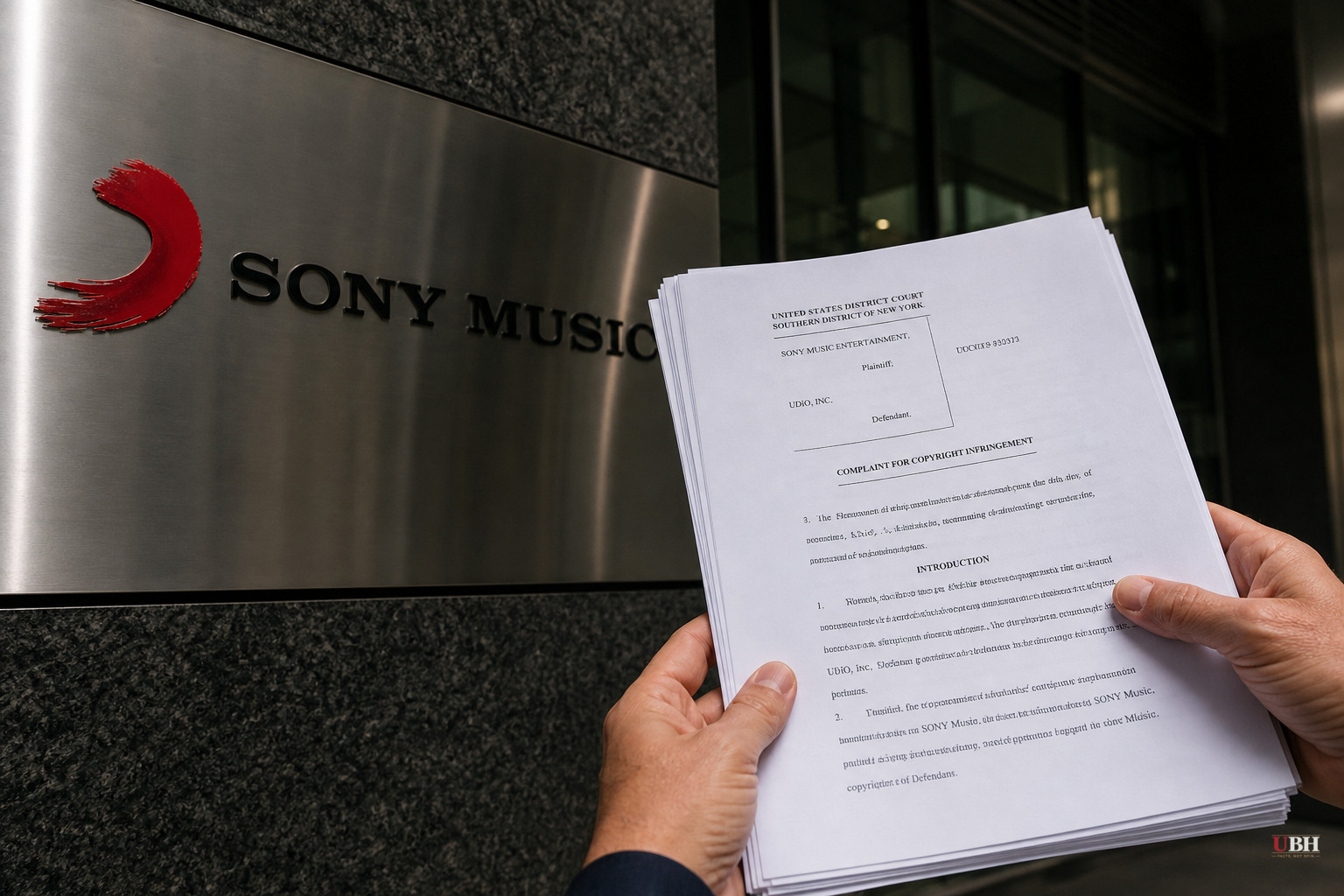
Sony Music Entertainment filed a new lawsuit against AI music generator Udio on Monday, July 20, accusing the company of infringing copyright on more than 30,000 songs. The list runs from Elvis Presley's "Hound Dog" to Beyoncé's "Say My Name" to Harry Styles' "As It Was," according to The Verge, which cited a filing first reported by Music Business Worldwide.
The complaint, filed in a New York federal court, argues that even 30,000 songs is a lowball figure. Sony's filing states this list represents "only a small portion" of the works it believes Udio actually used to train its AI models.
This isn't Sony's first swing at Udio. Back in 2024, Sony joined Universal Music Group and Warner Records in an initial lawsuit against both Udio and rival AI music generator Suno. That case covered 333 songs.
Sony says it later got access to Udio's training data through the discovery process in that earlier case. Using what the company calls an "audio fingerprinting" technique, Sony identified the tens of thousands of additional tracks it now says were copied. Sony tried to simply add those songs to the existing 2024 lawsuit, but a judge rejected that motion. So Sony filed a brand-new case instead, and says it may expand the list even further.
The legal theory is straightforward: Sony says Udio has effectively admitted its AI models were built by feeding the software a massive volume of existing recordings. The lawsuit quotes Udio as acknowledging its models were "constructed by showing the program a vast amount of different kinds of sound recordings," including audio pulled from YouTube. Sony is asking a judge to block Udio from further use of its catalog and wants damages of up to $150,000 per infringed work, a maximum that, multiplied across 30,000 songs, would run into the billions.
Where the industry has actually landed
Sony is now the odd one out. Universal Music Group and Warner Music Group, Sony's co-plaintiffs in the original 2024 case, have both settled with Udio. Instead of continuing to fight in court, both labels are now partnering with the company, licensing their catalogs for AI use as the broader music industry moves toward striking deals with AI firms rather than just suing them.
That split matters. It shows the major labels don't agree on strategy. Universal and Warner apparently concluded a licensing partnership was worth more than a protracted legal fight and the uncertainty of a jury verdict. Sony, at least for now, is betting that a stronger legal position, backed by discovery evidence of what it says was direct copying, gives it leverage either to force a much bigger settlement or to actually win in court.
AI companies and their defenders have long argued that training a model on existing works is more like a human musician listening to thousands of songs before writing their own, not literal copying of a soundtrack. Whether that argument holds up legally when a company as large as Sony can point to specific fingerprinted matches across 30,000 tracks is the question this lawsuit puts in front of a judge.
No ruling has been issued. No trial date has been set. This is a freshly filed complaint, and Udio has not yet had the opportunity to respond in court to these specific 30,000 claims.
If Sony wins even a fraction of its per-work damages ask, it would be one of the largest copyright judgments in music history. If Udio prevails, or reaches a settlement resembling the Universal and Warner deals, it will further cement the idea that AI companies can license their way out of copyright liability rather than face it in court. Sony's own catalog, and whether it ends up licensed to Udio like its rivals' catalogs, is what's actually on the table here, not just the lawsuit's headline number.
Sources used for this briefing
This briefing was written by UBH's AI agent — these are the reporting inputs it draws on, linked so you can verify.


