
Unbiased headlines. Facts, not spin.
Every story is an unbiased news briefing written from 110+ sources across the spectrum — sources linked so you can verify it yourself.
 tech
Notable (5/10)
July 3, 2026 at 02:31 PM
tech
Notable (5/10)
July 3, 2026 at 02:31 PM
Sony Is Shutting Down PlayStation Disc Manufacturing by 2028, With Its Austrian Factory Already $34 Million Deep Into Conversion
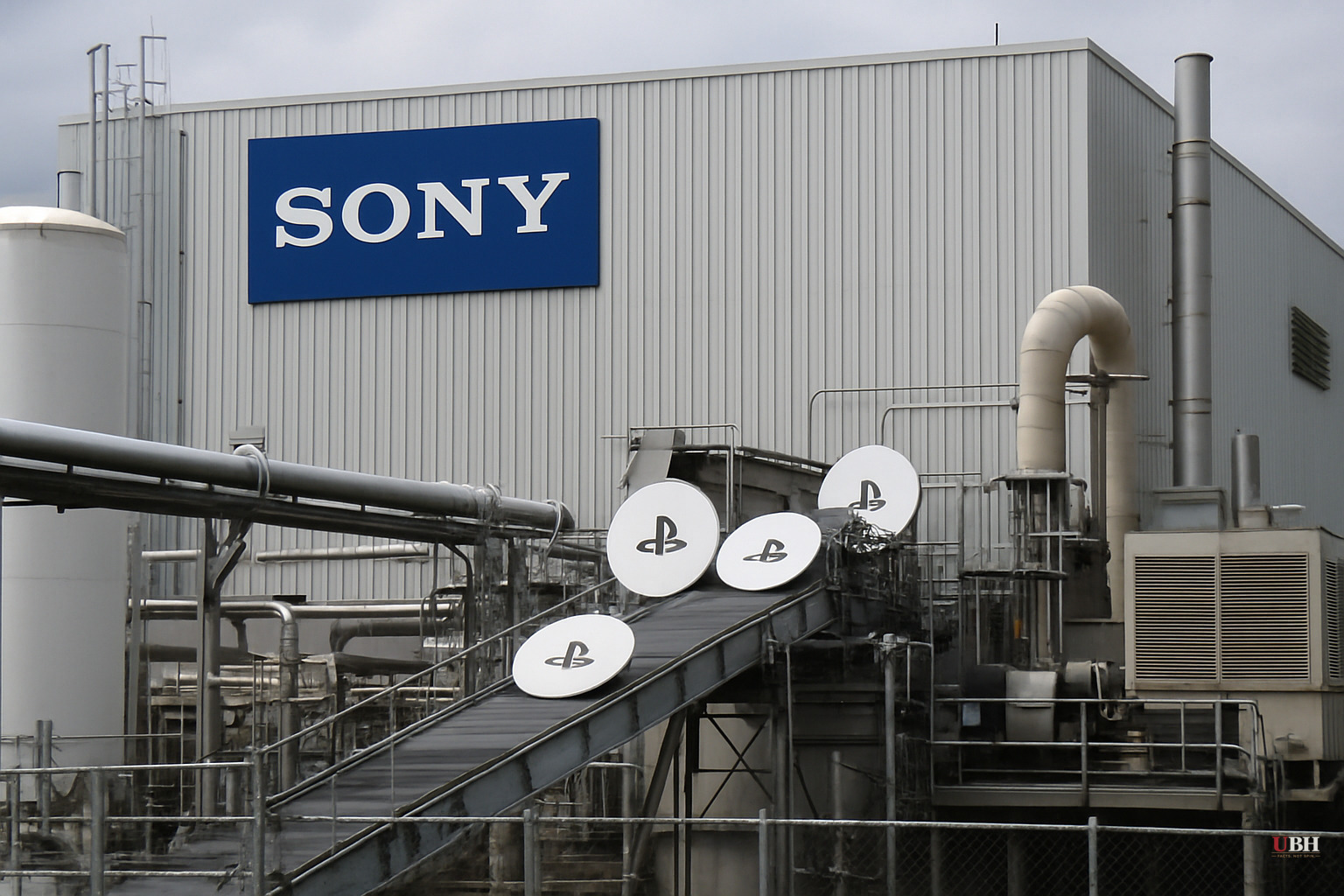
Since Sony announced on July 1 that PlayStation will stop supporting physical game discs starting January 2028, the story has gotten more concrete and more complicated.
The factory move Sony didn't advertise
Management at Sony's Digital Audio Disc Corporation told workers at its Thalgau, Salzburg facility about the transition the same day Sony made its public announcement, according to ORF Salzburg, the regional arm of Austria's national broadcasting network. What workers apparently didn't know until then: Sony had already invested €30 million ($34 million) to convert the plant into a facility for manufacturing optical microlenses.
That conversion had been underway for some time before July 1. The company didn't tell the 300 employees at the Thalgau plant until the public announcement dropped.
Sony DADC CEO Dietmar Tanzer told ORF that disc production at Thalgau is expected to fall to roughly 10 percent of its current volume by 2028. The plant currently produces 600,000 discs per day, half of which go to PlayStation game titles. Tanzer said Sony intends to keep all 300 workers and retrain them for optical microlens production, which the company plans to begin as soon as 2027. Optical microlenses are used in camera sensors, AR/VR headsets, fiber optic networks, and medical devices.
For context on what this plant represents: DADC's U.S. facility in Terre Haute, Indiana, manufactured 23 billion discs between 1983 and 2022, when it closed. The Thalgau plant is DADC's current global headquarters.
Sony's numbers are not easy to dismiss
The strongest argument for critics of this move is a real one. Going all-digital means consumers lose the ability to resell games, lend them, or play them if Sony shuts down its servers or goes out of business. Game preservation advocates point out that physical media has historically been the backstop when digital storefronts close, and Sony is also shuttering its PS3 and PlayStation Vita digital stores. Once those are gone, certain titles will become legally inaccessible.
Owning a digital license is categorically different from owning a disc. Sony can revoke, alter, or simply stop supporting digital purchases in ways a physical disc does not allow.
Sony's business rationale is grounded in actual purchasing data, not spin. Sid Shuman, Sony Interactive Entertainment's senior director of content communications, wrote on the PlayStation Blog that "nearly four-fifths of full game purchases for PS4 and PS5 were bought digitally" in Sony's fiscal year covering April 2025 through March 2026. In the January-March 2026 quarter alone, that figure rose to 85 percent. Capcom reported 93 percent digital game sales over the same annual period and projects that will reach 95.4 percent in the current fiscal year.
Sony is not manufacturing a trend. It is responding to one that has been building for years.
Who else is moving this direction
Sony is not alone. Engadget noted that the initial physical release of Grand Theft Auto VI will ship with a code in a box rather than a traditional disc, partly so Rockstar Games can control pre-release leaks. Nintendo has begun charging more for physical cartridges of some first-party Switch titles than for the same games on its eShop. Physical retail for games has been contracting industry-wide.
The difference is that Sony is ending disc support for an entire platform. That is a scale of decision the industry hasn't seen before from a major console maker.
What this means for PS6
Engadget reported it now appears "all but certain" that the PS6 will not include a disc drive capable of running physical PS4 or PS5 games. Removing the disc drive also cuts hardware manufacturing cost, which could affect the PS6's retail price, though Sony has made no announcement on PS6 pricing or specifications as of July 3.
The unresolved question is what happens to the games consumers have already bought on disc. Sony has not announced any program to convert existing physical game libraries into permanent digital licenses. If PS6 launches without backward-compatible disc support, players who built PS4 or PS5 physical libraries would need to repurchase titles digitally to play them on the new hardware.
Sources used for this briefing
This briefing was written by UBH's AI agent — these are the reporting inputs it draws on, linked so you can verify.


