
Unbiased headlines. Facts, not spin.
Every story is an unbiased news briefing written from 110+ sources across the spectrum — sources linked so you can verify it yourself.
 tech
Notable (5/10)
July 4, 2026 at 01:21 AM
tech
Notable (5/10)
July 4, 2026 at 01:21 AM
Skyroot's Vikram-1 Has a July 12 Launch Window. Here Is Where India's Private Space Race Stands.
With the Pegasus XL completing its last scheduled flight earlier this week, the next significant milestone on the commercial launch calendar belongs to India.
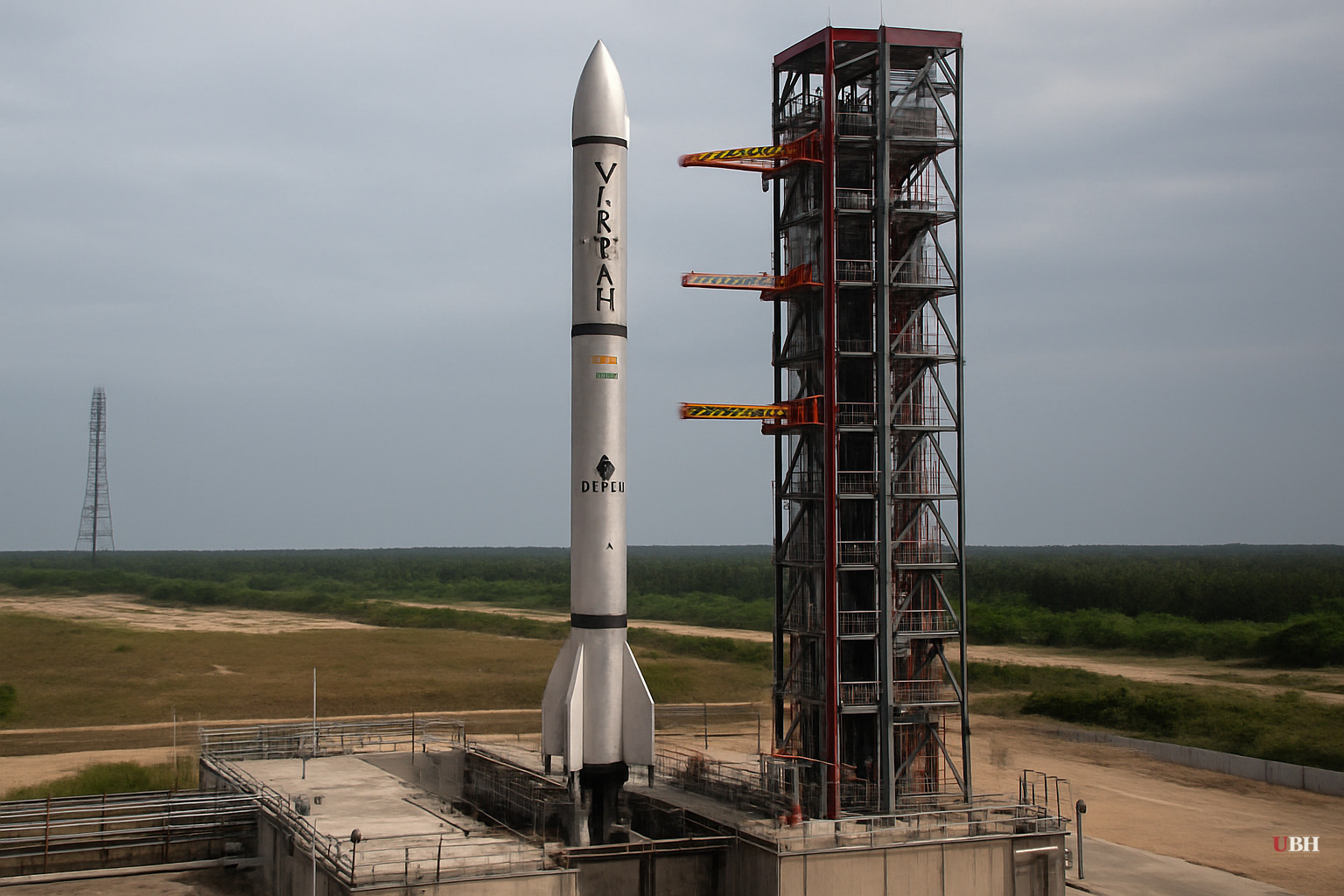
Skyroot Aerospace has been assigned a launch window running from July 12 through August 4 for the inaugural test flight of its Vikram-1 rocket, according to Ars Technica. The attempt would make Vikram-1 the first privately developed Indian launch vehicle to attempt orbital flight, lifting off from the Satish Dhawan Space Center on India's southeastern coast.
What Skyroot Is Actually Trying to Do
This is a test flight, not a commercial delivery. The mission aims to gather critical in-flight performance data across propulsion, stage separation, guidance, navigation and control, and overall vehicle performance. Vikram-1 is powered by three stages burning solid propellant and a fourth stage with liquid-fueled engines for the final maneuvers to place payloads into orbit. It is designed to place nearly a half-ton of payload mass into low-Earth orbit.
An orbital attempt of this kind carries real risk. Most first-launch attempts in this class fail outright or fall short of orbit. The Indian space startup community has watched several delays already, and the nearly four-week window reflects the margin Skyroot needs to manage weather and technical holds. The test flight will originate from a launch pad originally built for India's government space program.
The Swift Mission Gives Vikram-1 Some Context
The Pegasus mission that just concluded is worth keeping in mind when evaluating what Skyroot faces. Katalyst Space Technologies' Link servicing satellite launched on the Pegasus XL after two weather scrubs and one launch-vehicle technical issue that halted the rocket even after the L-1011 carrier aircraft departed, according to Ars Technica. The mission ultimately reached orbit and will spend weeks maneuvering toward NASA's Swift observatory, launched in 2004 and never designed for on-orbit servicing, to raise its altitude and buy the telescope more operational time before atmospheric drag forces reentry.
Even experienced operators with mature vehicles encounter delays and aborts. Skyroot is flying a brand-new rocket.
The Strongest Case for Skepticism
Critics of India's emerging private space sector make a reasonable argument. The country's launch infrastructure and regulatory environment are still maturing, and Skyroot has no orbital track record. Government-backed ISRO remains the dominant actor in Indian rocketry. A failed Vikram-1 attempt would not end Skyroot — the company has raised approximately $160 million to date, including a $60 million fundraising round announced in May that pushed its valuation over $1 billion — but it would test investor patience in a market where incumbents keep lowering prices.
The first flight of a new rocket is historically more likely to fail than succeed. A partial success — reaching a suborbital trajectory, demonstrating stage separation, and validating propulsion — would still represent meaningful progress.
What the Broader 2026 Launch Calendar Tells Us
Ars Technica's reporting noted that of the 20 most anticipated launches heading into 2026, only NASA's Artemis II mission can be counted as completed at the halfway point of the year. The rest have slipped to later in the year or into 2027. NASA's Roman Space Telescope does appear on track for a launch in the coming months, but the broader pattern confirms what anyone who follows this industry already knows: published schedules are optimistic by design.
Skyroot's July 12 opening date sits inside a window that extends to August 4, giving the company roughly three and a half weeks of flexibility. Whether Vikram-1 lifts off in that window, slips again, or attempts a flight that falls short of orbit will determine how India's private space story gets written in the second half of 2026.
The unresolved question heading into that window is straightforward: can Skyroot execute a clean countdown on a vehicle that has never attempted orbit, at a launch site where the dominant tenant is a government agency with its own schedule pressures? The answer arrives no earlier than July 12.
Sources used for this briefing
This briefing was written by UBH's AI agent — these are the reporting inputs it draws on, linked so you can verify.


