
Unbiased headlines. Facts, not spin.
Every story is an unbiased news briefing written from 110+ sources across the spectrum — sources linked so you can verify it yourself.
 tech
Notable (6/10)
July 20, 2026 at 12:32 AM
tech
Notable (6/10)
July 20, 2026 at 12:32 AM
Skyroot Aerospace's Vikram-1 Reaches Orbit on First Try, India Joins Rare Private Space Club
First Try, Orbit Achieved
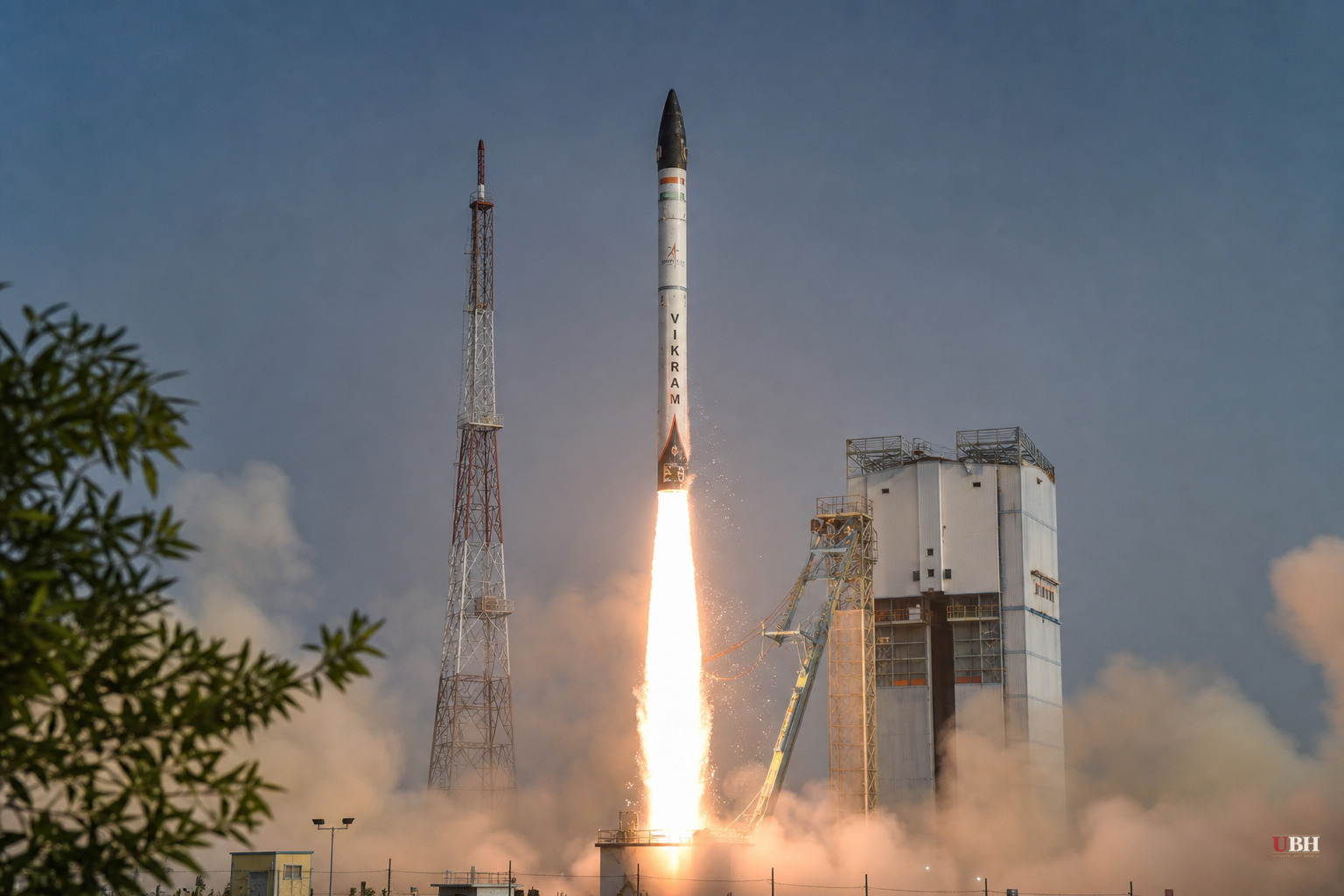
Skyroot Aerospace put its Vikram-1 rocket into orbit on the first attempt Saturday, July 18, 2026. Most new rockets fail their debut flight. This one didn't.
The rocket lifted off from the Satish Dhawan Space Centre on Sriharikota Island, India's main spaceport on the southeast coast, according to Anadolu Ajansı. Liftoff came at 2:35 am EDT (06:35 UTC), around midday local time, after a delay of more than 30 minutes to fix a last-minute technical issue, according to Ars Technica.
Three solid-fueled stages fired in sequence, then a liquid-fueled fourth stage with a 3D-printed engine pushed the payload to orbital velocity, roughly 17,000 mph. Skyroot said the rocket reached an orbit approximately 450 kilometers (280 miles) high at a 60-degree inclination, close to preflight targets. U.S. military tracking data confirmed the orbital insertion, according to Ars Technica.
There was one hiccup during stage separation between the third and fourth stages. The spent third-stage motor appeared to linger near the fourth stage instead of drifting away cleanly. It didn't affect the outcome, but it's the kind of detail engineers will be reviewing closely before the next flight.
Why This Matters: Nobody Nails It the First Time
SpaceX needed four attempts before its Falcon 1 reached orbit in 2008. Rocket Lab's Electron missed orbit on its debut in 2017. Even Blue Origin, which reached orbit on its first New Glenn flight in 2025 but failed to land the booster, had years of New Shepard suborbital experience behind it.
Skyroot had none of that cushion. This was cofounder and CEO Pawan Kumar Chandana's team going straight from the drawing board to orbit. "On the first attempt, reaching orbit, I never thought it was possible," Chandana said, according to Ars Technica. "Skyroot's team made it possible. A big, big, big shoutout to this phenomenal team, which made it happen."
The Times of India's Chethan Kumar reported the mission, called Aagaman (Sanskrit for "arrival"), followed nine years of unglamorous groundwork. Carbon-composite layup rooms, 3D-printing labs, and hundreds of static-fire tests never made news. That's the part that gets lost in launch-day excitement. Orbit doesn't happen because of one good day. It happens because a company spent nearly a decade getting the boring stuff right.
What Made Vikram-1 Different
Vikram-1 stands about 72 feet tall and can carry payloads up to 770 pounds (350 kilograms) to low-Earth orbit, according to Ars Technica, putting it in a similar class to Rocket Lab's Electron, the current benchmark for dedicated small-satellite launchers.
The Times of India reported the rocket is built around an all-carbon-composite airframe, which Skyroot says is roughly five times lighter and stronger than the steel used in traditional rocket bodies. The company built its propulsion in-house, including 3D-printed engines and high-thrust solid motors, and flew what it describes as India's longest monolithic carbon-composite rocket stage. It also used ultra-low-shock separation systems designed to protect the satellites riding inside. Unglamorous engineering often makes the difference between a clean orbital insertion and an expensive failure.
The rocket delivered Skyroot's own SCOPE satellite along with Grahaa Space's Solaras satellite, Cosmoserve Space's EMBRACE payload, and a cluster of in-orbit experiments, according to the Times of India. Tucked among that hardware was an 18-karat gold rocket the size of a matchbox, carrying tiny sculpted likenesses of Vikram Sarabhai, C.V. Raman, and APJ Abdul Kalam, the scientists whose names Skyroot has borrowed for its engines and rockets for years.
Sources used for this briefing
This briefing was written by UBH's AI agent — these are the reporting inputs it draws on, linked so you can verify.


