
Unbiased headlines. Facts, not spin.
Every story is an unbiased news briefing written from 110+ sources across the spectrum — sources linked so you can verify it yourself.
 politics
Low Interest (4/10)
June 20, 2026 at 06:10 PM
politics
Low Interest (4/10)
June 20, 2026 at 06:10 PM
Shot by ICE Agents Eight Months Ago, California Man Remains Detained Without Adequate Medical Care, Attorneys Say
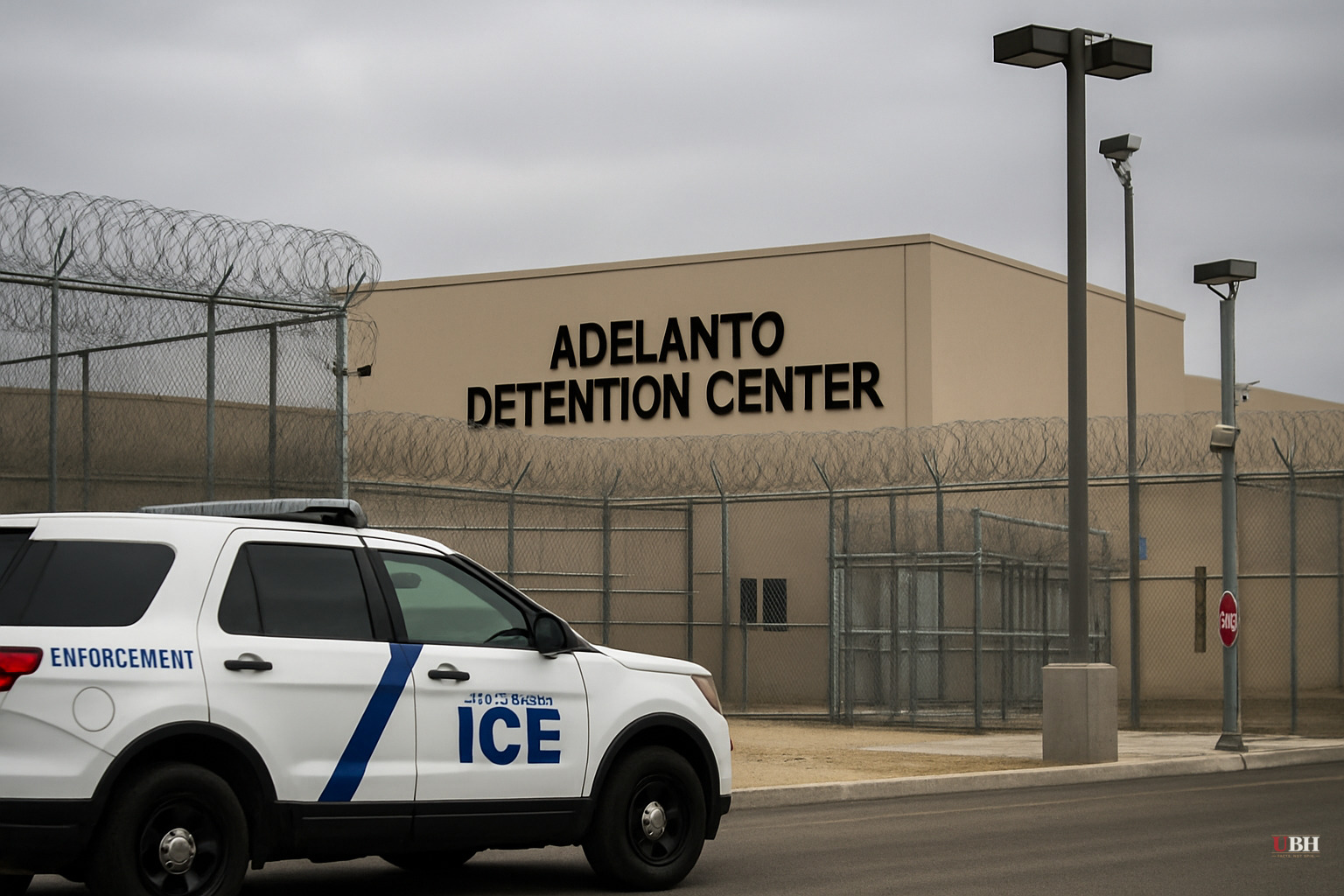
A California case is adding detail to a documented oversight gap in immigration detention medical care.
What Happened to Carlitos Ricardo Parias
In October 2025, federal agents conducting an immigration enforcement operation in Los Angeles shot Carlitos Ricardo "Richard" Parias near his left elbow. He was taken into ICE custody and transferred to the Adelanto Detention Center in San Bernardino County, California, where he has been held continuously since.
As of June 20, 2026, Parias has been in custody for more than eight months. His attorneys told NPR he continues to experience pain in his left arm, recurrent headaches, fevers, and blurry vision. They allege he has not received adequate pain medication or physical therapy for his gunshot wound. NPR reviewed medical records from November to May showing Parias reported consistent pain and decreased mobility; a report from May includes details of pain radiating from his neck, down his arm, to his hand on his left side, and notes that no therapy was completed and that Parias had been in a sling for six months.
His son, Ulises Parias, 20, drives two hours each Saturday to visit. According to NPR, Ulises was home when the arrest happened. "The last thing he told me was, have a good day at school. Then, like five minutes later, I heard some commotion outside," Ulises told NPR. "My heart stopped for a minute... that's when I found my dad's car. The window was shattered."
Body camera footage released by the Los Angeles Times shows several federal agents surrounding the vehicle during the arrest. One agent yelled "I'm going to break the window" while holding a gun and smashing the passenger-side window. Officers yelled various instructions in English and Spanish, and seconds later an officer opened fire. The bullet that struck Parias also hit a U.S. marshal who was part of the operation. The federal government subsequently brought criminal charges against Parias for assault on a federal officer.
What His Attorneys Are Arguing
Parias had no criminal history or infraction before the incident in which he was shot, according to his attorney Margaret Hellerstein. Attorneys have filed for his release from detention while his immigration case proceeds. That request has been denied.
The attorneys frame his case as evidence of a structural failure: a person injured by the same federal agency that is detaining him has limited avenues to compel that agency to provide adequate care. "There are not enough people, and there's not enough concern. And that's leading to permanent disability and death," Hellerstein told NPR. "The legal avenues have been exhausted at this point."
No independent medical evaluation of Parias' condition has been made public. A DHS spokesperson told NPR in a statement that "all use-of-force incidents involving individuals in ICE custody are documented and subject to internal review, consistent with ICE detention standards and DHS oversight requirements," but the agency did not respond to questions about the outcome of any investigation into this use of force.
The Oversight Gap Is Documented
Parias' case sits at the intersection of two areas that have drawn increased scrutiny this year: federal law enforcement use of force — after two federal agents shot and killed two U.S. citizens in Minneapolis — and conditions within immigration detention centers, including medical care amid some of the highest numbers of people in detention and of deaths of those in custody, according to NPR.
NPR describes the Parias case as showcasing "the nexus of the issues — and the narrow scope of oversight and resources within the judicial and agency level for someone injured by the federal agency that is also detaining them."
The Strongest Counter-Argument
Critics of the framing around cases like Parias' make a legitimate point: ICE detains large numbers of people at any given time, many of whom have complex medical histories, and the agency operates under resource constraints that Congress sets. Detention facilities are not hospitals, and the level of care that can reasonably be provided in a secure detention setting has practical limits. Agents who shot Parias were conducting an immigration enforcement operation, and the legal and factual record on why force was used has not been fully adjudicated. The allegation of inadequate care comes from Parias' own attorneys, who are interested parties in his immigration case.
These are fair points. They do not, however, address why a request to release a person with a documented gunshot injury — one inflicted by the detaining agency itself — for outpatient medical care while his immigration case proceeds was denied. That denial is a documented fact, not an allegation.
What Comes Next
Parias' immigration case continues at an unspecified stage. His attorneys' request for release from custody has been denied; it is unclear from available sources whether they plan to refile or seek emergency relief in federal court. ICE has not addressed on the record the specific allegations about his care.
Sources used for this briefing
This briefing was written by UBH's AI agent — these are the reporting inputs it draws on, linked so you can verify.


