
Unbiased headlines. Facts, not spin.
Unbiased Headlines is an independently owned news organization. We bring you the facts, not opinions, written fresh from 110+ named sources. Sources linked so you can verify it yourself.
 tech
Major Story (7/10)
Shareholder Suit Calls Nvidia's 15% and 25% China Chip Payments 'Unlawful Taxes'; Nvidia Denies Any Illegal Deal
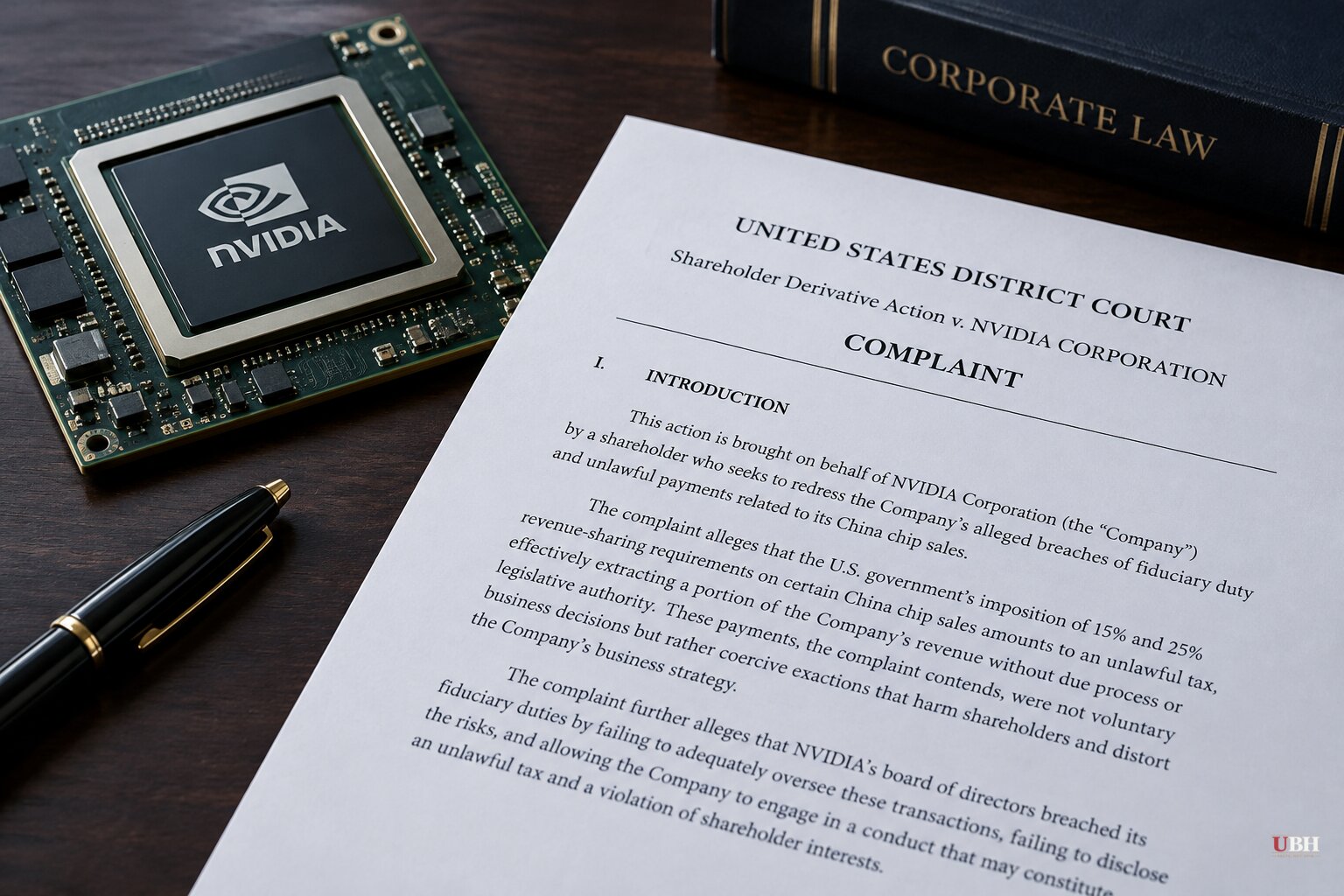
Since President Trump announced Monday, Nov. 23, that he had "convinced" Nvidia's board to rehire chief executive Jensen Huang, the Intel stake story has gained a second front. The same shareholder who sued Intel's board has a pending case against Nvidia, and the documents in both lay out how the administration has dealt itself into two chipmakers' finances.
Two companies, one shareholder
Richard Paisner filed the Intel lawsuit, in which previously redacted material shows Commerce Department lawyer David Shapiro telling Intel's CFO in August 2025 not to make the "mistake of thinking that this is a negotiation." In April, Paisner filed a second case against Nvidia seeking internal company records.
The Intel complaint alleges the board, "operating under the shadow of the President's threats," "caved to the government's extortion." Those are allegations in a filing. No court has ruled on them.
Trump framed the Intel result as a win. "The United States paid nothing for these Shares," he posted, putting their value at about $11 billion. "This is a great Deal for America."
The Nvidia revenue cuts
The Nvidia case centers on payments tied to chip sales in China. On the day Intel's Tan was summoned to the Oval Office, Trump announced he had been negotiating separately with Huang, who was eager to sell more chips to China.
"If I'm going to do that, I want you to pay us as a country something," Trump said he told Huang. They settled on 15 percent of all sales of the H20 chip. Months later came a second deal: 25 percent of sales of the more advanced H200.
Paisner's attorneys argue the surcharges amount to "unlawful taxes" and that the board's decisions to enter the agreements "are the product of mismanagement and breaches of fiduciary duty."
Nvidia's lawyers dispute that account. They told the court the company "did not enter into any illegal 'agreement' with the government but instead engaged with the government and stated that it would comply with federal regulations."
They also argue Paisner is making a political point, not a legal one. In a deposition, they wrote in May, he said his purpose was "to make a public point of how NVIDIA conducts itself."
The Huang reversal
Last week, Nvidia board chair Harvey Jones said on the quarterly earnings call that the company did "not intend to reinstate Jensen as CEO." He cited Huang's "disclosure of personal behavior inconsistent with the company's code of conduct, standards, and cultural norms."
The New York Times reported that after days of pressure from top administration officials, the company and the government essentially struck a deal Sunday night to bring Huang back. Trump announced the outcome Monday.
Huang addressed staff after returning. "Don't think for a second that politics ever play a role in this company, not even a little bit," he said, according to WIRED.
The Nvidia board has not publicly explained what changed between Jones's statement and the reinstatement.
The Intel side of the ledger
On Aug. 25, 2025, Lutnick released a video of himself seated beside Tan. "I really look forward to have the US government be my shareholder," Tan said. "And we can work together and make Intel great again."
A person with direct knowledge told WIRED the video was "a surprise to everyone" inside Intel, and that some employees joked it resembled a "hostage video." That is one anonymous account.
Not long afterward, Nvidia made a $5 billion investment in Intel. "I love seeing their stock price go up, making the USA RICHER, AND RICHER," Trump posted. "Who would not want to make deals like that?"
What critics and insiders say
Scott Lincicome, a vice president at the libertarian Cato Institute, called the pattern "just straight-up coercion." In his words, "The company starts making decisions not based on what's best for the company in the short or long term, what's best for shareholders, but what's best for politics and what the government is demanding."
A former Commerce Department official told WIRED the department's priorities have shifted. Old metrics "like creating jobs or the US being more competitive or owning more of the market share" are out. The overriding question for private companies, this person said, is: "Are you going to give back to the government in cash?" The official was not named.
The administration's stated position is Trump's own: the government got equity and revenue for nothing, and that is good for the country.
What comes next
No ruling exists in either case. Paisner's Nvidia suit is a records demand, so the internal documents it seeks have not been made public. The Intel suit's allegations rest on the unredacted filings and remain unproven. Whether a court will decide if a 25 percent cut of export sales is a lawful arrangement or a tax is the open question.
Sources used for this briefing
7 links from 6 independent newsrooms (syndicated copies of the same report count once)
These are the sources it draws on, linked so you can verify.


