
Unbiased headlines. Facts, not spin.
Every story is an unbiased news briefing written from 110+ sources across the spectrum — sources linked so you can verify it yourself.
 politics
Notable (6/10)
August 8, 2026 at 11:15 PM
politics
Notable (6/10)
August 8, 2026 at 11:15 PM
Senate Fails Again to Advance Voter ID Bill, 52-46, as Seven States Pass Their Own SAVE Act Laws
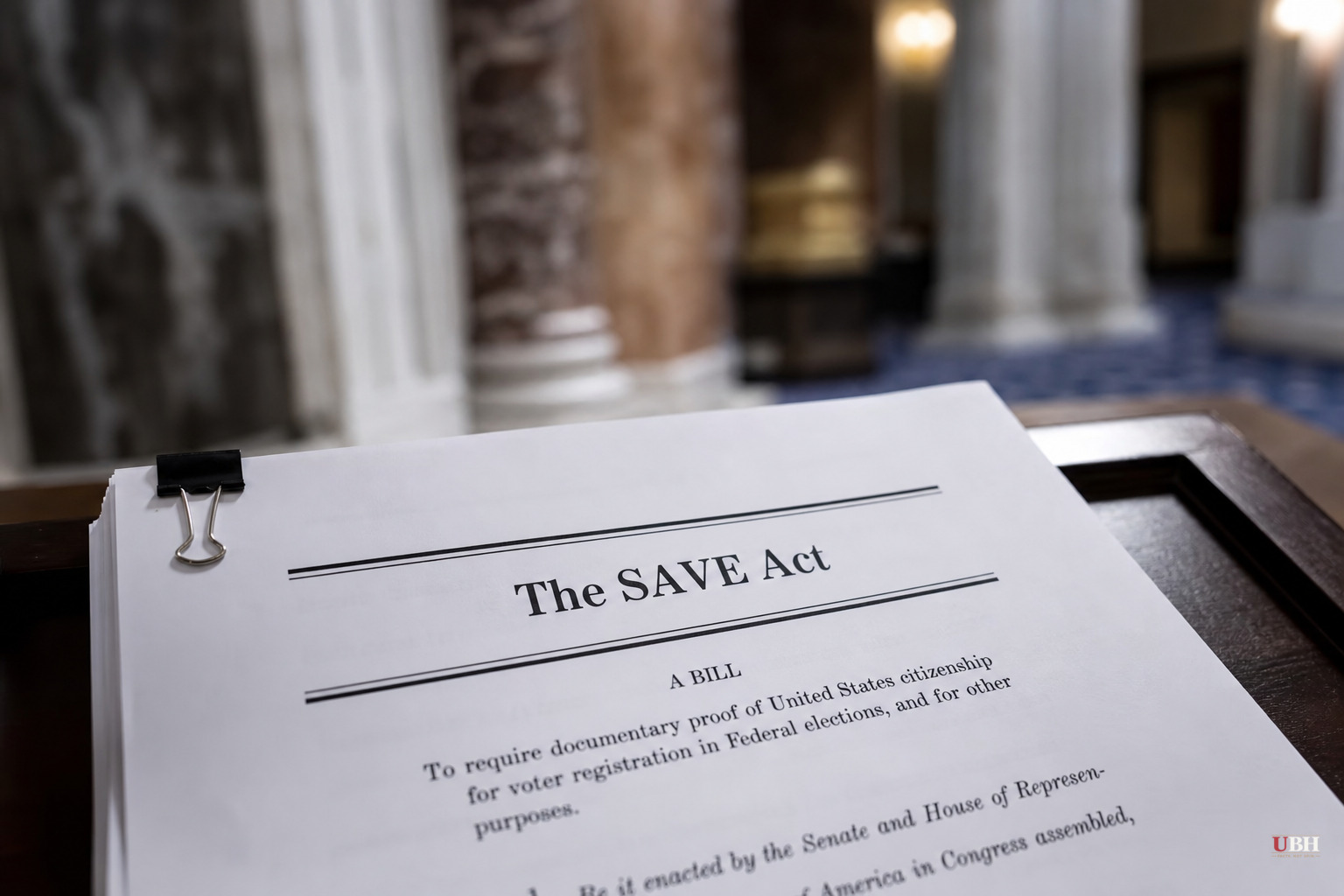
The Senate failed Thursday to advance a Republican-backed voter ID bill, 52 to 46, eight votes short of the 60 needed to break a filibuster. It's the latest defeat for the SAVE America Act and its offshoots since Senate Majority Leader John Thune first tried to move the legislation. Seven states have stopped waiting on Congress and written similar requirements into their own law.
The bill at issue, S. 5271, sponsored by Sen. Jon Husted, R-Ohio, would require voters to show photo ID at the polls and include a copy of that ID when voting by mail. It's a narrower slice of the broader SAVE Act, which has passed the House multiple times under different Congresses but never cleared the Senate's 60-vote threshold.
Sen. Alex Padilla, D-Calif., ranking member of the Senate Rules and Administration Committee, led the opposition on the floor. Padilla argued the bill is stricter than voter ID laws in all 50 states because it would require mail and absentee voters to submit copies of their identification. "This goes further, requiring voters to include a copy of their ID when they vote by mail," Padilla said. "Tens of millions of Americans vote by mail; this bill would do away with secret ballots as we know it." He also tied the timing to the 2026 midterms, calling it a distraction from cost-of-living issues and accusing Trump and Senate Republicans of prioritizing the bill over health care and the economy less than 90 days before Election Day.
Requiring a copy of a photo ID to accompany a mail ballot is a real logistical hurdle for older voters, people without easy access to a copier or scanner, and rural voters far from a DMV. Critics are right that no state currently requires exactly this combination, and Padilla's point that it's stricter than existing state voter ID laws is accurate as a factual matter.
But the underlying premise of the SAVE Act, that voters should have to prove they're citizens and show ID to cast a federal ballot, isn't a fringe position. Requiring identification is standard for boarding a plane, opening a bank account, or picking up a prescription. States that have already implemented proof-of-citizenship and photo ID requirements haven't produced evidence of mass disenfranchisement. No source here presents verified evidence of widespread voter fraud under existing law, and that absence of proof cuts both ways: it doesn't prove fraud is happening, but it also doesn't mean tighter verification is unnecessary or bad-faith.
While the Senate keeps falling short, states aren't waiting around. According to the Daily Signal, seven states have enacted laws in 2025 and 2026 combining proof-of-citizenship requirements with voter ID mandates, building on five states that already had citizenship-verification laws on the books, per Ballotpedia.
South Dakota, Thune's own home state, passed its version through the Legislature and Gov. Larry Rhoden signed it in March. Senate Bill 175 requires documentary proof of citizenship to register, accepting driver's licenses, tribal ID, birth certificates, passports, and naturalization papers.
Kansas took a different route. After a 2011 citizenship-verification law was struck down by a federal appeals court for violating the National Voter Registration Act, Kansas lawmakers passed the SAVE Kansas Act in 2026, requiring the secretary of state to cross-check voter rolls against the federal SAVE database used to verify immigration status. Democratic Gov. Laura Kelly vetoed it. The Republican-controlled Legislature overrode her.
Florida's version, signed by Gov. Ron DeSantis in April, takes effect in 2027. It requires the state to check new and updated voter registrations against Department of Highway Safety and Motor Vehicles records, and demands documentary proof of citizenship if that check comes up short.
The legal ceiling on all this is a 2013 Supreme Court ruling that limited how far states can go in demanding citizenship proof for federal voter registration under the motor-voter law. That's the same legal obstacle that sank Kansas's original 2011 law. States are threading the needle by building verification systems around existing federal databases rather than imposing new documentary hurdles directly, which is part of why Kansas shifted its approach entirely between 2011 and 2026.
National voter ID policy is now being decided state by state, not in Washington. The next test comes in 2027, when Florida's law takes effect and becomes the first large swing state to fully implement DMV-based citizenship verification alongside a governor-signed voter ID mandate. Whether it survives legal challenge, and whether other closely divided states follow Florida and South Dakota's lead before the 2026 midterms finish playing out, remains unresolved.
Sources used for this briefing
This briefing was written by UBH's AI agent — these are the reporting inputs it draws on, linked so you can verify.


