
Unbiased headlines. Facts, not spin.
Every story is an unbiased news briefing written from 110+ sources across the spectrum — sources linked so you can verify it yourself.
 politics
Major Story (7/10)
August 8, 2026 at 07:58 PM
politics
Major Story (7/10)
August 8, 2026 at 07:58 PM
Senate Confirms Todd Blanche as Attorney General by 50-49, One Vote to Spare
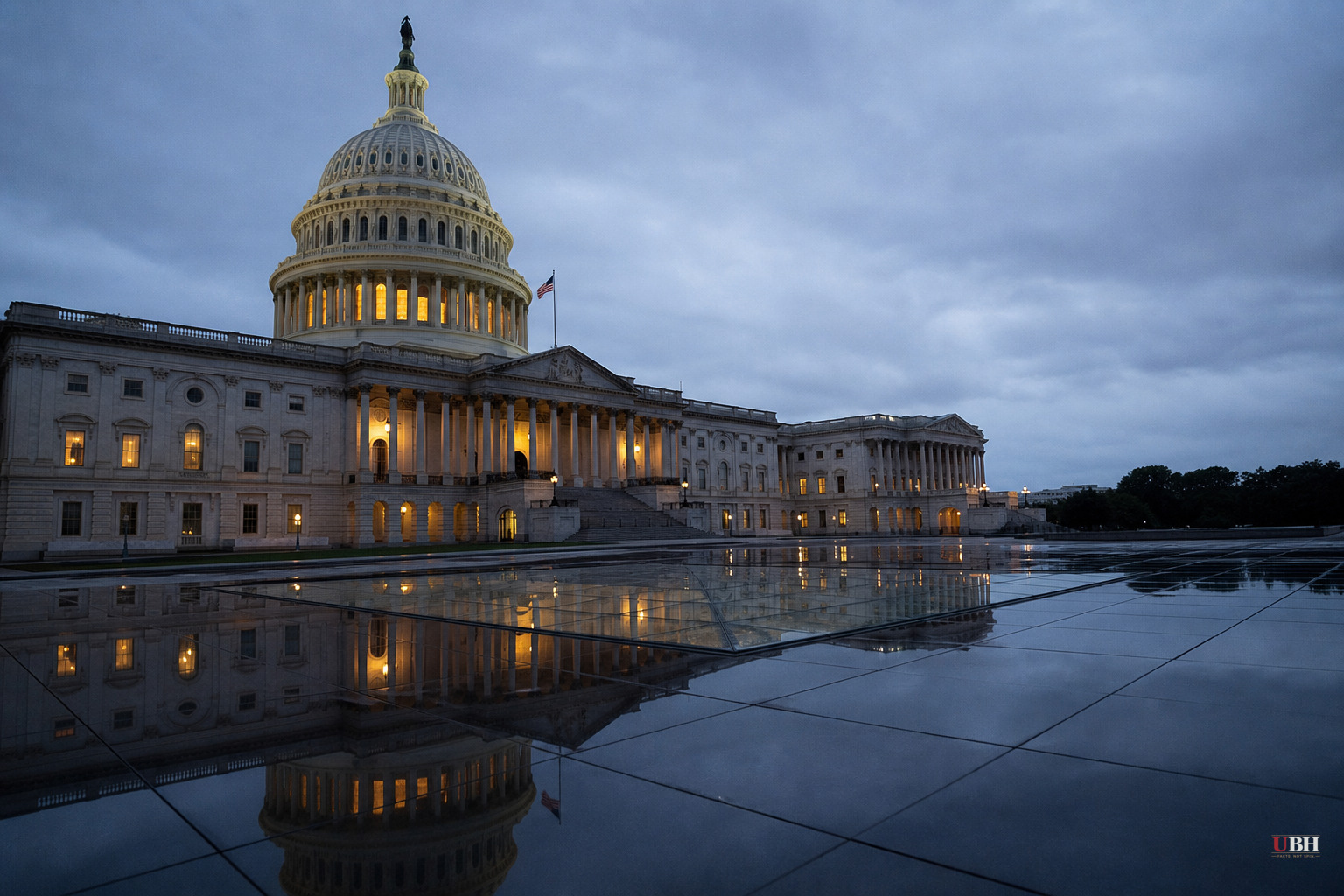
The Senate confirmed Todd Blanche as attorney general in a 50-49 vote early Saturday morning, according to the Associated Press. It's the second attorney general confirmation of Trump's current term, and it came only after a fight that split Republicans and left the outcome in doubt until the final day.
Blanche was already running the Justice Department in an acting capacity. Confirmation gives him full authority to run it going forward, without the legal ambiguity that comes with an acting title.
The vote broke almost entirely on party lines, but not entirely. Republican Sens. Susan Collins of Maine and Lisa Murkowski of Alaska voted no, joining every Senate Democrat. That left Blanche with exactly the votes he needed and not one to spare.
What nearly sank the nomination
The fight wasn't really about Blanche's resume. It was about a settlement the Justice Department negotiated in Trump's lawsuit against the IRS.
That settlement reportedly included a $1.8 billion compensation fund benefiting Trump allies, including people who took part in the January 6, 2021 Capitol riot, according to the AP. It also contained provisions shielding Trump and his family from IRS tax audits.
Republican senators, not just Democrats, balked. A cash fund tied to Jan. 6 participants and a carve-out from IRS audits for a sitting president's own family is the kind of thing that doesn't poll well even inside Trump's own party, and several GOP senators said so privately and publicly before the vote.
To save his nomination, Blanche put a promise in writing. The Justice Department would abandon the $1.8 billion fund and rein in the audit-shield provision. That written commitment is what moved Sen. Bill Cassidy of Louisiana, the decisive vote, into the yes column on Friday morning.
Cassidy, notably, lost his own primary this year to a Trump-backed challenger, meaning he has no obvious political incentive to protect Trump. His reasoning was pointed: "This is not a referendum on President Trump. It is a decision regarding Mr. Blanche in very specific circumstances," he said, according to the AP. Cassidy argued Blanche's history as Trump's former criminal defense attorney could actually make him more capable of pushing back on the president when needed, not less.
That's a fair argument and worth taking seriously. A former personal lawyer confirmed to run the Justice Department is an unusual arrangement, but it doesn't automatically mean Blanche will be a rubber stamp. Cassidy's bet is that someone who has already had to tell Trump "no" in a legal context might be better positioned to do it again than an outside pick with no relationship at all. Whether that bet pays off is something only Blanche's actual conduct in office will answer.
The case against him
Sen. Dick Durbin of Illinois, the top Democrat on the Judiciary Committee, called the confirmation a "serious mistake" and urged colleagues not to be on the "wrong side" of history, according to the AP. Durbin's argument is straightforward: an attorney general who spent years as the president's personal criminal defense lawyer is not the person you want running an agency that's supposed to operate independently of the White House, especially one Trump has openly said he wants used against political opponents.
That's not a hypothetical concern invented by Democrats. Trump has said publicly, repeatedly, that he wants the Justice Department to investigate people he considers enemies. An attorney general whose entire professional relationship with the president is built on personal loyalty and legal defense work is a legitimate structural worry, regardless of who happens to hold the job.
Collins and Murkowski crossing over reinforces that this wasn't simple partisan noise. Two sitting Republican senators looked at the nominee and the circumstances and said no.
What actually changed
The written commitment to drop the $1.8 billion fund and limit the audit-shield provision is the concrete outcome here. It's now on record, which means it can be checked against what the department actually does.
Blanche posted on social media that he was "deeply honored" by Trump's trust and "grateful" to the senators who worked late into the night to confirm him.
The open question is whether Blanche's written promise holds once he's no longer fighting for votes. The IRS settlement terms, the fate of the compensation fund, and whether the audit protections for Trump's family actually get narrowed are all now matters of public record that reporters and senators can track. If the department reverses course after confirmation, Cassidy and the other Republicans who backed Blanche on the strength of that promise will have to answer for it.
Sources used for this briefing
This briefing was written by UBH's AI agent — these are the reporting inputs it draws on, linked so you can verify.


