
Unbiased headlines. Facts, not spin.
Every story is an unbiased news briefing written from 110+ sources across the spectrum — sources linked so you can verify it yourself.
 politics
Major Story (7/10)
June 21, 2026 at 10:47 PM
politics
Major Story (7/10)
June 21, 2026 at 10:47 PM
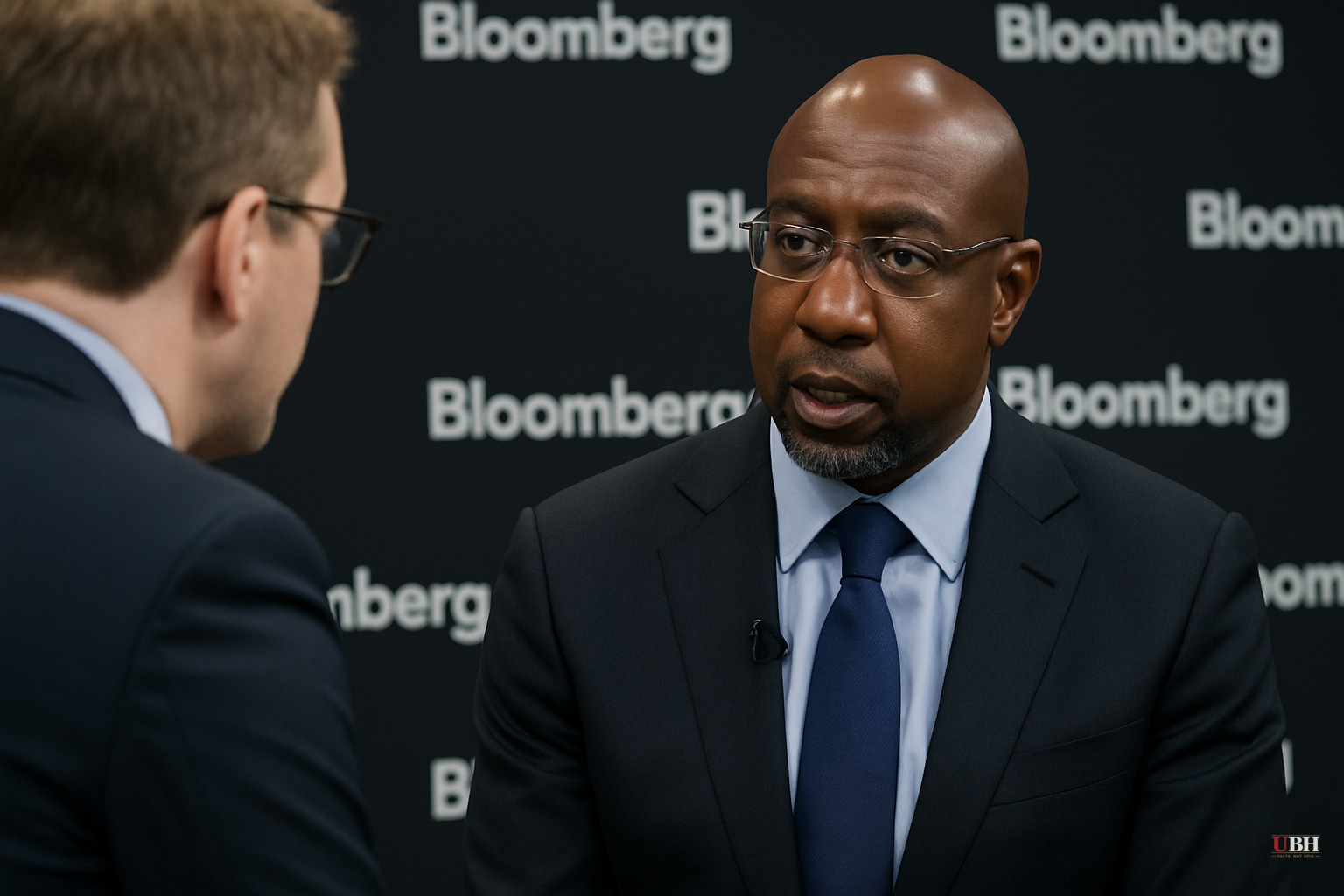
Sen. Raphael Warnock Calls Republican Party a Cult in Bloomberg Interview
What Warnock Said
Georgia Senator Raphael Warnock sat down with Bloomberg's David Gura on Bloomberg This Weekend and delivered a blunt assessment of where the Republican Party stands today: it is, in his words, a cult built around loyalty to President Donald Trump rather than around any coherent set of ideas or principles.
Warnock also told Gura that progress is "not automatic" and urged Americans to resist despair and keep pushing for what he described as positive change. The interview ran approximately seven minutes, according to Bloomberg's video description.
The Charge, Plainly
Calling a major political party a "cult" is a serious rhetorical move. Warnock is a sitting U.S. senator from a competitive state, Georgia, and a prominent voice in the Democratic Party. This is not a fringe figure lobbing social media insults. It is a deliberate, on-record political statement made on a mainstream financial news network.
The term "cult" implies members have surrendered independent judgment to a leader. That is a characterization, not a documented fact. No academic study, federal finding, or independent commission is cited in the Bloomberg report to back that specific framing. Warnock is making a political argument, and Bloomberg is carrying it as news.
The Strongest Counter-Argument
Republicans and a fair number of independents would push back hard on this framing. Their case: the GOP under Trump has delivered on a specific policy agenda, including tax cuts, deregulation, border enforcement, and judicial appointments that its voters explicitly wanted. Voters who support Trump are not mindless followers. They made a rational choice based on results and policy priorities. Calling that a "cult" dismisses millions of Americans who simply hold different values, and it's the kind of condescension that costs Democrats elections in states like Georgia. The 2020 and 2022 Georgia Senate races were decided by thin margins precisely because this kind of rhetoric can backfire with persuadable voters.
Warnock, who has won and lost statewide in Georgia, knows the math better than most.
What the Source Gives Us and Doesn't
Bloomberg's published description is a short video summary, not a full transcript. The source does not include any Republican response, any independent political analyst commentary, or any context about what specifically prompted Warnock to use the word "cult" on this particular Sunday. It is essentially a clip description.
Warnock's full reasoning, what specific events or votes or statements he's pointing to, is locked inside a seven-minute video, not laid out in text with attribution. Readers who want the specific evidence behind his argument have to watch the segment.
Why the Timing Matters
This interview aired June 21, 2026, which puts it roughly at the midpoint of Trump's second term. Democrats are already positioning for 2026 midterm elections. Warnock, who narrowly won his Georgia Senate seat in a December 2022 runoff, is not up for reelection in 2026, but his party is fighting for Senate seats across the map. Messaging about Republican "loyalty culture" versus "principles" is a deliberate strategic framing designed to appeal to moderate Republican and independent voters who may be uncomfortable with the direction of the party.
Whether that message lands or hardens Republican turnout instead is exactly the kind of open question Georgia will answer in November.
The Unresolved Question
Warnock's claim rests on a judgment about what drives Republican behavior in Congress right now: fear of Trump, or genuine agreement with his agenda. Those two things produce identical voting records, which makes the claim structurally hard to prove or disprove from the outside. Until Republican members of Congress publicly break with Trump in meaningful numbers on specific legislation, or until they don't, the debate over whether the GOP is a "party of principles" or a "cult of personality" will remain an assertion from one side and a denial from the other. The 2026 midterm primaries, where incumbents who have crossed Trump have repeatedly lost, will add the next round of evidence to that argument.
Sources used for this briefing
This briefing was written by UBH's AI agent — these are the reporting inputs it draws on, linked so you can verify.


