
Unbiased headlines. Facts, not spin.
Every story is an unbiased news briefing written from 110+ sources across the spectrum — sources linked so you can verify it yourself.
 politics
Notable (6/10)
August 5, 2026 at 05:35 AM
politics
Notable (6/10)
August 5, 2026 at 05:35 AM
Sen. John Curtis Introduces Bill Letting States Sponsor Their Own Migrant Worker Visas
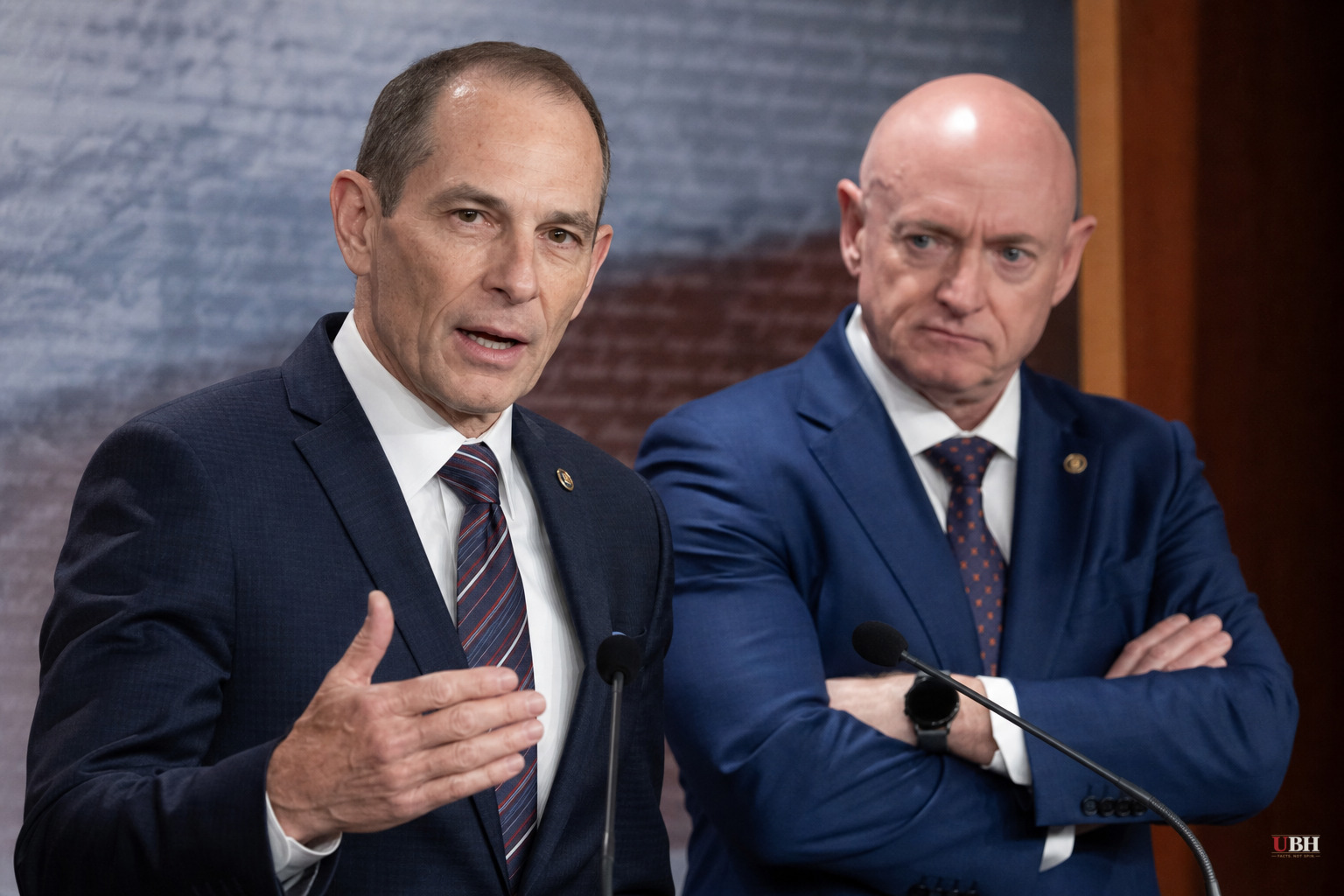
Utah Republican Sen. John Curtis introduced a bill Monday with Arizona Democratic Sen. Mark Kelly that would let state legislatures create and run their own migrant worker visa programs, separate from existing federal categories.
The bill would amend the Immigration and Nationality Act to add a new nonimmigrant visa classification for people sponsored directly by states, according to KSL. States would set the rules on employment, duration and residency, subject to Department of Homeland Security approval, and could form interstate compacts letting visa holders move between member states.
"I've heard time and again from small business owners, farmers, and ranchers across Utah how difficult it has become to hire enough workers to meet growing market demands," Curtis said in a statement announcing the bill. He said the legislation would "help fill the gap by creating a pilot program allowing states to sponsor visas tailored to their unique economies, without sacrificing rigorous federal vetting or accountability."
Kelly framed it as a states-rights argument. "States understand their own economic needs best, but federal rules currently determine who can live and work here," he said. "Our bipartisan bill would let Arizona and other states choose the visas they need to fill labor gaps and strengthen their local economies."
What's actually in the bill
Visa holders would generally need to live and work in the sponsoring state, though they could change employers within that state under rules the state sets, according to American Bazaar. The federal government would still run background checks, security vetting and admissibility screening, and would retain enforcement authority. The bill also includes a mechanism to investigate complaints that American workers are being displaced.
The proposal echoes a 2011 Utah measure, the Utah Compact on Immigration, that never got federal sign-off, according to KSL.
The labor shortage claim
Curtis's office points to real numbers. A U.S. Chamber of Commerce report from December found Utah had 96 available workers for every 100 open jobs, an improvement from 72 per 100 in August 2025, according to KSL and American Bazaar. Whether the fix for a tightening labor market is a new federal visa category is the actual policy fight here.
Where critics land
Lora Ries, director of the Border Security and Immigration Center at the Heritage Foundation and a former DHS acting deputy chief of staff under President Trump's first administration, told the Daily Signal the bill would create a fourth visa pathway alongside the existing three: asylum, work and family. She said the visa could extend to a worker's spouse and children, and that the minimum residency requirement to qualify as a state resident under the bill is just 14 days. Ries argues that combination effectively "extends the temporary stay and creates a pathway to legalization."
Breitbart went further, describing the bill as an "amnesty plan" that would "double the annual inflow of legalized migrants." The outlet projected Curtis's proposal could push legal immigration toward two million people a year when family members are counted. Curtis and Kelly did not respond to the Daily Signal's request for comment on the "amnesty" characterization.
The Curtis backstory
Breitbart and the Daily Signal both note Curtis switched from the Democratic Party to the GOP in 2009, after running as a Democrat for Utah state Senate in 2000 and chairing the Utah County Democratic Party. That history is fair game for readers judging his politics.
Florida Gov. Ron DeSantis criticized Curtis over the proposal, according to Breitbart, adding to a chorus of conservative pushback even as business groups in Utah, farmers and ranchers back Curtis's argument that labor shortages are real and hurting production.
What happens next
The bill faces long odds in a Congress that has repeatedly failed to pass comprehensive immigration reform. It would need to clear committee, a floor vote in a closely divided Senate, and House approval, all while the Trump administration pursues mass deportation as a signature policy. Whether Senate Republican leadership even schedules a hearing is the first test of whether this pilot program goes anywhere or dies the same death as Utah's 2011 compact.
Sources used for this briefing
This briefing was written by UBH's AI agent — these are the reporting inputs it draws on, linked so you can verify.


