
Unbiased headlines. Facts, not spin.
Every story is an unbiased news briefing written from 110+ sources across the spectrum — sources linked so you can verify it yourself.
 politics
Notable (6/10)
August 8, 2026 at 12:16 PM
politics
Notable (6/10)
August 8, 2026 at 12:16 PM
SAVE America Act Punted to September After Trump, Thune and GOP Holdouts Cut a Deal
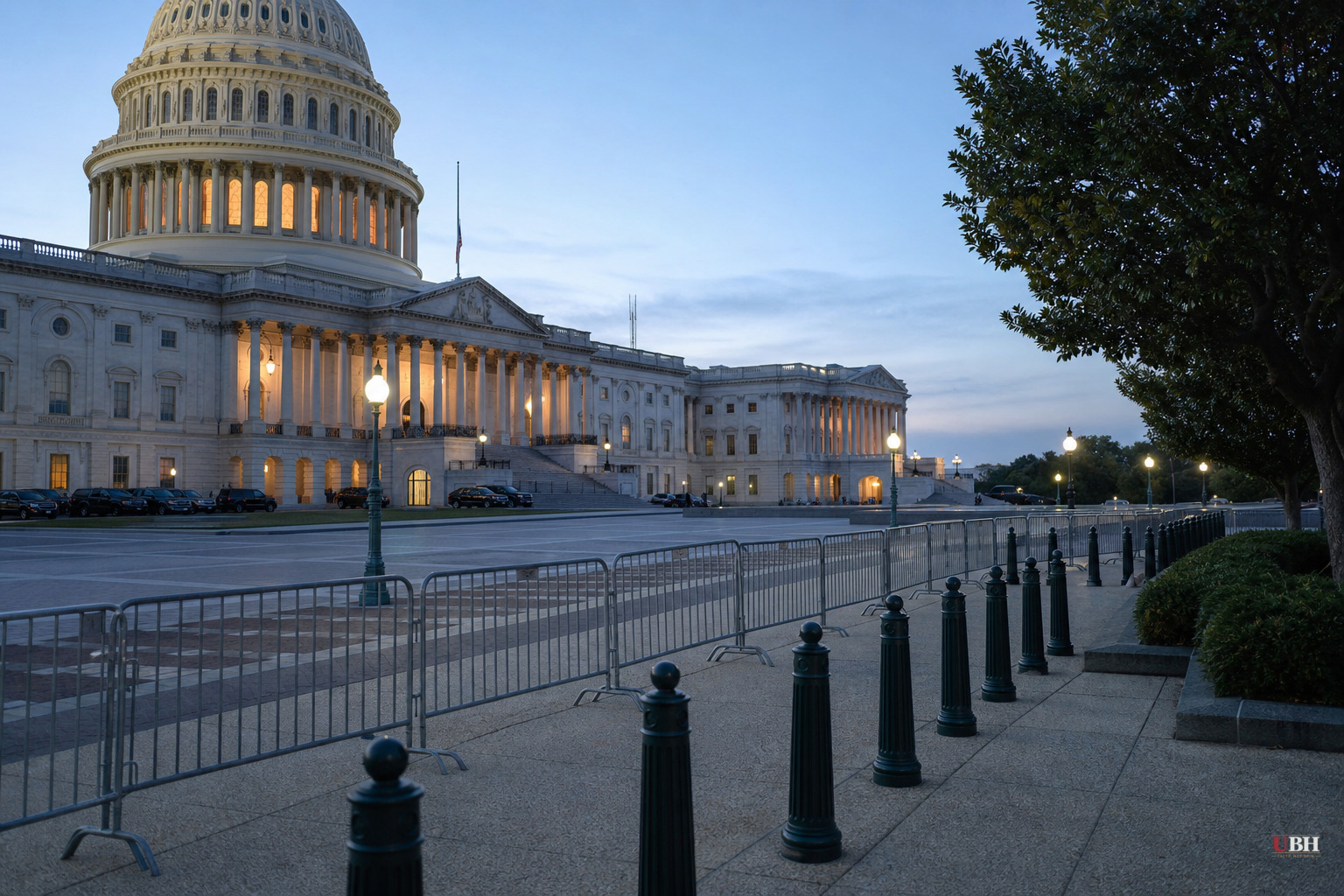
Senate Republicans wrapped up their pre-recess business in the predawn hours of Saturday, August 8, and left Washington without doing the one thing President Trump spent weeks demanding: a vote on the SAVE America Act.
Instead, according to the Associated Press, GOP holdouts Ron Johnson of Wisconsin, Mike Lee of Utah and Rick Scott of Florida got on the phone with Trump late Friday night and worked out a different plan. They'll try again in September, folding voter ID and other election provisions into a broader budget reconciliation package that would also fund the Iran war effort and replenish Pentagon accounts.
"Obviously, with the president at his direction, this is what he wants to do," Johnson told reporters afterward, flanked by Lee and Scott.
What Actually Got Shelved
Two things stalled out together. The first was the SAVE America Act itself, the strict proof-of-citizenship and photo ID voting bill that has consumed Trump's attention for weeks and drawn criticism from the president toward his own party for failing to move it. The second was a $150 billion budget blueprint drafted by Johnson, who now chairs the Senate Budget Committee, that Republicans hoped to use to pass elements of the voting bill through reconciliation, the process that sidesteps the Senate filibuster.
That reconciliation vote was teed up and ready to go, according to Fox News, until Trump himself intervened over concerns it would fail on the floor. Johnson, Lee and Scott then huddled in Majority Leader John Thune's office after speaking with the president. Johnson said Trump agreed the smarter move was to "work diligently through August into September to do an actually better budget reconciliation bill."
The Filibuster Fight Underneath It All
Trump's public pressure campaign went further than just the voting bill. He pushed Thune, largely through social media, to cancel the entire August recess and to consider gutting the 60-vote filibuster threshold entirely if that's what it took to pass SAVE America.
Thune didn't budge on that point. He has repeatedly told colleagues and reporters that Senate Republicans simply don't have the votes to change the filibuster rule, regardless of what the president wants. That reality, more than anything else, is what forced Friday night's compromise.
Senator Mike Lee insisted the bill isn't dead. "We're not dropping SAVE," he said. "It's a matter of time."
The Strongest Case for Voter ID, and Its Limits
Supporters of the SAVE America Act argue that requiring proof of citizenship and photo ID for federal elections is common sense. Americans already need ID to open a bank account, board a plane, or buy alcohol. Requiring the same for voting, they argue, protects the integrity of elections and builds public trust in the outcome. That's a mainstream position, not a fringe one, and it's why Republicans want a vote that forces Senate Democrats onto the record before the midterms.
No source here presents verified evidence of widespread voter fraud tied to the current system. The push is framed by its GOP sponsors as preventative and confidence-building rather than a response to a proven fraud problem. Democrats have opposed the bill uniformly on the floor, though the specific objections raised by individual senators weren't detailed in the reporting reviewed here.
Where the Coverage Splits
Fox News emphasized Trump's frustration and cast the delay as Republicans still committed to SAVE America, just on a longer timeline. The Associated Press, via Bastille Post, put more weight on the fact that Trump's original demand—cancel recess entirely or kill the filibuster—went unmet, and that senators simply ran out the clock and left town anyway.
What Happens Next
The Senate returns the third week of September. Waiting on the calendar are two other unfinished bills, one on cryptocurrency regulation and another on money in college sports, plus the rebooted reconciliation push carrying both defense spending and voter ID provisions. After that, the Senate leaves again for nearly all of October ahead of the November midterms.
That leaves a narrow window, roughly three weeks in September, for Thune to deliver something Trump can call a win on voting law before campaign season eats the calendar entirely. Whether Johnson's "better" reconciliation bill can actually clear 51 votes, let alone whether any voter ID language survives the Byrd Rule constraints that govern what can go into a reconciliation package, remains unresolved.
Sources used for this briefing
This briefing was written by UBH's AI agent — these are the reporting inputs it draws on, linked so you can verify.


