
Unbiased headlines. Facts, not spin.
Unbiased Headlines is an independently owned news organization. We bring you the facts, not opinions, written fresh from 110+ named sources. Sources linked so you can verify it yourself.
 defense
Breaking / Critical (9/10)
defense
Breaking / Critical (9/10)
Saudi Coalition Downs Drone Over Eastern Province After Week of Houthi Strikes on Airports and Aramco Site
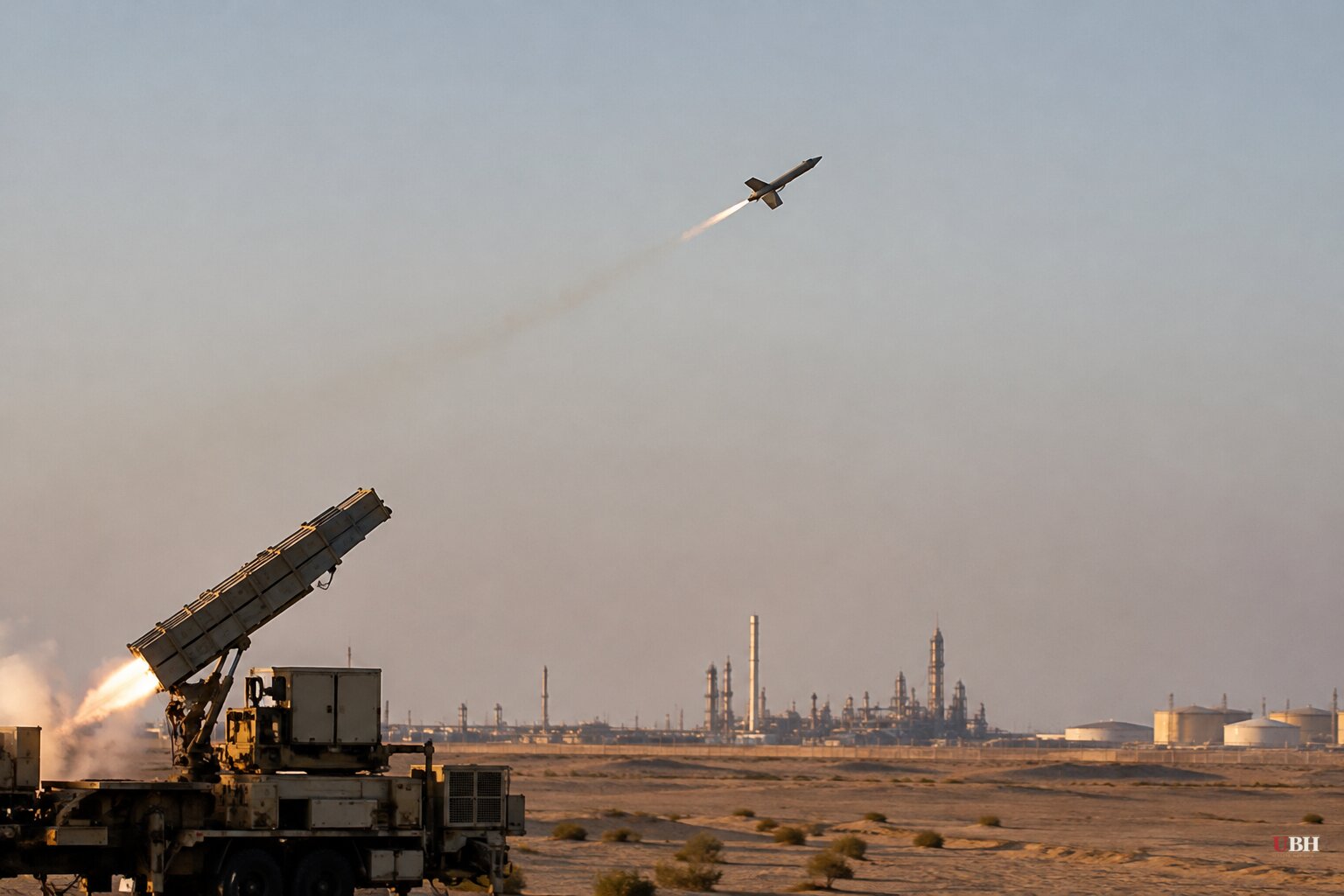
The Saudi-led coalition said early Thursday, Oct. 15, that it intercepted and destroyed a drone over Saudi Arabia's Eastern Province. Coalition spokesman Turki al-Maliki gave no details, including who launched it. Saudi authorities said there were no casualties or damage.
The interception came hours after the Houthis claimed a ballistic missile strike on King Khalid International Airport in Riyadh. The coalition said it destroyed that missile on Wednesday after alerts sounded in the capital and in nearby Al-Kharj. The Houthis offered no details of casualties or damage.
Airports under fire
The current escalation traces to July, when the Houthis declared the 2022 truce with Saudi Arabia over amid the U.S.-Iran war. They resumed attacks on Red Sea shipping and then struck the kingdom directly.
An Anadolu tally based on official statements counts 10 attacks on five Saudi airports between Oct. 5 and 11. Those attacks killed 20 people, injured hundreds and disrupted flights. Saudi Arabia's General Authority of Civil Aviation put the injured at 356.
King Khalid International in Riyadh was hit five times and accounts for 18 of the deaths. The deadliest strike came Saturday, Oct. 10, killing at least 12 to 13 people depending on the account. One victim was an American citizen. More than 300 were injured and flight gates were heavily damaged.
The next day, GACA confirmed an attack on King Fahd International Airport in Dammam. It caused unspecified damage, less than at Riyadh.
Aramco and the oil question
On Wednesday, Oct. 14, Saudi authorities said an administrative building belonging to Aramco in Dhahran, where the company is headquartered, was targeted. It caused a limited fire, and no injuries were reported. It was not immediately clear whether the building took a direct hit or was damaged by debris from intercepted missiles. The Houthis claimed responsibility for an attack on Aramco headquarters.
The coalition said it also destroyed three cruise missiles and two drones aimed at the Riyadh region and southern Saudi Arabia. At least four people were hurt by falling debris, according to Saudi authorities.
The Houthis also claimed Wednesday night that a surface-to-air missile hit a Saudi Typhoon fighter over Saada province in northern Yemen. Military spokesman Yahya Saree said the aircraft, which he said took off from Taif, was at risk of crashing. Saudi authorities have not commented.
Energy markets were already on edge. Brent crude closed Monday at $106.65 a barrel, its highest since Sept. 15, then slipped to about $106.04 in early Asian trading Tuesday, per Reuters. Bloomberg, citing tanker-tracking data, reported that at least 10 empty supertankers and multiple Suezmax vessels had halted or diverted their trips toward the Persian Gulf after recent Iranian attacks on regional maritime infrastructure.
Saudi retaliation
On Tuesday, Oct. 13, Saudi Arabia struck a fuel depot in Yemen. Riyadh said the Houthis were using it to support attacks on Saudi airports, energy facilities and Red Sea shipping.
The Houthi-controlled Yemen Oil Company said the facility held no petroleum products and that the strike would not affect fuel supplies. The Houthis said two civilians were killed and two injured. The coalition said it warned civilians to leave the area beforehand.
Houthi official Mohammed al-Bukhaiti has framed the campaign as payback. He told AFP the attacks were meant to warn Crown Prince Mohammed bin Salman "that he can no longer wage aggression against Yemen from a safe position." He also told airport and oil workers to stay away from those sites because they "have become legitimate targets."
Washington's position
President Donald Trump said Sunday that the U.S. was weighing joining Saudi strikes. "We may. We're gonna look at it," he told reporters. On Monday, after speaking with the crown prince, he called the Riyadh attack "not acceptable" and said, "The Houthis are misbehaving very badly."
In a Truth Social post Tuesday, Trump wrote: "I thought they learned their lesson a year ago when we bombed the HELL out of them and, at their request, stopped. They've been silent for a long time, but now they've emerged again, probably at the behest of Iran." That campaign cost more than $1 billion and ended with the Houthis agreeing to stop attacking American ships in the Red Sea.
Bukhaiti's answer came Monday. "If the US becomes involved in the aggression against Yemen, we will not deliberate over the decision to respond, rather, there will be a swift and painful response targeting the US and all its interests in the region."
No U.S. strike on the Houthis has been announced. Iran's Revolutionary Guard commander, Gen. Ahmad Vahidi, separately warned outside powers Monday against interfering in the Strait of Hormuz and the Persian Gulf.
Life in Riyadh
The National reported Tuesday that Riyadh schools moved to virtual learning and some companies let employees work from home. Road traffic was still fairly active at rush hour, and sporting events had not been canceled.
"We could hear loud explosions from time to time, but the situation was worse for those living near the airport," one office worker told the paper.
Saudi state media did not name the Houthis as the source of Tuesday's drone attack on Riyadh, though the coalition said it intercepted three drones heading toward the capital.
Whether Washington joins the strikes remains unresolved. Trump has raised the possibility publicly while the Houthis have promised to hit American interests if he does. Meanwhile Riyadh's main airport has been targeted again as recently as Wednesday.
Sources used for this briefing
7 links from 7 independent newsrooms (syndicated copies of the same report count once)
These are the sources it draws on, linked so you can verify.


