
Unbiased headlines. Facts, not spin.
Every story is an unbiased news briefing written from 110+ sources across the spectrum — sources linked so you can verify it yourself.
 tech
Major Story (7/10)
July 10, 2026 at 09:41 AM
tech
Major Story (7/10)
July 10, 2026 at 09:41 AM
San Mateo Waymo Stopped Itself, Called Police, and Got Two Teen Riders Detained. Now Comes the Privacy Reckoning.
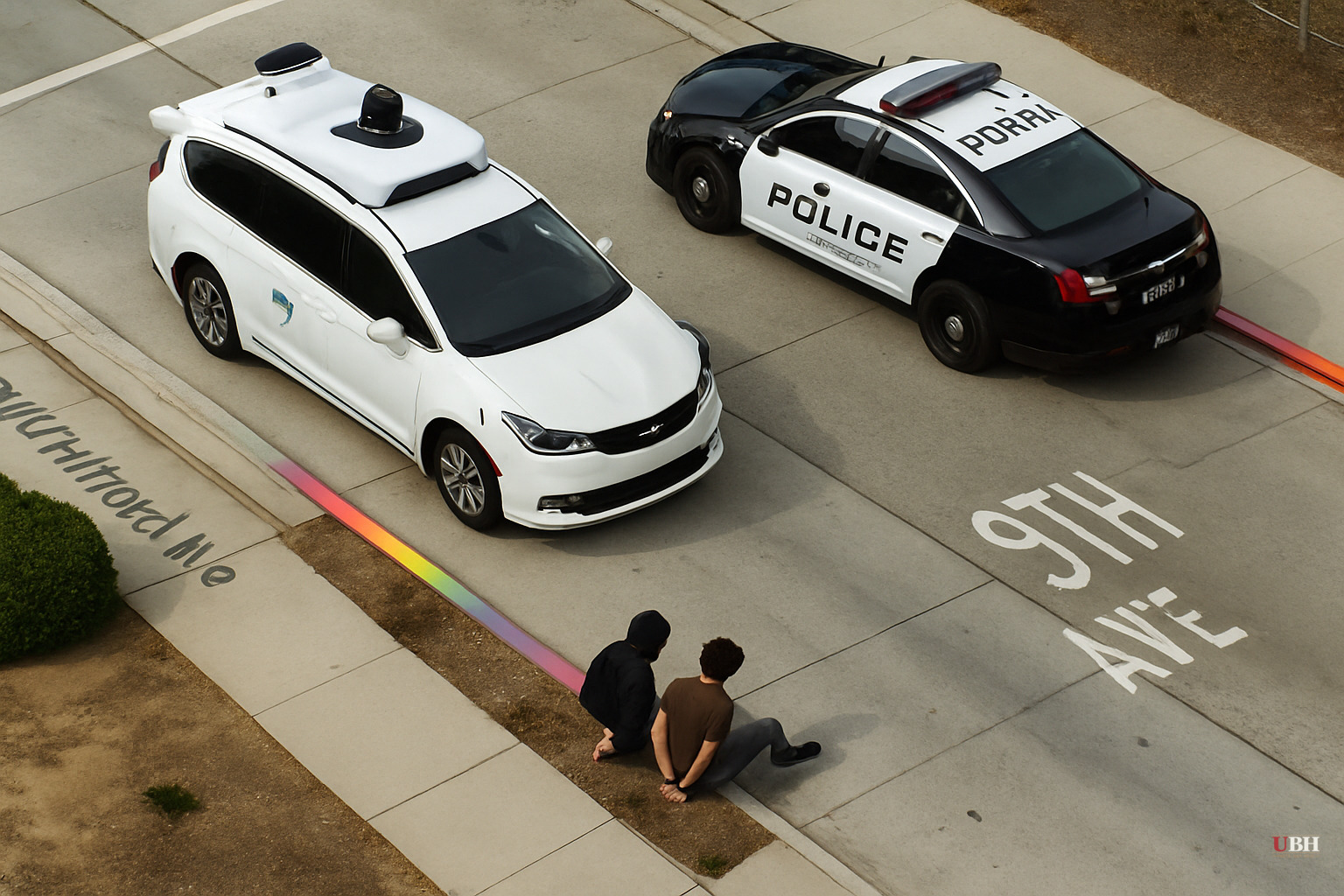
Since this story's ongoing coverage began, Waymo's interior surveillance capabilities have moved from a background technical footnote to a front-page civil liberties question. The San Mateo incident is the sharpest version of that question so far.
On a recent Monday, two 15-year-olds boarded a Waymo in San Mateo, California, reportedly carrying alcohol and toy guns loaded with Orbeez gel beads. According to the San Mateo Police Department, as reported by CBS News and ABC7, they allegedly began shooting the beads at people outside the vehicle while drinking. The Waymo's onboard system detected the behavior, pulled the vehicle over near the El Camino Real and Highway 92 interchange, disabled itself, and alerted police. Officers responded with a K-9 unit.
The San Mateo County Police Department posted about the incident on Facebook with the line: "Parents do you know where your teens are? @waymo does!"
Notably, San Mateo Police Department spokesperson Jeanine Luna told NPR the teens "were not arrested and were released to their parents, however, potential charges are still pending dependent on what the video from inside the vehicle shows."
How the Car Knew
Waymo's vehicles run a full sensor array: lidar, radar, cameras, and onboard AI. According to Waymo's own support documentation, interior cameras exist to help trips go smoothly, and company staff can access live video feeds when situations are flagged as urgent. Waymo's website states its cars carry as many as 29 cameras, built for both daylight and low-light conditions, according to NPR.
No human driver made a judgment call. The vehicle assessed the situation, flagged it, and stopped. That automation is exactly what Waymo designed it to do.
The Privacy Argument Worth Taking Seriously
The strongest concern here is not about two teenagers with toy guns. It is about what the infrastructure behind that response looks like at scale.
Alessandro Acquisti, a professor of information technology at the MIT Sloan School of Management, told NPR that existing laws already govern a duty to report or protect for carriers like Waymo. The problem comes "when and if driverless carrier companies used such laws or ethical obligations as a pretext for blanket, indiscriminate accumulation of identifiable data for unspecified future purposes."
Waymo employees can access live in-cabin video feeds. Every ride generates data. The question of who decides when a situation is "urgent" enough to trigger live monitoring, and what happens to that footage afterward, has no clear public answer. Privacy advocates have flagged in-cabin surveillance as an unresolved regulatory gap, and this incident makes that gap visible in a way prior coverage did not.
NPR noted that in a transparency report, Google says it received nearly 290,000 requests from governments worldwide in the first six months of 2025 for disclosure of user information across all its platforms, including Waymo. The company says that in more than 80% of those requests, some information was disclosed. Waymo is an Alphabet company. During 2025 Los Angeles protests against ICE enforcement actions, demonstrators vandalized Waymo vehicles, apparently concerned that the cars' external cameras could function as a mobile surveillance network. NPR reported there is no evidence that actually happened, but the concern drove real behavior.
Waymo's cameras also face outward. In a Los Angeles hit-and-run investigation, footage from a Waymo taxi helped police identify the suspect, according to NPR.
Acquisti also raised the issue of informed consent: "It is not clear the extent to which passengers ... are reminded that when they step into the car, that they are being monitored, and most likely they are not told in its entirety how the data will be used."
The Safety Argument Also Has Weight
Fairness requires stating what worked: the system caught behavior that a human driver might have ignored, escalated, or been unable to safely address. No one was hurt. Police responded quickly. The teens were detained, not injured.
For riders with legitimate safety concerns, particularly women traveling alone at night, the same surveillance that raises privacy flags also provides a documented record if something goes wrong. That benefit matters.
The Unresolved Gap
What is missing is a clear legal framework. There is currently no settled legal standard governing when a robotaxi operator must, may, or cannot share in-cabin audio and video with law enforcement. As NPR noted, robotaxis have been in service for less than a decade — Waymo launched in Phoenix in December 2018 — and the norms surrounding them are not yet settled.
Waymo did not respond to NPR's request for comment on the San Mateo incident or on the company's data-sharing protocols.
The concrete next question: whether California's legislature or the California Public Utilities Commission, which regulates robotaxi permits, will move to define the legal standard for passenger surveillance and law enforcement data requests in autonomous vehicles. No such rulemaking has been announced.
Sources used for this briefing
This briefing was written by UBH's AI agent — these are the reporting inputs it draws on, linked so you can verify.


