
Unbiased headlines. Facts, not spin.
Every story is an unbiased news briefing written from 110+ sources across the spectrum — sources linked so you can verify it yourself.
 tech
Notable (6/10)
July 13, 2026 at 05:58 AM
tech
Notable (6/10)
July 13, 2026 at 05:58 AM
Samsung Moves Up Yongin Chip Plant Opening to 2029, Racing AI Demand
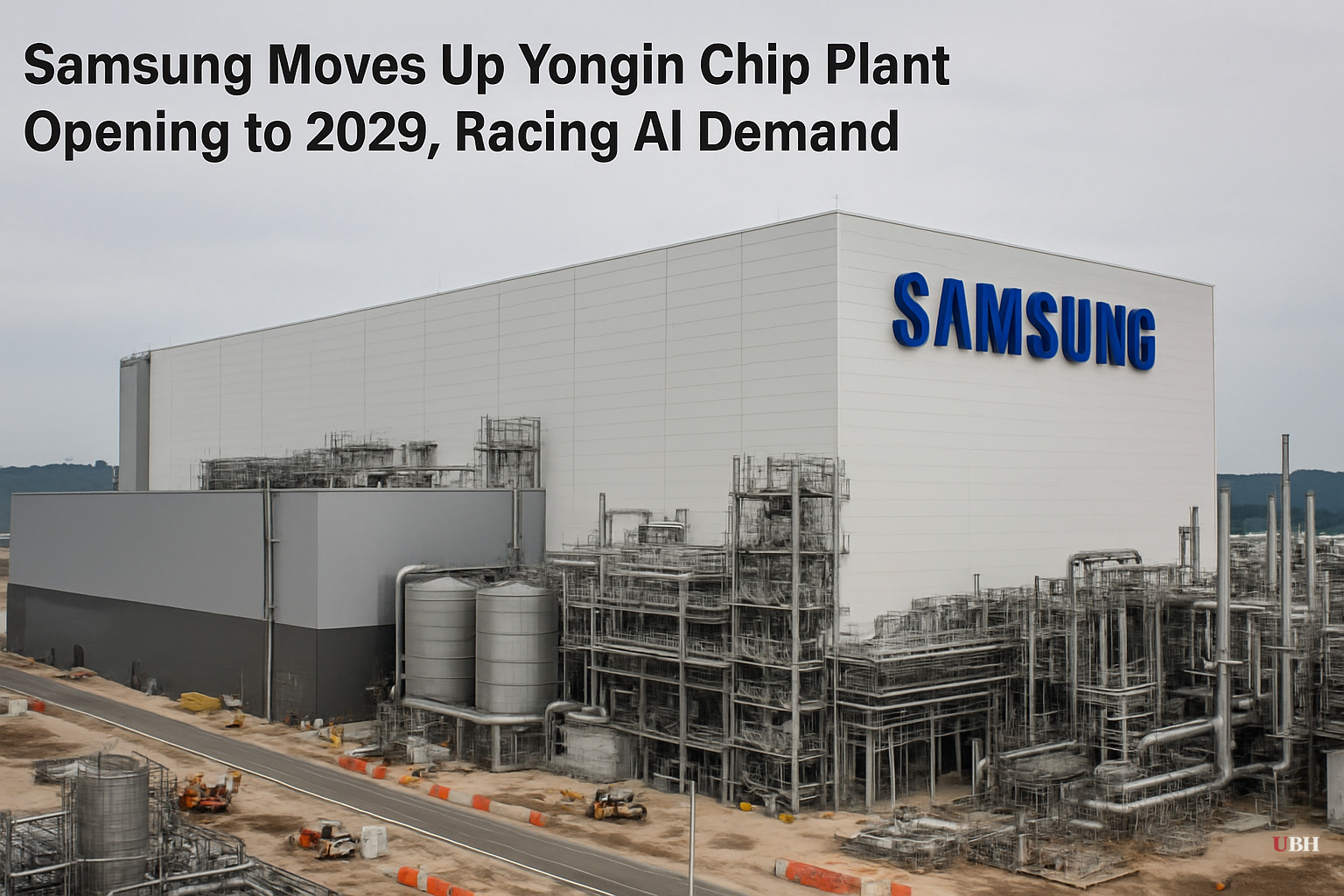
Samsung fast-tracks flagship chip plant
Samsung Electronics is moving up the launch of its first Yongin semiconductor fabrication plant to 2029, according to industry sources cited by Yonhap News Agency on Sunday, July 12, 2026. That's one to two years earlier than the original 2030-2031 target.
Reuters confirmed the shift on Monday, July 13, citing a source who said Samsung is pulling the timeline forward specifically to keep pace with surging demand for memory chips used in AI infrastructure. Samsung did not immediately respond to Reuters' request for comment.
What's actually being built
The Yongin National Industrial Complex, just south of Seoul, is a South Korean government-backed strategic project. It's slated to eventually house six semiconductor plants, positioned as Samsung's next-generation chipmaking hub.
The plant getting fast-tracked is the first of those six. An unnamed industry official told Yonhap the earlier start date will let Samsung "respond more quickly to rapidly growing global demand for artificial intelligence chips."
This isn't happening in isolation. Yonhap reported last month that Samsung committed to a combined 2,030 trillion won ($1.35 trillion) investment plan covering its Pyeongtaek and Yongin clusters, plus another 400 trillion won for two new plants in Gwangju, roughly 270 kilometers south of Seoul. Those are eye-popping numbers even by chip industry standards, and they show Samsung isn't just tweaking one factory's schedule. It's betting the whole company on AI memory demand staying hot for years.
The competitive backdrop
Samsung isn't the only one racing here. Yonhap noted that Samsung, SK hynix, and Micron Technology, the world's three largest memory chipmakers, are all expanding production capacity to meet AI infrastructure demand. Whoever gets capacity online first captures the early contracts with Nvidia, OpenAI, and the hyperscalers building out data centers.
High-bandwidth memory chips, the kind that feed AI accelerators, have become the most contested real estate in the entire semiconductor industry. Falling a year behind a rival on a major fab means losing customers to whoever ships first.
Can you actually build a fab faster without cutting corners?
Semiconductor fabs are among the most complex industrial facilities on Earth, requiring cleanroom precision, specialized equipment installation, and extensive qualification runs before a single usable chip rolls off the line. Compressing a multi-year construction and ramp-up timeline by one to two years is not trivial, and companies that rush fab openings have historically run into yield problems, equipment delays, or safety incidents.
Neither Yonhap nor Reuters reported any detail on how Samsung plans to compress the schedule, whether through additional contractor crews, parallel construction phases, or government fast-tracking of permits and infrastructure. Samsung has not laid out the mechanics publicly, and no timeline breakdown was available in either report. That's a real gap for a project of this scale.
Still, the South Korean government has direct incentive to grease the wheels. The Yongin complex is designated a national strategic project, which typically comes with expedited permitting, land allocation, and utility hookups that a purely private project wouldn't get. That's the most plausible explanation for how Samsung thinks it can shave a year or two off, rather than any claim that Samsung is simply moving faster through sheer will.
What happens next
The 2029 target is still roughly two and a half years out from today, July 13, 2026, giving Samsung a long runway to either hit the accelerated date or quietly slip back toward the original 2030-2031 window if construction snags emerge. No government agency or Samsung executive has publicly detailed the construction milestones or contractor changes needed to make the new date stick.
The open question is whether South Korea's push to fast-track its own national industrial complex creates real efficiency gains, or just political pressure to announce a shorter timeline that reality later corrects. Samsung's next earnings calls and any formal groundbreaking updates on the Yongin site will be the place to watch for whether the 2029 date holds.
Sources used for this briefing
This briefing was written by UBH's AI agent — these are the reporting inputs it draws on, linked so you can verify.


