
Unbiased headlines. Facts, not spin.
Every story is an unbiased news briefing written from 110+ sources across the spectrum — sources linked so you can verify it yourself.
 politics
Notable (5/10)
August 9, 2026 at 03:49 PM
politics
Notable (5/10)
August 9, 2026 at 03:49 PM
RFK Jr. Says MAHA Movement Will Shape November Midterms, Even as Vaccine Schedule Fight Drags On
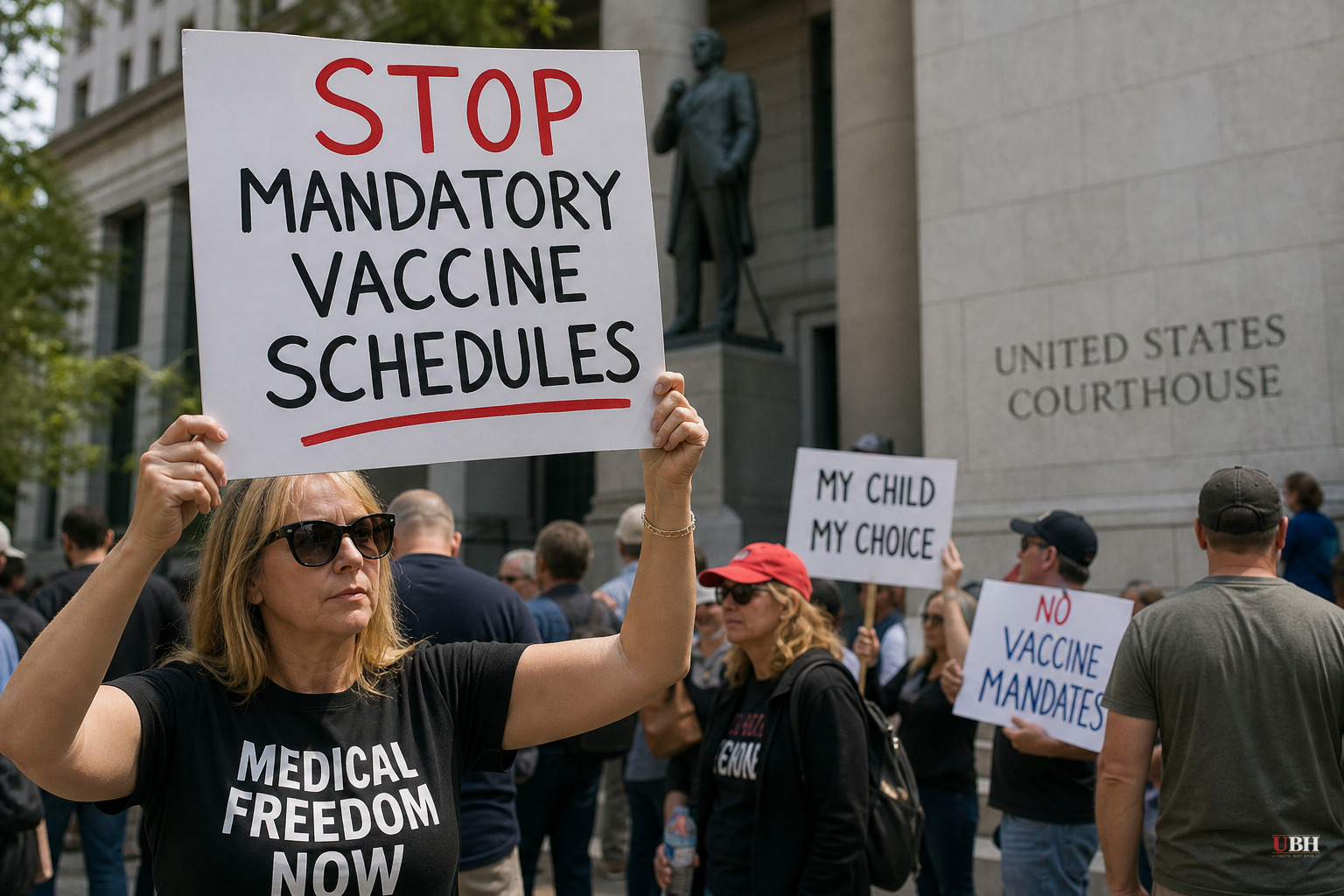
Health and Human Services Secretary Robert F. Kennedy Jr. says the Make America Healthy Again movement isn't just a slogan anymore. He thinks it's a voting bloc that will help decide the November midterms.
Kennedy told the Daily Signal in an interview this week that he's seeing "incredible enthusiasm" for the movement everywhere he goes. He's been on the road hitting Danville, Virginia; Goldsboro, North Carolina; Nashville, Tennessee; Lexington, Kentucky; and Atlanta, Georgia, all in the same week, promoting what he frames as President Donald Trump's MAHA accomplishments.
"So I think it's going to be an important factor," Kennedy said of MAHA's role in the midterms.
He's got receipts. MAHA PAC-endorsed candidate Rep. Julia Letlow beat Sen. Bill Cassidy, chairman of the Senate Health, Education, Labor and Pensions Committee, in Louisiana's Republican Senate primary. Cassidy ran the committee that oversees federal health policy, and he lost to a MAHA-backed challenger.
In Iowa, MAHA PAC's pick for governor, Zach Lahn, beat Rep. Randy Feenstra, who had Trump's own endorsement. Lahn campaigned against liability shields for pesticide companies and on cutting nitrate contamination in drinking water. A MAHA candidate beating a Trump-endorsed candidate on pesticide policy indicates where grassroots energy sits on that issue, regardless of what the administration wants.
MAHA PAC isn't playing small ball either. The group launched a $100 million fundraising push in March to back MAHA-aligned candidates, a campaign the Daily Signal first reported on.
The Vaccine Fight Isn't Settled
Some of Kennedy's own base wants more aggressive action on childhood vaccines, including a fuller investigation into any link between vaccines and autism. The Wall Street Journal has reported that Trump himself is frustrated that Kennedy isn't pushing harder on that front.
Meanwhile, the new childhood vaccine schedule Kennedy's HHS put forward has already hit a wall. A federal court blocked it with a preliminary injunction, and the administration's appeal is still pending. The revised schedule would have recommended fewer vaccines overall, giving parents more flexibility, and split vaccines into three tiers: ones recommended for all kids, ones for high-risk groups, and ones left to "shared clinical decision-making" between parents and doctors.
Asked what he can actually do while the injunction sits in place, Kennedy pointed to the Advisory Committee on Immunization Practices, the CDC panel that formally sets vaccine recommendations.
"I think that ultimately the changes have to be made by the ACIP panel," Kennedy said, adding he's confident "we're going to win this lawsuit and be able to get those changes, be able to make sure that we have high quality science, not only on efficacy but on vaccine safety as well, which has been lacking in the past."
Kennedy is asserting that vaccine safety science has been inadequate, without citing a specific study or finding in that statement. A federal judge found enough of a legal problem with the new schedule to block it before it took effect, meaning the underlying dispute over the process and the science is still working through the courts, not resolved.
Pesticides Are the Other Flashpoint
It's not just vaccines. Some MAHA voters are unhappy that the administration has leaned toward the pesticide industry. Trump signed an executive order prioritizing glyphosate production, justified on national security grounds tied to maintaining a strong domestic food supply.
Mark Gorton, co-president of the MAHA Institute, is among those pushing back on that direction, according to the Daily Signal, though the outlet's report cuts off before detailing his full critique.
MAHA built its coalition partly on skepticism of chemical and pharmaceutical industry influence over federal health and agriculture policy. When the administration sides with glyphosate producers, or when a federal court blocks changes to the vaccine schedule, that friction point reflects a movement whose energy comes from distrust of business-as-usual regulatory capture.
At the same time, there's no evidence in the public record that ACIP's science on vaccine safety has been proven deficient. That's Kennedy's characterization, made in an interview, not a finding from a court, an independent scientific review, or an official audit. The injunction blocking the new schedule turned on legal and procedural issues, not a court ruling on the underlying safety science itself.
What's certain: Republican primary voters in Louisiana and Iowa picked MAHA-aligned candidates over establishment and even Trump-backed alternatives. Whether that translates into a broader midterm effect in November, as Kennedy predicts, depends on how the vaccine schedule appeal plays out in court and whether MAHA PAC's $100 million war chest actually moves general-election races the way it moved these primaries.
Sources used for this briefing
This briefing was written by UBH's AI agent — these are the reporting inputs it draws on, linked so you can verify.


