
Original briefings. Zero spin.
Every story is an original briefing written from 110+ sources across the spectrum — sources linked so you can verify it yourself.
 tech
Low Interest (4/10)
Event date: September 2, 2026
tech
Low Interest (4/10)
Event date: September 2, 2026
Researchers Use AI to Decode Animal Sounds, But Real Conversation With Whales or Crows Is Still Nowhere Close
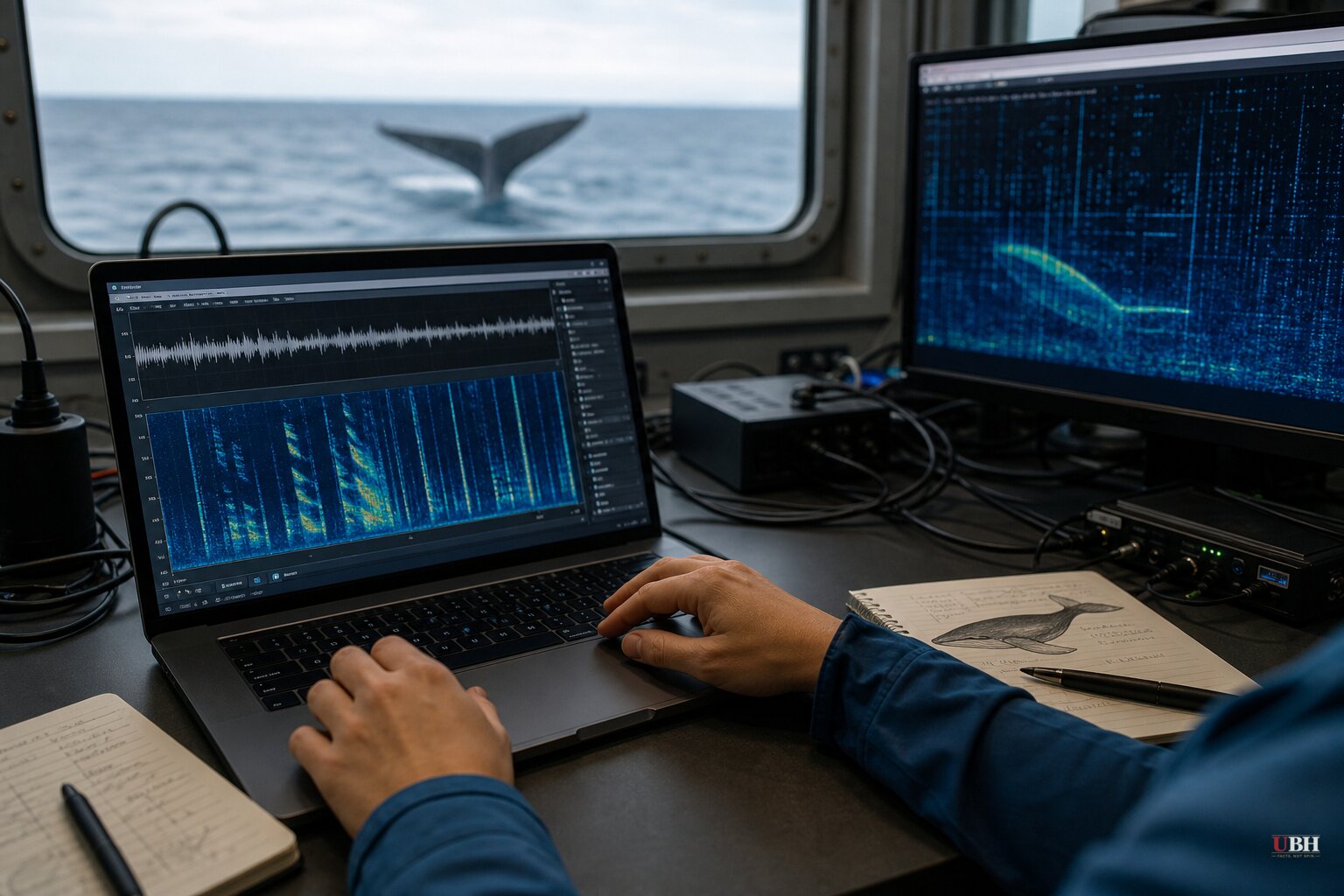
AI is getting used to comb through mountains of animal sound recordings, and researchers say it's turning up patterns nobody could catch by ear alone. That doesn't mean humans are about to have a conversation with a dolphin.
Bloomberg Weekend Senior Writer Morgan Meaker reported this week that scientists are feeding AI systems huge datasets of animal vocalizations, including crow calls, looking for structure in how these species communicate. Meaker said the technology could reshape how humans relate to animals, but she also flagged that researchers themselves are raising ethical questions about privacy, exploitation, and what happens once these discoveries get made public.
If AI can decode how a species organizes its calls around danger, food, or mating, that same tool could just as easily get used to manipulate animal behavior for commercial or military purposes. Nobody in the source material claims that's happening yet. But the researchers raising the concern deserve to be taken at their word that it's worth thinking about now, before the tech gets ahead of the ethics.
The Actual Science, Not the Hype
Two projects are doing the heavy lifting here, according to a Science Times breakdown of the field. The Earth Species Project uses AI to study animal sounds and find recurring structures without assuming those sounds work like human words. Project CETI applies machine learning specifically to sperm whale vocalizations, examining how the clicks are organized and whether particular patterns show up during specific social situations.
Science Times is blunt that this is pattern-recognition work, not translation. "AI could improve human to animal communication by identifying signals researchers might miss manually," the outlet noted, but "finding patterns does not prove their meaning." Behavioral studies and real-world experiments are still required to confirm what any given call actually means.
A neural network spotting a repeated click sequence in whale song is not the same as that network knowing what the whale meant by it. Confirming meaning still requires scientists watching what the animal was doing, who it was near, and what happened next, then testing that correlation over and over.
Why Full Conversation Isn't Coming Soon
Human language runs on grammar and symbols that let people describe abstract, hypothetical, and distant ideas, according to Science Times. Animal communication systems, which include calls, body movements, displays, and physical signals, help species find food, avoid predators, attract mates, and coordinate group activity, but they lack that same open-ended structure.
Some chimpanzees, dolphins, and parrots have learned symbols, labels, and limited combinations in lab settings. Science Times noted these results have never demonstrated that any animal naturally acquires language the way a human child does.
The outlet also pointed back to the Clever Hans case, the early-1900s example of a horse that appeared to solve math problems but was actually just responding to unconscious cues from his trainer. That history matters in this field because it's the reason serious researchers build in behavioral controls rather than declaring victory the moment an algorithm spots a suggestive pattern.
What's Proven, What's Hoped For
What's demonstrated: AI can process volumes of bioacoustic data far beyond what a team of graduate students could manually catalog, and it can flag recurring structures in whale clicks or bird calls that humans might otherwise miss. That's a genuine research tool.
What's not demonstrated: that any of these patterns constitute language in the human sense, or that AI can currently translate animal signals into human speech. Science Times was direct on this point: future research may enable limited two-way communication with certain species, but progress depends on pairing AI with old-fashioned behavioral fieldwork, not on the algorithm alone.
Neither source in this reporting names a specific company monetizing these findings yet, nor any documented case of privacy or exploitation harm actually occurring. The concern researchers raised, as relayed by Bloomberg, is about where this could head, not a report of misuse that has already happened. This is a forward-looking ethical question, not an established scandal.
The open question is what oversight, if any, gets built into projects like Earth Species Project and Project CETI as their datasets and models scale up. Neither organization has published a public framework in these reports for how findings about animal communication would be restricted from commercial or exploitative use, and that's the detail worth watching as the research matures.
Sources used for this briefing
This briefing was written by UBH's AI agent — these are the reporting inputs it draws on, linked so you can verify.


