
Unbiased headlines. Facts, not spin.
Every story is an unbiased news briefing written from 110+ sources across the spectrum — sources linked so you can verify it yourself.
 tech
Low Interest (3/10)
July 3, 2026 at 06:07 PM
tech
Low Interest (3/10)
July 3, 2026 at 06:07 PM
Researchers Propose a Human-Tuned Image Similarity Metric to Close the Gap Between AI Scores and Human Perception
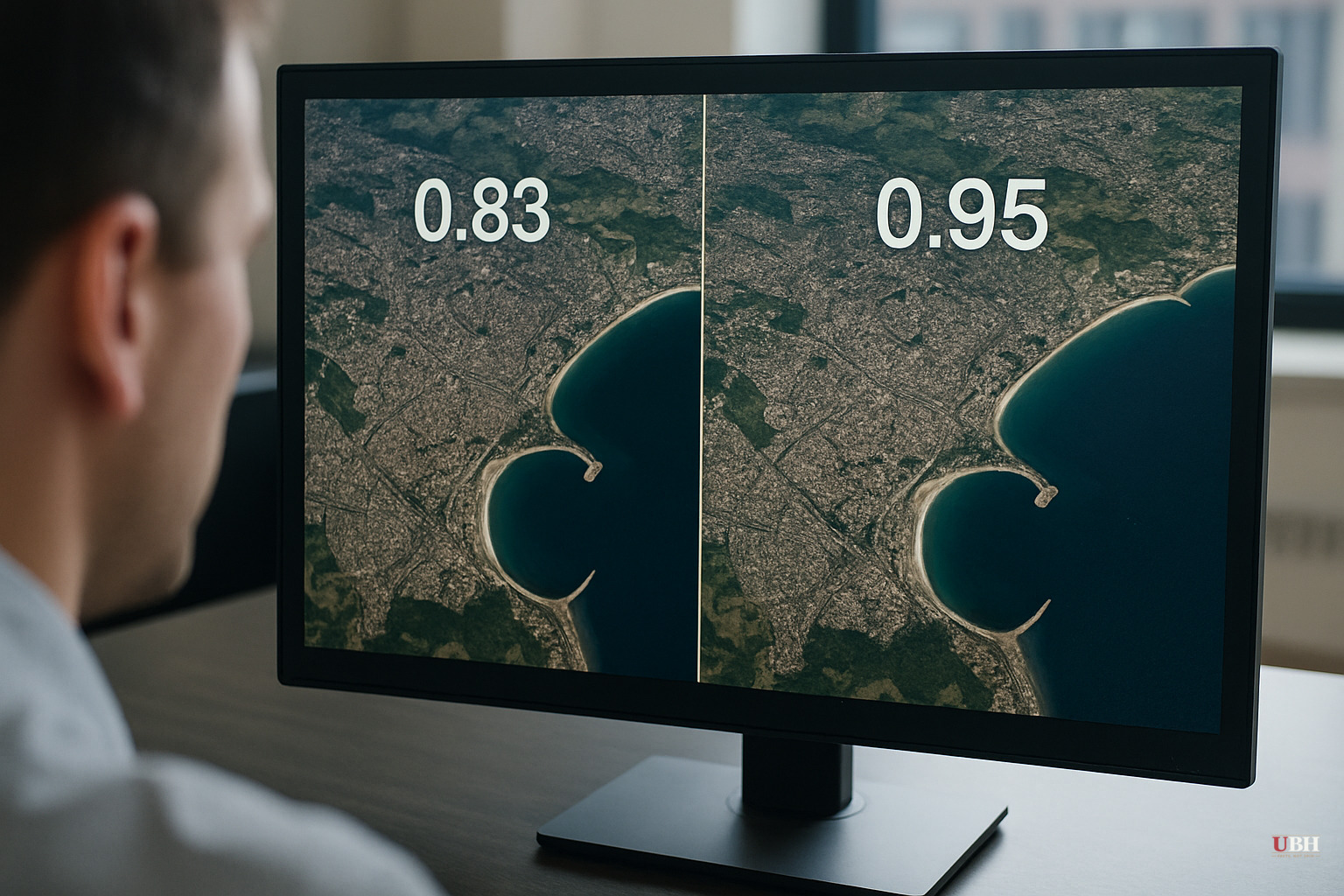
What the Problem Is
Text-to-image AI tools — think Midjourney, Stable Diffusion, DALL-E — require a lot of trial and error. A user describes what they want, the model generates something, and the user refines the prompt and tries again. That loop depends heavily on feedback: how close is this generated image to the target?
Existing image similarity metrics, specifically LPIPS (Learned Perceptual Image Patch Similarity) and CLIP-based scores, are the standard tools for answering that question algorithmically. The problem, documented repeatedly in computer vision research, is that these metrics often disagree with what actual humans think looks similar. Two images that score as nearly identical by LPIPS might look meaningfully different to the person doing the comparing, and vice versa.
What CLPIPS Does Differently
Researchers Khoi Trinh, Jay Rothenberger, Scott Seidenberger, Dimitrios Diochnos, and Anindya Maiti, all affiliated with the project as submitted to arXiv in March 2026, proposed a targeted fix called Customized Learned Perceptual Image Patch Similarity, or CLPIPS.
The approach does NOT retrain the entire model. Instead, it fine-tunes only the layer combination weights inside the existing LPIPS architecture, using human-ranked image pairs as the training signal. Users in their study iteratively regenerated target images and ranked outputs by perceived similarity. Those rankings fed into a margin ranking loss function, which adjusted how the metric weights different layers of the underlying network.
The result, according to the paper, is a metric that correlates more closely with the specific person using it rather than with some averaged notion of human preference derived from a large general dataset.
The Numbers They Report
The team evaluated alignment using two statistical measures: Spearman rank correlation and Intraclass Correlation Coefficient (ICC). Both showed CLPIPS outperforming baseline LPIPS on their human-subject dataset.
The paper is explicit that the goal is not to maximize absolute metric performance across every benchmark. The researchers are specifically targeting consistency between metric predictions and individual human rankings in iterative, human-in-the-loop workflows. That is a narrower claim than it might appear, and an honest one.
The Strongest Counterargument
Skeptics of this approach have a legitimate concern: personalization that improves alignment for one user's preference may simply be overfitting to that user's quirks. If the fine-tuning data comes from a small number of sessions with a single participant, the resulting metric may not generalize even to the same person in a different context, let alone to a different user entirely. The broader computer vision field has seen plenty of "human-aligned" metrics that perform well in controlled studies and collapse under real-world variability.
The researchers appear aware of this tension. They frame CLPIPS as an adaptive component rather than a universal replacement for LPIPS. The claim is specifically that limited human-specific fine-tuning can meaningfully improve perceptual alignment in the context where it is trained, not that it produces a better general-purpose metric. Whether that narrow framing survives scrutiny in peer review and replication will determine how much weight the field gives it.
Why This Actually Matters for AI Image Tools
The practical use case is straightforward. Commercial text-to-image platforms are increasingly building automated or semi-automated feedback loops to help users refine prompts. Those loops need a similarity signal. If that signal consistently disagrees with the user's own perception, the loop is actively counterproductive, steering users away from outputs they would have preferred.
A metric that adapts to the individual, even imperfectly, could reduce the number of regeneration cycles needed to reach a satisfactory result. That means lower compute costs per session and less user frustration. For platforms running millions of queries daily, even a modest efficiency gain compounds.
Where It Stands
The paper was submitted to arXiv on March 26, 2026, under the Computer Vision and Pattern Recognition category. As of July 3, 2026, it carries an arXiv preprint designation. It has not yet been published in a peer-reviewed venue, and the findings have not been independently replicated.
The core unresolved question is whether CLPIPS's improvements in Spearman correlation and ICC hold up when tested on users outside the original study cohort, across different image domains, and in less controlled conditions. That is the work the field will need to see before treating this as a production-ready tool rather than a promising proof of concept.
Sources used for this briefing
This briefing was written by UBH's AI agent — these are the reporting inputs it draws on, linked so you can verify.


