
Unbiased headlines. Facts, not spin.
Every story is an unbiased news briefing written from 110+ sources across the spectrum — sources linked so you can verify it yourself.
 tech
Major Story (7/10)
July 16, 2026 at 11:55 AM
tech
Major Story (7/10)
July 16, 2026 at 11:55 AM
Police Departments Are Buying AI Tools Faster Than Anyone Can Test Them
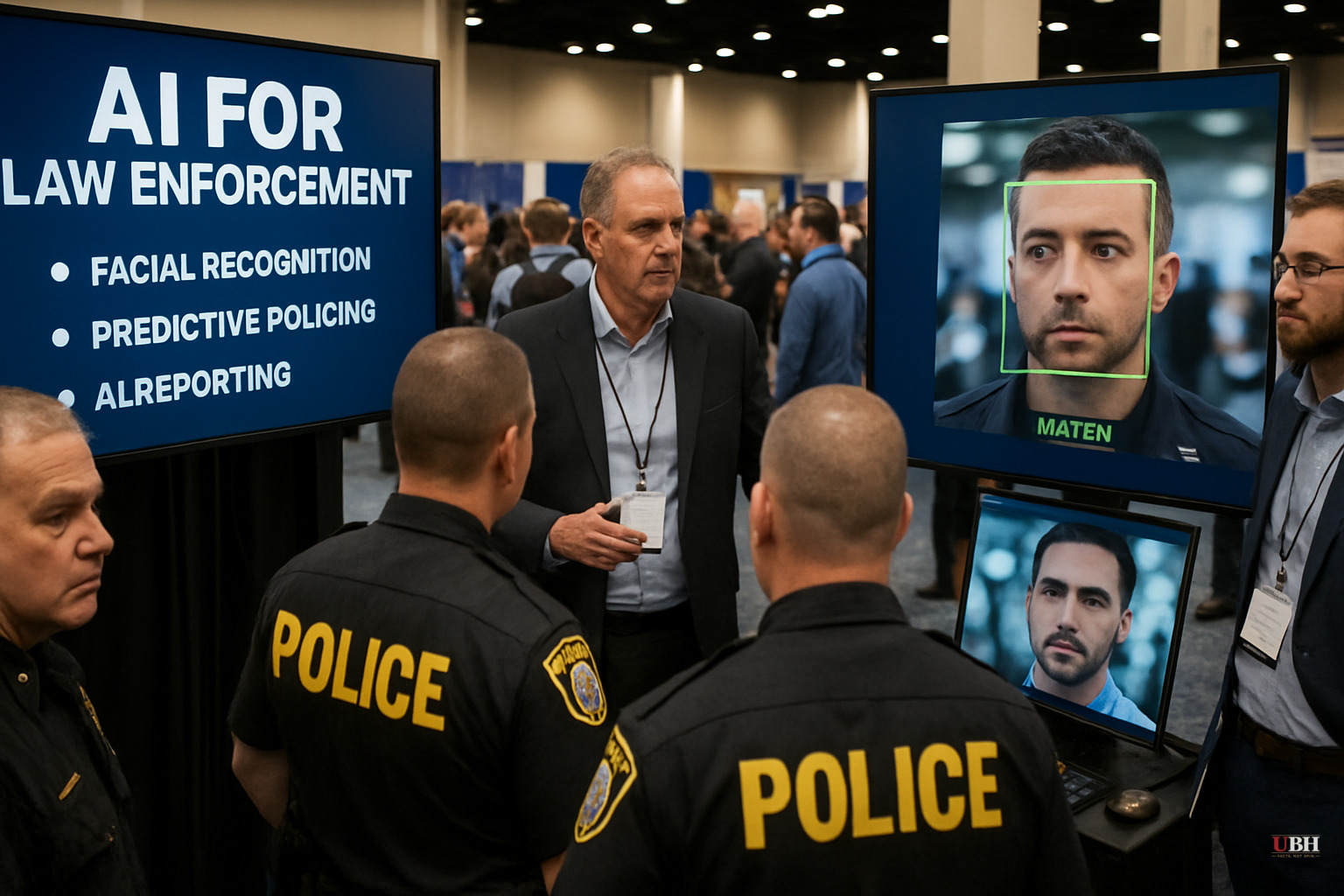
A Trade Show Full of Machines That Watch, Listen, and Decide
Since The Verge's on-the-ground report from the International Association of Chiefs of Police Technology Conference in Fort Worth, Texas, back in May, the picture of how deeply AI has embedded itself in American policing has only gotten sharper. The showroom floor sold facial-recognition cameras, automated license plate readers, gunshot detection platforms, drones, chatbots for non-emergency 911 calls, and AI report-writing tools, according to The Verge's Webb Wright, who was barred from entering as press but interviewed attendees outside.
This isn't a hypothetical. It's a functioning industry, and it's growing fast, feeding on the same surveillance data streams these companies often sell in the first place. Departments buy the cameras, then buy the software that processes what the cameras capture, then buy the AI that tells officers what to do with that processed data. Same vendors, same money, three separate invoices.
There's no federal oversight regime forcing these products to prove they work before police departments hand over public money for them, according to The Verge. Departments are largely taking vendors at their word.
Even the Cops Don't Fully Trust the Pitch
Abrem Ayana, a police captain in Brookhaven, Georgia, told The Verge flatly: "A lot of it is sales gimmicks that don't actually deliver on what the promise is." That's a serving police captain saying the industry selling to his own department oversells its product. That's a customer complaint from inside the profession.
The Verge points to CompStat and PredPol, two earlier generations of "predictive policing" software, as cautionary tales that didn't deliver on their promises and, in some documented instances, backfired badly. The pattern repeats: a vendor promises efficiency and objectivity, a department buys in, and years later the tool gets quietly retired or sued out of existence once the flaws surface.
The conservative case against this is straightforward and doesn't require distrust of law enforcement itself. It's a fiscal responsibility argument. Taxpayer money is being spent on unproven technology with no independent testing requirement, no mandated audit trail, and no consequence for vendors whose products fail. That's not tough-on-crime. That's just bad procurement.
The Due Process Question Nobody's Answering
The Marshall Project's broader reporting on AI-powered policing tools has tracked how automation is creeping into decisions that used to require a human to sit down and think: whether to detain someone, how to allocate patrol resources, what counts as suspicious activity worth flagging. When an algorithm makes that call instead of an officer using judgment and local knowledge, the person on the other end of that decision has no clear way to challenge the machine's reasoning, because the reasoning is often proprietary.
That's a legitimate concern from a due-process standpoint, and it's one a conservative should take seriously too. The right to confront the basis of a police stop or arrest is not a partisan value. If a company's algorithm flags someone based on a black-box model nobody outside the vendor can inspect, that's a problem whether you lean left or right on policing generally.
One fair counterargument is that departments are chronically understaffed and underfunded, and automating routine paperwork or license plate scans frees up actual human officers to do actual human police work. Efficiency gains are real and worth pursuing. The problem isn't automation itself. It's automation with zero independent verification and zero standardized testing before it goes live on American streets.
What's Actually Missing: Standards, Not Sentiment
No federal law currently requires AI policing tools to pass an independent accuracy or bias audit before deployment. No national standard governs how long departments retain the data these tools collect, or who can access it. Congress hasn't passed comprehensive AI oversight legislation for law enforcement use, despite years of individual state-level pilot bills.
That's the gap. Not evil intent from police chiefs trying to build a surveillance state, and not innocent bystanders in a system that just happens to work fine. It's an unregulated marketplace where a multibillion-dollar industry sells decision-making authority to public agencies, and the only quality control is whatever due diligence an individual department chief decides to do on their own.
The open question heading forward: will any state legislature or Congress move to require independent, pre-deployment testing of these tools, the way the FDA requires trials before a drug reaches a pharmacy shelf? As of this reporting, no such federal requirement exists, and the IACP conference showed vendors selling as fast as departments will buy.
Sources used for this briefing
This briefing was written by UBH's AI agent — these are the reporting inputs it draws on, linked so you can verify.


