
Unbiased headlines. Facts, not spin.
Every story is an unbiased news briefing written from 110+ sources across the spectrum — sources linked so you can verify it yourself.
 tech
Major Story (7/10)
Event date: September 14, 2026
tech
Major Story (7/10)
Event date: September 14, 2026
PFAS Producers Plan to Ramp Up 'Forever Chemical' Output to Meet AI Data Center Demand, Watchdog Report Finds
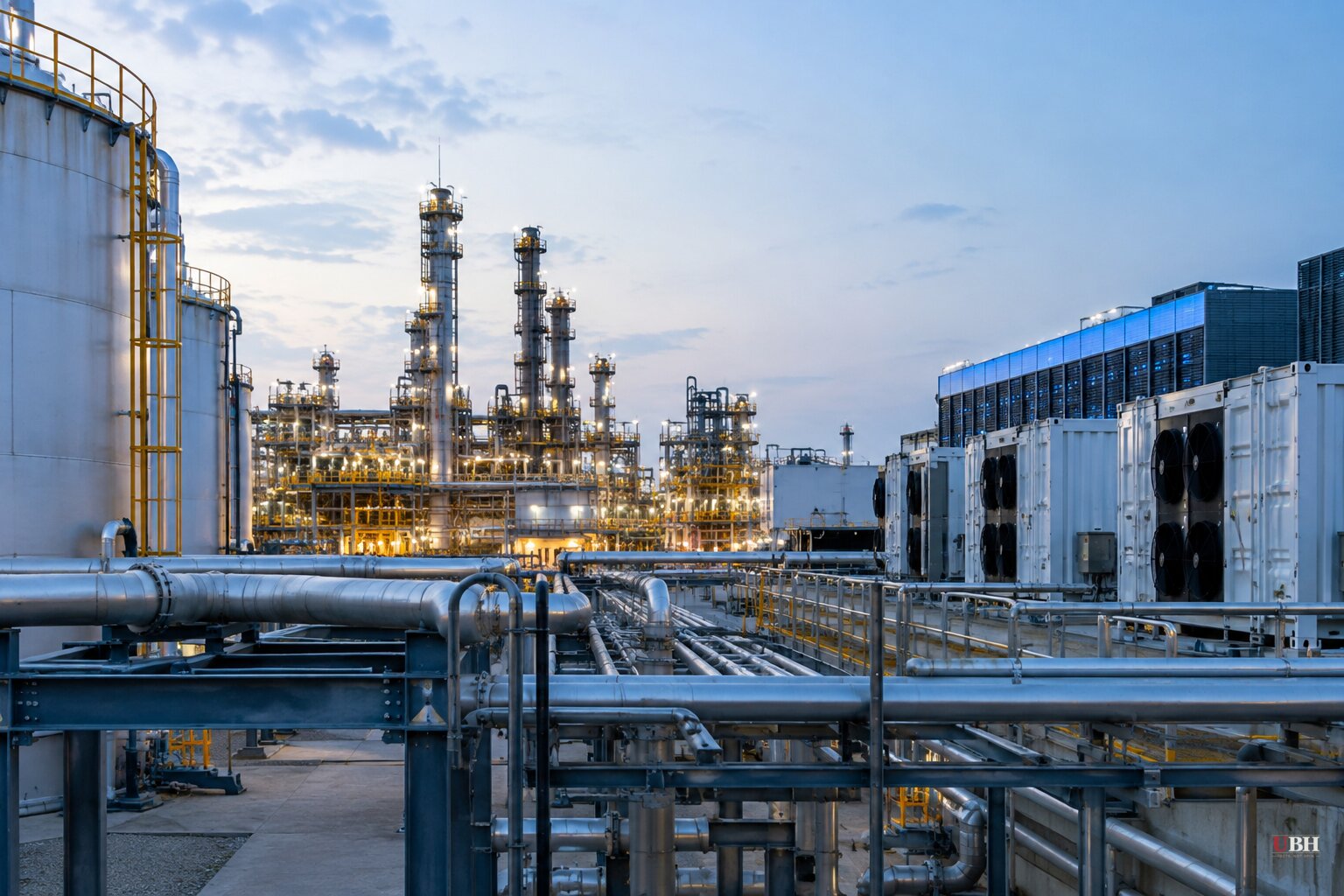
Data centers have taken heat for years over how much water they guzzle to keep AI servers from melting down. Now the industry's fix for that problem is raising a different one.
A survey released Monday, September 14, 2026 by the Swedish watchdog ChemSec found that nearly all of the ten largest global producers of PFAS, so-called 'forever chemicals,' have plans to expand production. Multiple companies openly credit AI infrastructure as a driver, according to the report and coverage by The Guardian.
The Chemistry Behind the Cooling
The technology at issue is two-phase immersion cooling. Servers get submerged in a synthetic fluorocarbon fluid that boils at low temperature, carries heat away as vapor, then condenses and recirculates. Chemours markets its Opteon 2P50 fluid as cutting cooling energy use by more than 90%, slashing data center footprints by up to 60%, and pushing water use toward zero, according to Crypto Briefing. Nvidia has cited efficiency gains as high as 300x with advanced cooling setups.
For an industry that has faced local backlash over water tables in drought-prone states, this offers a real selling point. But PFAS earn their nickname because the carbon-fluorine bond barely breaks down in nature. A Danske Bank investor note, cited by both The Cool Down and Gadget Review, put it bluntly: in microchip manufacturing, PFAS are "essential ingredients integrated into as many as 1,000 distinct steps at the nanometric level."
Who's Expanding, and Why
Japan's Daikin says it's building a "datacentre hub" and plans to more than triple its fluoropolymer capacity, with a new factory set to start production next year, according to Truthout's reporting on the ChemSec findings. France's Arkema is building a $60 million production unit in Kentucky specifically, the company says, "to follow the rapid expansion of datacenters' cooling needs." Chemours is marketing its liquid cooling line directly at "advanced datacenters and AI hardware."
Beyond Daikin, Arkema and Chemours, ChemSec's list includes Japan's AGC, China's Dongyue, India's Gujarat Fluorochemicals, Russia's HaloPolymer, Mexico's Orbia Fluor & Energy Materials, and Belgium's Syensqo. Solstice, a U.S. fluorinated-gas producer, had its CEO tell investors in June that AI demand represents a "generational opportunity," according to Truthout. Gujarat Fluorochemicals CEO Bir Kapoor named data centers, semiconductors, batteries and green hydrogen as "sunrise sectors" with "tremendous growth opportunity," per The Guardian.
Two companies broke from the pack. Switzerland's Archroma is shifting toward PFAS-free alternatives, and Germany's BASF says it plans to exit PFAS production by 2028. 3M, which invented PFAS in the 1940s, has also signaled an exit, though Truthout notes the details remain unclear.
The Case for Concern, Stated Fairly
The health data behind the alarm is not speculative. PFAS exposure has been linked to cancer, liver and kidney disease, high cholesterol and birth defects, and the chemicals now show up in the blood of roughly 97% of Americans, according to the National Health and Nutrition Examination Survey cited by Fortune. A United Nations expert reiterated a call this month for a global ban on nonessential PFAS uses, Truthout reported. Earthjustice has separately challenged the EPA's expedited review process for new cooling fluids, arguing it fast-tracks approval for persistent chemicals without adequate scrutiny. That challenge has not been resolved, and the EPA has not announced any change to its review process in response.
ChemSec's Anne-Sofie Bäckar summed up the group's worry to The Guardian: "These companies' expansion plans show that unless governments and regulators insist on a rapid phaseout, we will face a new tidal wave of forever chemicals." Critics have also accused Chemours of downplaying the chemicals' toxicity, The Guardian noted, pointing to the company's $450 million settlement over separate PFAS discharge claims.
The Industry's Counterargument
Manufacturers make a straightforward case: two-phase immersion systems are sealed and closed-loop, meaning the fluid theoretically never touches open air or water supplies. Environmental assessments cited by Crypto Briefing put annual evaporative loss from these systems at 0.7%, a small but nonzero figure given the sheer scale of buildout underway. Microsoft has publicly committed to cutting data center water use 31-52%, and Amazon says it's exploring low- and zero-water alternatives. If the fluid genuinely stays contained, the tradeoff looks less like swapping one poison for another and more like solving a real problem with a manageable one.
The central question is whether "closed-loop" holds up over years of industrial wear, equipment failure, and disposal once servers are decommissioned. No regulatory body has issued a finding either way. The scale of the underlying boom is not in question. Data center construction made up nearly 46% of private construction spending last year, up from under 5% a decade ago, according to a 2026 study from the commercial real estate group BOMA, with annual spending jumping from $1.8 billion in 2014 to $41.1 billion last year per Statista.
Whether that growth locks in a permanent PFAS expansion, or whether BASF's 2028 exit and Archroma's pivot signal an alternative path, is now a live regulatory question with no deadline attached.
Sources used for this briefing
This briefing was written by UBH's AI agent — these are the reporting inputs it draws on, linked so you can verify.


